The Long Bien bus station at the end of Yen Phu street, 100 years ago, was originally a large open area where bundles of bamboo were sold, so the locals called it the Bamboo Wharf .
In 2009, at the end of Yen Phu Street, near the entrance to Long Bien Market (Hanoi), between the two main lanes of Yen Phu Street, the Urban Traffic Management Center under the Hanoi Department of Transport inaugurated the Long Bien bus station. One hundred years ago, this area was a large open space where bundles of bamboo were sold, hence the name "Bamboo Wharf" (Bến Nứa).
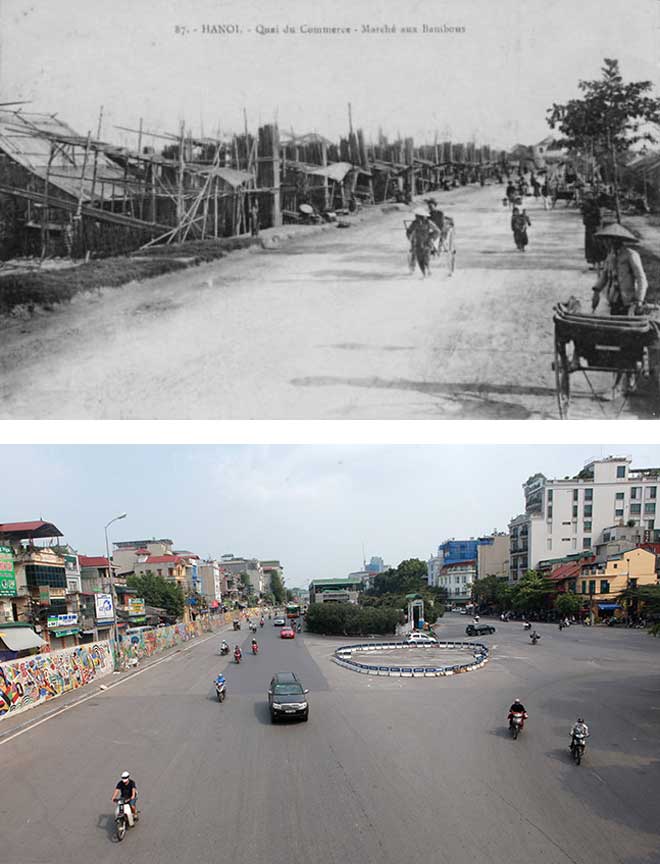
Today, instead of the bamboo groves, there are wide roads lined with houses and tall buildings.
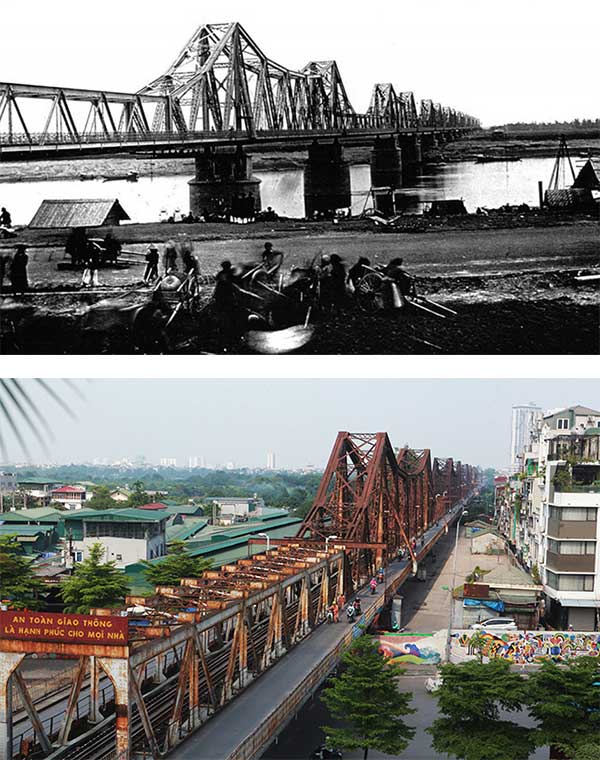
The Long Bien Bridge was completed in 1902 and had two additional lanes for cars and access roads built to it in 1936. At that time, the Long Bien Bridge saw very little traffic. Later, a bus station for buses to the northern and northeastern provinces was established, and it became extremely crowded during rush hour.
See also: Time stamp on Long Bien bridge.
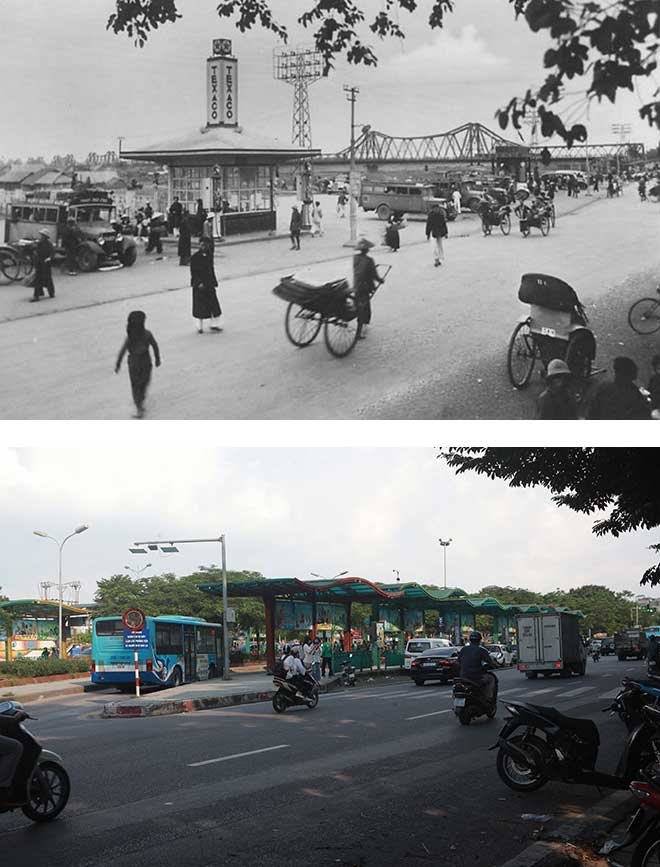
Initially, Ben Nua only had a few passenger buses, but gradually the number of buses increased, and the demand for transportation grew, so it became a bus station called Ben Nua. After 1954, when the passenger bus station was established, it was named Long Bien.
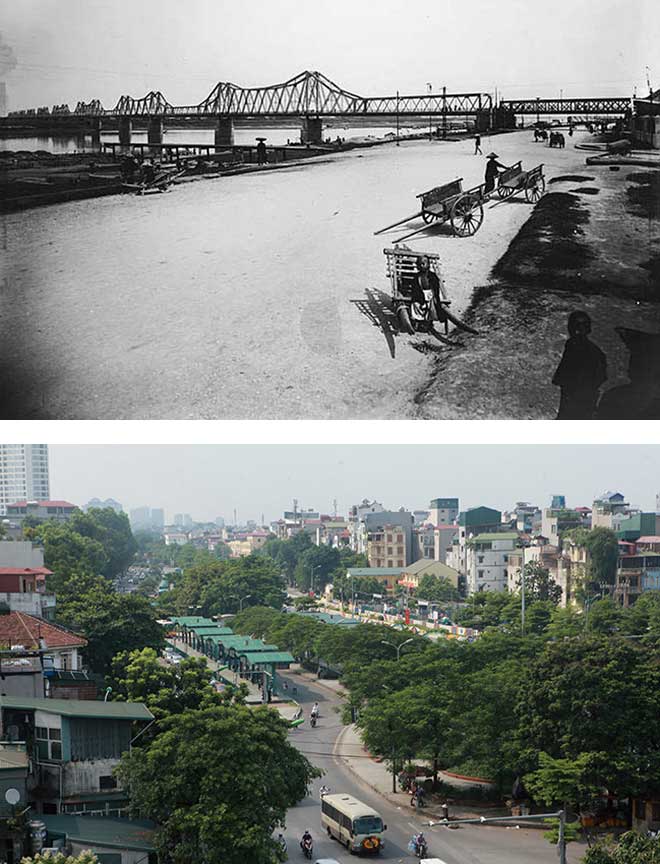
Images of Long Bien bus station today and when it was still called Ben Nua.
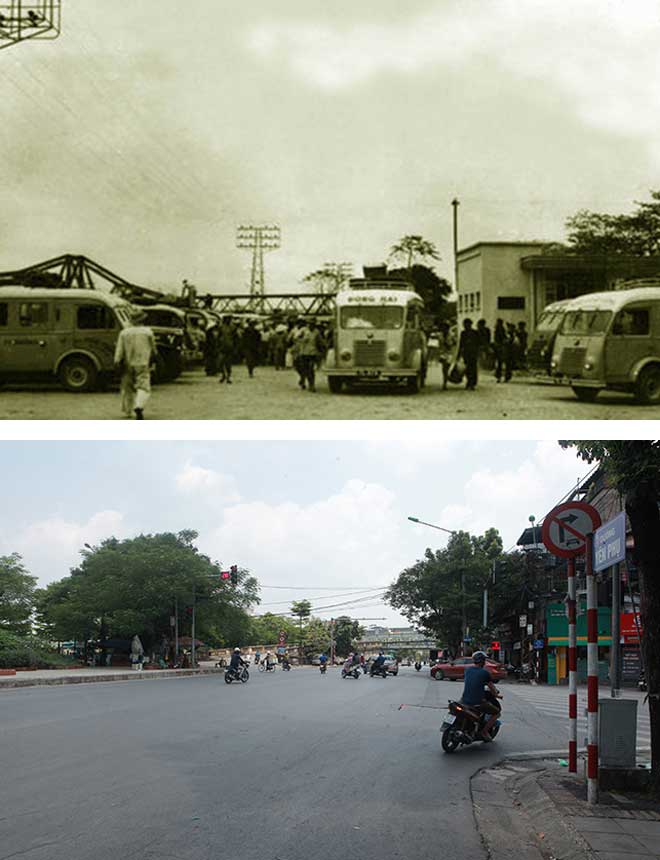
The boundary between Long Bien bus station and Yen Phu street is fenced off, from the section opposite Hang Than slope to the road leading to the bridge, opposite the beginning of Hang Dau street. A contrast between the past and present.
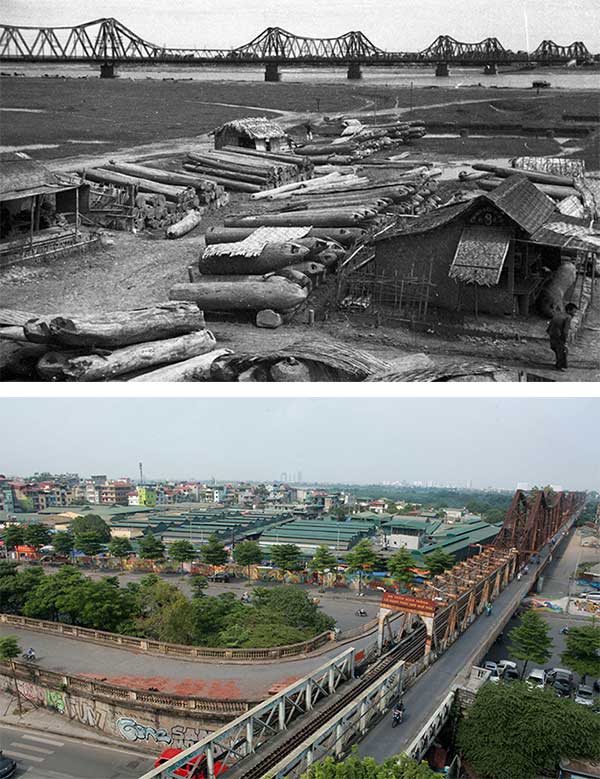
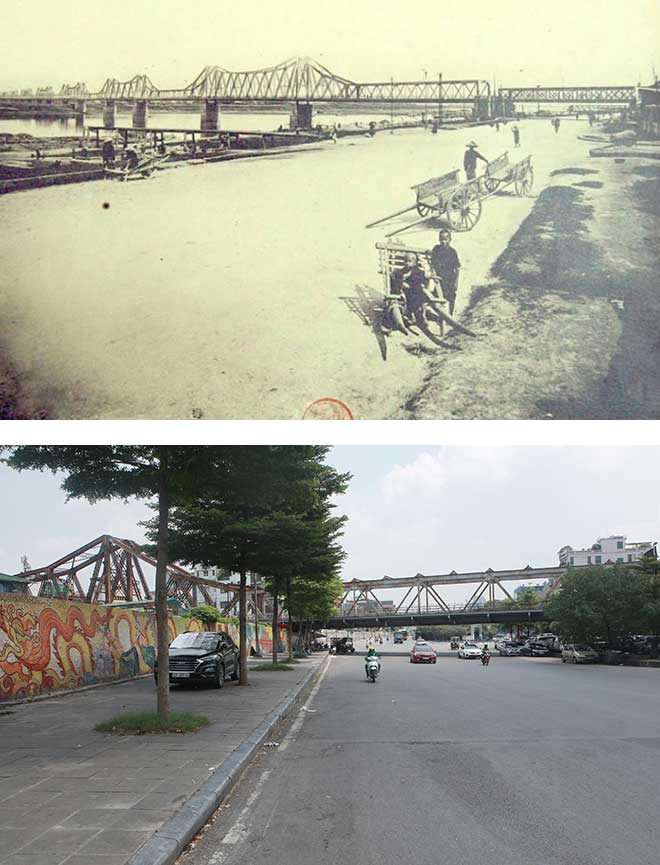
In the past, the banks of the Red River were filled with bamboo rafts; today, along the Red River at the foot of Long Bien Bridge, there are scattered floating houses where homeless people live. The old Ben Nua Market is now the Long Bien wholesale market .
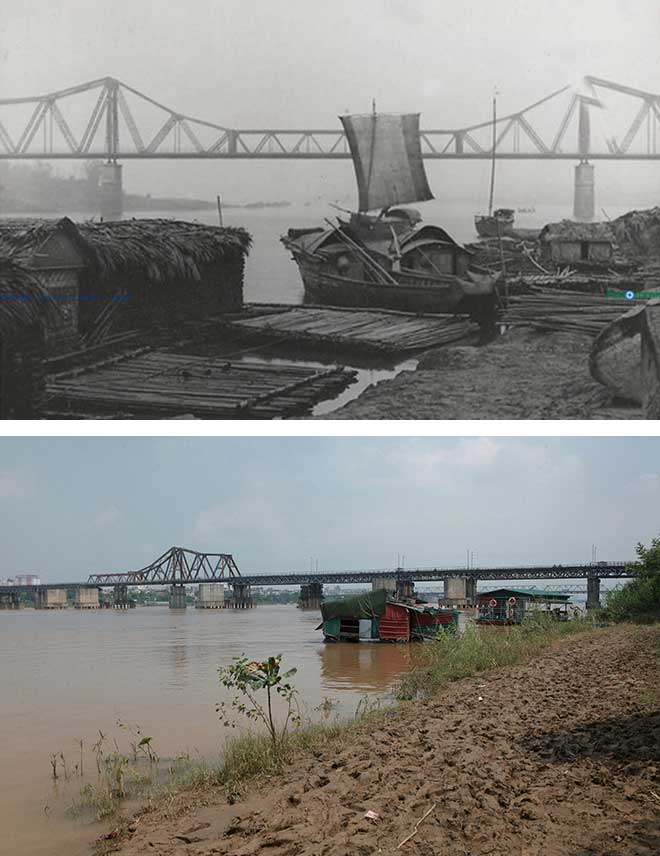
Images of the Red River bank at the foot of Long Bien Bridge, then and now. In the past, it was bustling with boats carrying bamboo; now, there are only a few floating houses.
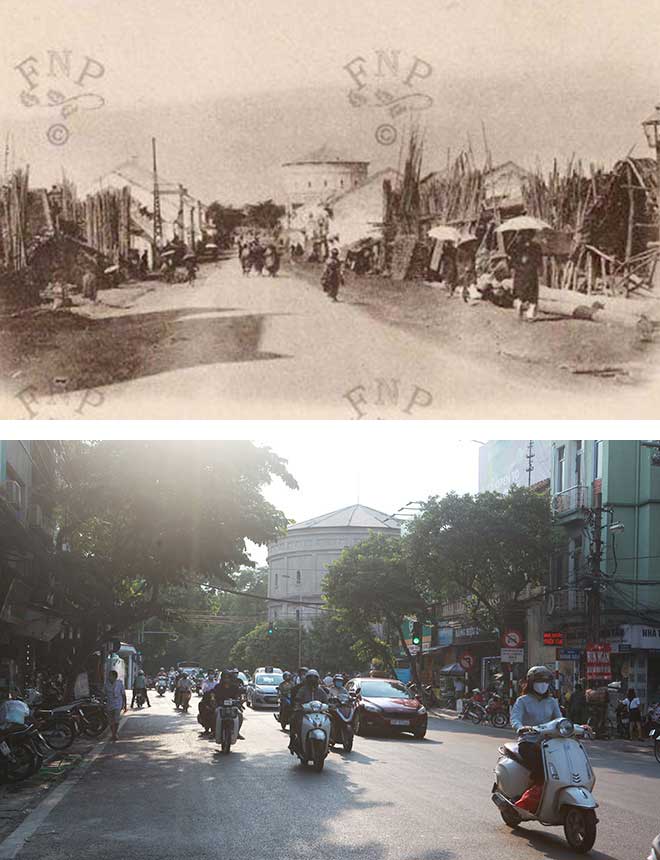
The bamboo and rattan market on Hang Dau Street in 1906 featured sparsely spaced houses and a dirt road. Currently, it's a paved road with densely packed houses and a bustling flow of people, with motorbikes and cars bumper to bumper.