Few people know that this toxin can also increase the risk of lung cancer just like cigarettes .
Cancer is no longer a rare health problem. Anyone can be at risk of getting this disease and the places we live can potentially contain many toxic substances that cause cancer. Among them, asbestos is a substance that was once recommended to be avoided because of its high toxicity. In the United States, Japan and many other countries, the use of asbestos in daily life has been banned. But unfortunately, many people still try to use it without knowing how dangerous it is.
Learn About Asbestos
According to the Ministry of Health, asbestos is a double silicate of Calcium (Ca) and Magnesium (Mg), containing SiO 2 found in nature.
Asbestos includes 02 groups:
- (a) Serpentine Group : Chrysotile (White Asbestos) has a twisted form and is also the only type of asbestos fiber still commercially consumed on the market today. While many developed countries have banned the use and consumption of all forms of asbestos, some countries, especially developing countries and in Vietnam, white asbestos continues to be used;
- (b) The Amphibole group includes: Actinolite, Amosite (Brown Asbestos), Crocidolite (Blue Asbestos), Tremolite, Anthophylite. The Amphibole fiber group has a straight, needle-shaped structure, commonly called colored asbestos, which has been banned in many countries around the world and has been out of circulation since 20 years ago.
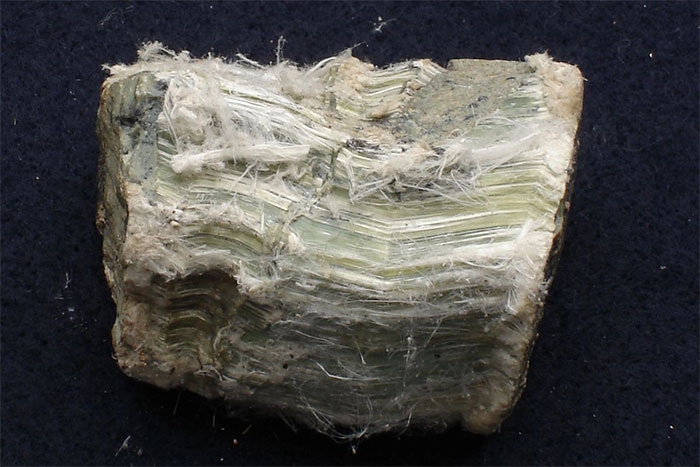
Asbestos has long, thin, separate, and very soft fibers.
Products using asbestos : construction industry, insulation, electrical insulation, soundproofing, brake pads, shipbuilding. Asbestos is also used in defense technology, space travel, nuclear power plants.
What are the negative effects of asbestos on human health?
Asbestos has long, thin, detachable and very soft fibers. These fine fibers can remain suspended in the atmosphere and water for weeks or even months. If asbestos enters the human body, it can cause great harm to the lungs. In addition, the incubation period of asbestos is very long, up to 20 - 50 years . From this you can imagine the extent of the impact on the lungs if not detected in time.
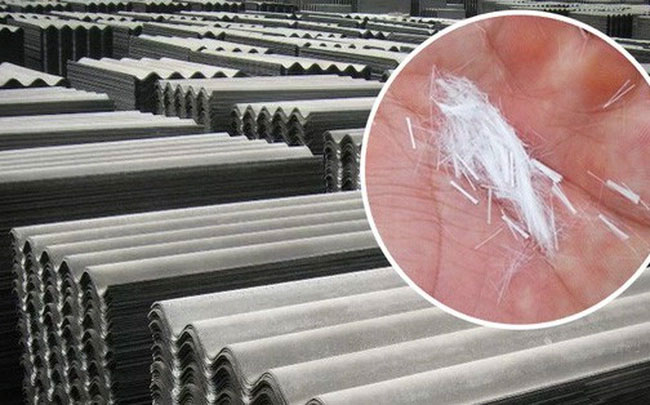
Asbestos has good fire resistance, so this substance naturally becomes a fireproof material. (Illustration photo).
In addition, asbestos has excellent fire resistance and insulation properties, so in everyday life, this substance naturally becomes a fireproof material. For that reason, it is also widely used in many places and has a silent impact on human health.
So where does asbestos usually hide? How can we prevent it?
Asbestos is used in many different environments such as homes, schools or some office buildings, home electronics, household appliances, ceramic tiles and many substances used in cars such as seat cushions and brake pads. It can be seen that asbestos appears in many places so people need to pay attention to precautions in daily life, especially in some industrial areas. During the process of removing asbestos, you should also wear protective equipment to prevent the spread of this substance.
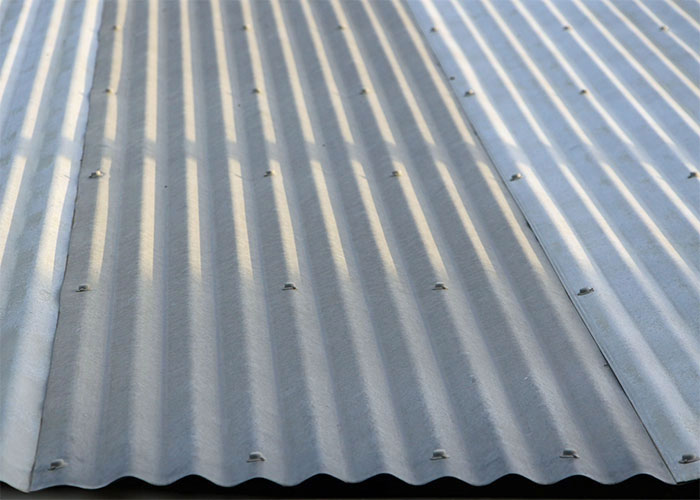
These fiber cement roofing sheets all contain toxic asbestos.
Canada used to be the largest producer of asbestos, but people's health was greatly affected by asbestos. Later, many European and American countries also began to restrict the use of this substance. The United States, Japan and other countries have banned the use of asbestos.
Also according to information from the Ministry of Health, all types of asbestos, including white asbestos (Chrysotile) are confirmed to be harmful to health. After 40 years of research, since 1973, the International Agency for Research on Cancer (IARC) of the World Health Organization (WHO) has had enough evidence on humans and experiments to classify all types of asbestos into group 1 as carcinogens in humans.
The IARC Special Issue 100C in 2012 concluded after reviewing hundreds of studies published in international journals that: 'Despite differences in toxicity levels in studies published by many authors, the general conclusion is that all types of asbestos, including chrysotile, are carcinogenic' and there is no safe threshold for carcinogens. The United States, Germany, Australia, and the European Union all affirm that all types of asbestos, including chrysotile, are carcinogenic to humans.