The next evolutionary step in ants has been found in the chimera ant, surprising scientists .
The yellow chimera ant (Scientific name: Anoplolepis gracilipes ), like many other invasive species, is trying to colonize new lands and adapt to produce as many worker ants as possible.
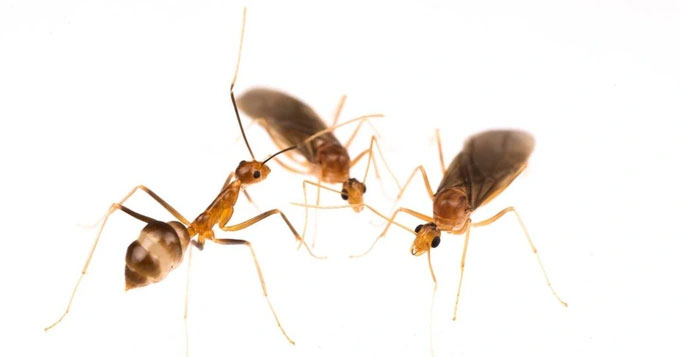
The chimera ant has a unique reproductive method, previously unknown to science. (Photo: Getty).
Recent research has discovered that they use a reproductive method previously unknown to science.
Typically, male chimera ants are single organisms made up of two genetically distinct cell populations, meaning they always carry the same two sets of chromosomes in all cells of their body.
However, the researchers found something strange was happening with the male ants, as some individuals contained only one of the two sets of genes.
They hypothesize that these male ants may develop from fertilized eggs when the two parent gametes fail to actually fuse, leaving them diploid.
The study suggests that the cell nuclei of male and female ants undergo separate divisions within the same egg.
This results in adult males that have both the DNA sequences of the father and mother ants, but in different body cells.
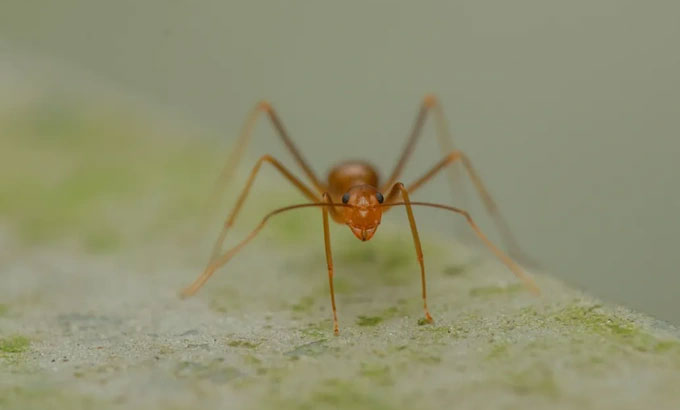
Ants are considered one of the world's most feared invasive species. (Photo: Getty).
'This is a unique case ,' said study author Dr. Hugo Darras of Johannes Gutenberg University Mainz. 'This process is in contrast to known cases of chimera ants, where there is virtually no cell exchange between them.'
Evolutionary geneticist Waring Trible of Harvard University, believes this is a conditional evolutionary step that occurred in chimera ants , for reasons that we still don't know. "It could be considered the next evolutionary step in ants ," he asserted.
In nature, most animals develop from sperm cells and egg cells that fuse into one, then combine their DNA.
As an organism grows, all subsequent cells, except sex cells, will carry two sets of DNA-carrying chromosomes, with one set of chromosomes from each parent.
In other words, these somatic cells all carry the same genetic information. Sperm and egg cells contain only one set of chromosomes.
However, with the chimera ant, a strange method of reproduction has emerged. Evolutionists believe that this will be beneficial to the chimera ant , because it helps the ant avoid any possibility of inbreeding, a trait often seen in other invasive ant species.
There are an estimated 20,000 species of ants, but the reproductive systems of most of them are still unclear to science. Ants are also considered one of the world's most feared invasive species.