If we were to name a country famous for its unique architectural structures that leave a deep impression on the viewer, we would definitely not miss China. In this country, many buildings seem to have such creative designs that it is hard to believe. The Shanghai Center is one such structure.
China's tallest building
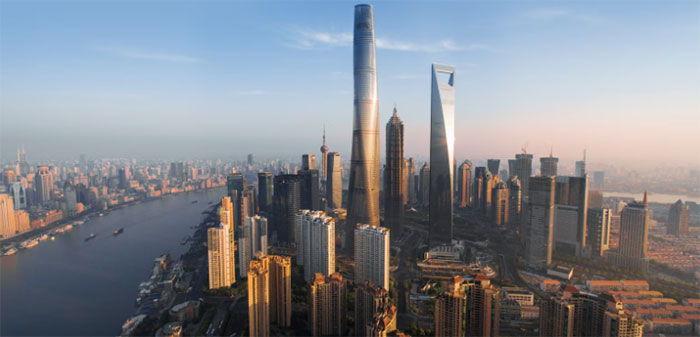
The Shanghai Center building is 128 stories high, equivalent to a height of 632 meters. (Photo: The Guardian)
Shanghai Center, also known as Shanghai Tower , was built from November 2008 and completed in the summer of 2015. Shanghai Tower is located in Lujiazui, Pudong, Shanghai. The building is 128 floors high, equivalent to a height of 632 meters . Shanghai Tower is known as the second tallest building after Burj Khalifa and is also the tallest building in China. After completion in 2015, the Shanghai Tower with a height of 632 meters easily surpassed the tallest building in the United States with a total height of 541 meters at that time.
Shanghai Tower was designed by New York-based architecture firm Kohn Pederson Fox Associates , which has offices around the world. The building has a floor area of 377,000 square meters and is home to about 12,000 office workers on 70 floors. The building has business space and a conference center below, and a hotel above.
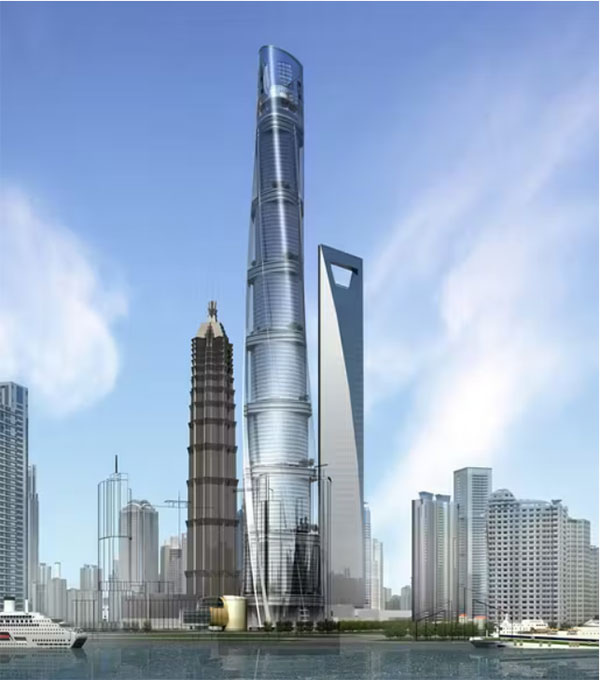
At 632 metres tall, the building easily surpassed the tallest building in the US. (Photo: The Guardian)
Because Shanghai is a sandy plain area, often affected by weather phenomena such as storms and earthquakes, making this skyscraper stand firm was a big challenge for the design and construction team.
Architect Tim Johnson, who chaired the Council on Tall Buildings and City Planning's selection committee, described the tower's design. The steel truss, which can withstand wind and earthquakes, makes the building lighter, requiring less steel and helping to reinforce its stability.
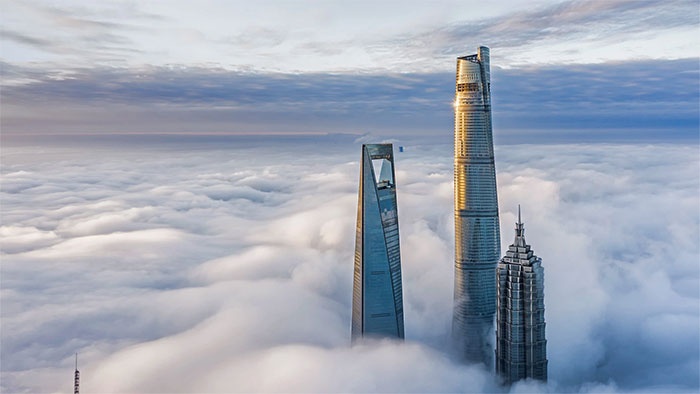
The estimated weight of this building is around 850,000 tons. (Photo: The Guardian)
To complete the foundation of the building, more than 2,000 workers had to bury hundreds of support piles deep underground. More than 61,000 cubic meters of concrete were prepared and poured continuously for 60 hours to create the foundation for the Shanghai Tower. In addition, to help the building structure stabilize in strong winds, this project was designed with a special spiral cylinder shape. The estimated weight of this tower is about 850,000 tons.
Shanghai Tower has 9 stacked cylinders with all exteriors covered with 2 layers of transparent, highly reflective glass to reduce heat absorption. The building's railing system is also designed in a spiral shape, absorbing a large amount of heat to regulate the air and heat the building.
The building has a strange design
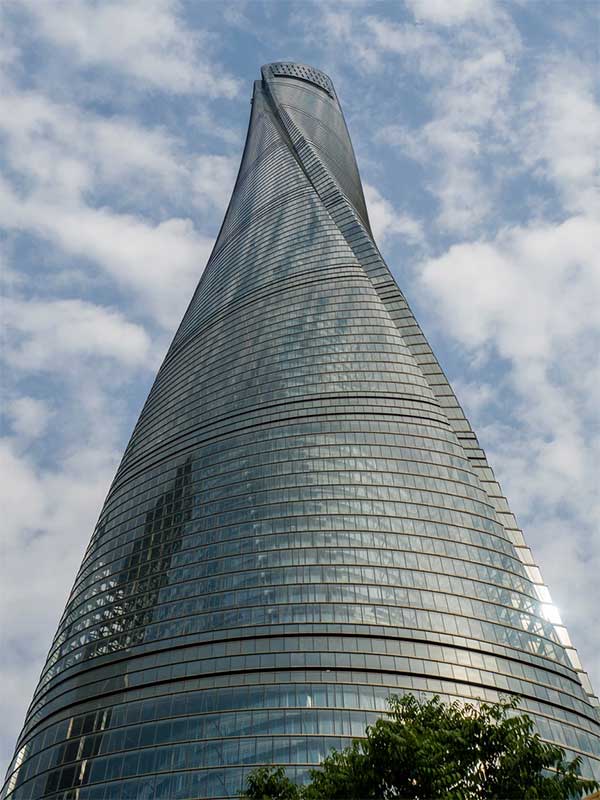
Although the Shanghai building holds many records, in the eyes of many people, its design is too abstract. (Photo: The Guardian)
Although the Shanghai Tower holds many records, in the eyes of many people, its design is too abstract. The reason for this opinion is because the building is designed in a spiral shape, especially the top of the building pierces the clouds, making people feel that it is not real.
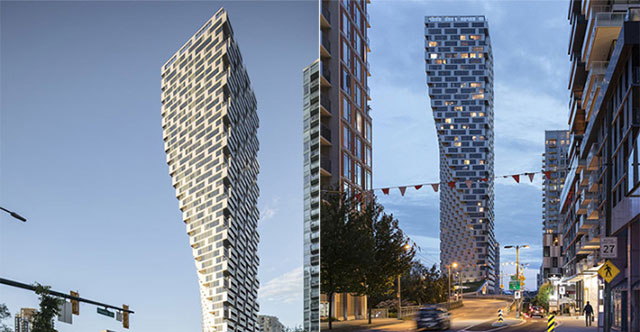
The design of the Shanghai Tower is considered "unique". Unlike the square exterior of normal buildings, the Shanghai Central Building gradually twists as it goes higher, making anyone who sees it at first glance think it is distorted or crooked.
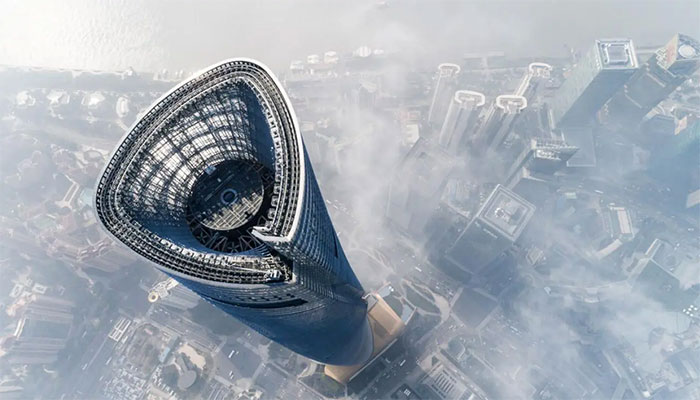
The architects explained that the design of the Shanghai Center building was to better adapt to Shanghai's climate and reduce damage caused by strong winds. (Photo: The Guardian)
The architects explained that since Shanghai is a coastal city in eastern China, it is often affected by strong typhoons in the summer. The building was designed in this way to better adapt to Shanghai's climate and reduce the damage caused by strong winds. Thus, when strong winds pass by, the curved surface of the building will have a certain adjustment effect, and can even withstand a level 12 typhoon. The conical shape gives the impression that the building is "dissolving" into the sky.