Electric eels can generate electricity up to more than 800V, the question is why this electricity does not cause damage to the electric eel itself .
The electric eel is the largest fish in the eel family, famous for its unique ability to discharge electricity. Originating from South America, it mainly lives in the Amazon and Orinoco river basins. This fish is also known as Electrophorus electricus and is currently classified as an endangered species in the Red Book.
First, we need to understand the mechanism of how electric eels generate electricity. In essence, almost all animals have the ability to generate electricity. It is a process that occurs every time a nerve or muscle cell is activated, it generates a small amount of electricity.
This electricity is used to perform vital tasks from regulating the heartbeat to helping the animal's body move. You can imagine each cell in an animal's body as a battery that produces energy.
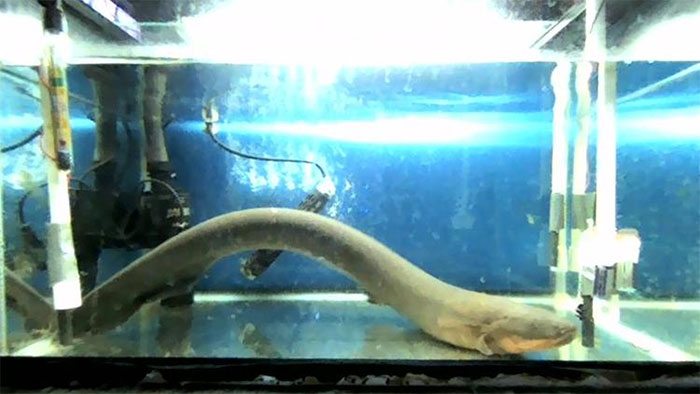
An experiment measuring the electric current of electric eels.
What makes electric eels unique is that each of their cells is like a battery, carrying a charge of just under 100 volts. Electric eels generate large currents using a highly specialized nervous system that synchronizes the activity of disc-shaped electricity-producing cells arranged in a miniature 'power plant' along their long bodies.
The electric eel's nervous system does this through a command nucleus that decides when the electric organ will fire. When the command is given, a complex array of nerve fibers ensures that thousands of cells are activated at once, no matter how far away they are from the command nucleus.
When a control signal arrives, the nerve ending releases a small amount of acetylcholine, a neurotransmitter. This creates a temporary, low-resistance pathway connecting the inside and outside of one side of the cell. Each cell thus acts like a battery, with the activated side carrying a negative charge and the opposite side carrying a positive charge. And when these 100-volt batteries are activated, the entire system can produce up to 860 volts of electricity, about three times the voltage of an average electrical outlet in Vietnam.
What happens to electric eel victims?
The terrifying voltage of up to 860 volts emitted by electric eels can paralyze large animals or even kill them, thus creating a notoriously dangerous brand for electric eels.
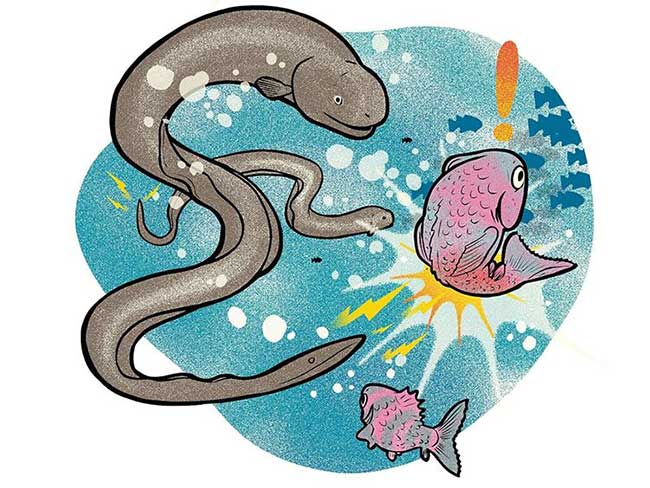
The most common victims are individuals who are unlucky enough to come close to an electric eel. In some cases, other electric eels are also affected by the current.
Normally, every animal has a 'bioelectric circuit' within it. First, the electric eel's current will affect this bioelectric circuit and cause dysfunction. For example, triggering abnormal muscle contractions can paralyze an animal, allowing the eel to eat it or escape.
In worse cases, the prolonged paralysis can be directly fatal to an electric eel victim.
How do electric eels not harm themselves?
The electric eel's internal 'power plant' is turned on, creating a short-lived current that runs through the eel's body. If the eel is exposed to air, the current can reach as high as 1 amp, making the creature's body the equivalent of a 500-volt battery. But if it's underwater, the eel generates a higher voltage, but the current is diffused by the water, reducing the voltage.
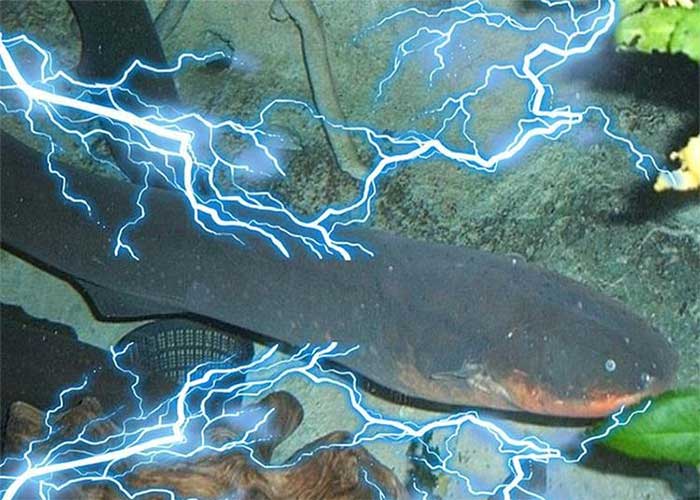
In addition, the severity of an electric shock depends on the amount and duration of current flowing through any given area of the body. For comparison, an eel's body is about the size of an adult man's arm. To cause an arm to contract, 200 milliamps of current must flow through that arm for 50 milliseconds.
An eel is not in much danger because its electric current only flows through its body for 2 milliseconds before it is released outside. In addition, because the resistance of the eel is greater than that of water, a large part of the current will be dissipated into the water through the oily skin. This reduces the level of damage the electric current causes to the internal organs of the electric eel such as the brain or heart.
Furthermore, when activating the electric current, the electric eel has also instinctively perfected the technique of discharging electricity to cause the least harm to itself. The bending movements of the electric eel will keep the sensitive parts of its body away from the electric current at a safe distance.
When generating electricity, eels will try to push their brain organs to the front of their bodies. This is a position out of the direct path of the electric current and is surrounded by a thick layer of fat that helps increase insulation.
All of the above reasons help electric eels avoid damage from their own electric shocks.
