We know a lot about what happened in the past through the recovery and study of archaeological artifacts. However, there are still mysteries in the past that we still cannot fully understand.
As time passed and humans began to evolve, language and writing developed. Our knowledge is largely recorded only since then, from cuneiform, Egyptian hieroglyphs and Greek texts written by historians of the time. We can read, understand and interpret the contents of these ancient works.
The frustrating thing about human history is that before cultures began to write, we have no idea what their cultural practices were. What archaeological artifacts from that time period represent or what their specific purposes were. Or simply whether small non-tool objects were used in some people's religious traditions.
There are still so many things that we still cannot explain clearly to this day. It makes us search for answers, speculate and come up with theories from logical to illogical in this desperation to discover about the past of mankind.
One of these ancient and puzzling finds is a dogū figurine made in prehistoric Japan.
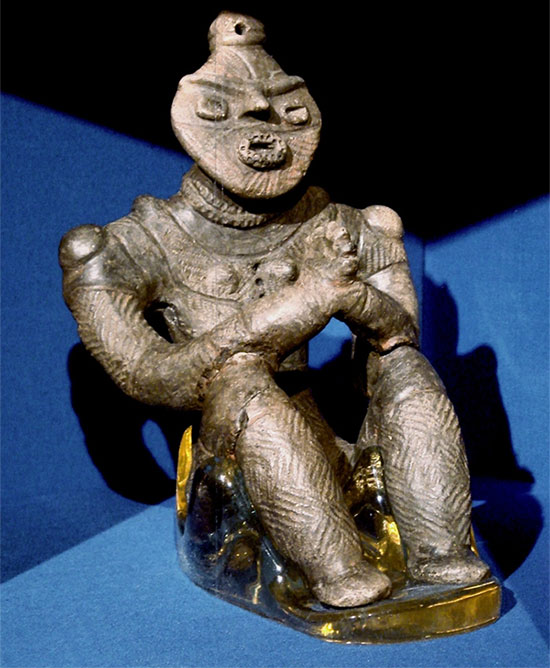
Dogū figurines made in prehistoric Japan.
Dogū, meaning "earthen statue" , are small clay figurines of people or animals created during the late Jōmon period of prehistoric Japan. What makes dogū figurines so fascinating is that scholars do not know what these figurines were made for or what they represent.
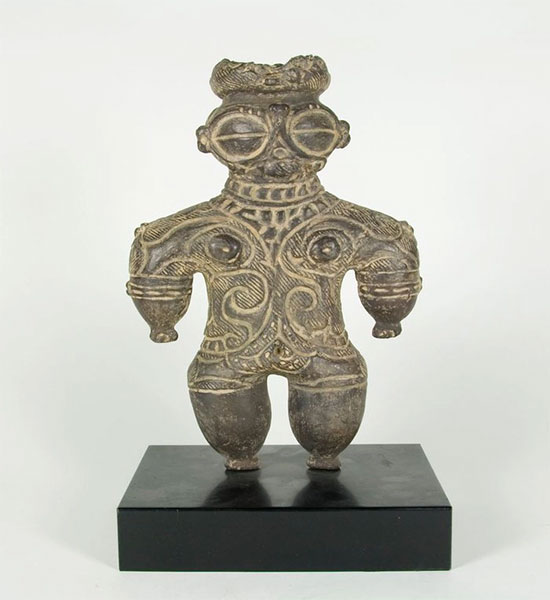
The statue was created in the late Jōmon period of prehistoric Japan.
The Jōmon period was actually a long period, a period in Japanese history that lasted from 14,000 to 300 BC. At that time, the Japanese people were hunter-gatherers. Early agricultural communities were also formed during the Jōmon culture period .
During the early Jōmon period, the first forms of pottery in Japan developed. In 1998, American archaeologist and zoologist Edward S. Morse found the first pottery fragments from the Jōmon period.
Morse himself named the period; Jōmon means "cord marking". Pottery styles from the early Jōmon culture were decorated by pressing cord into wet clay to form various designs and textures.
We do not know what the specific purpose and significance of these figurines were because writing in Japan did not begin to develop until the 6th century AD, long after the dogū was created. Dogū were only created during the Jōmon period, and by the time the next period of Japanese prehistory occurred, dogū figurines were no longer created.
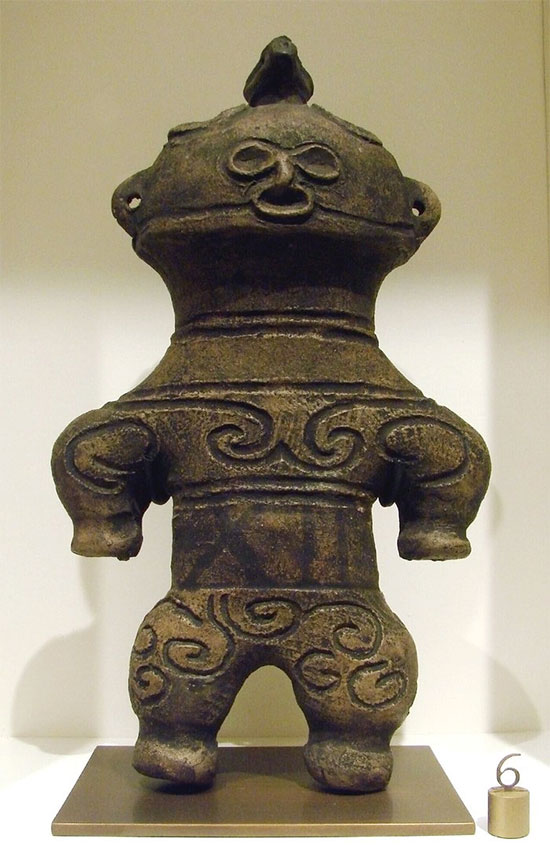
Dogū was only created during the Jōmon period.
All theories and interpretations of what the dogū figurines represent are speculative and are one of the many reasons why these small clay figures are so mysterious. In fact, we know that there are several different styles of dogū sculpture, largely depending on where the artifacts are found and the time period in which the dogū were created.
Why these styles developed is also part of the mystery of dogū.
The dogū figurines are small and range in size from 10 cm to 30 cm, with most of the dogū found having a female body shape. Common features include large eyes, a small waist, wide hips, and sometimes a large, pregnant belly.
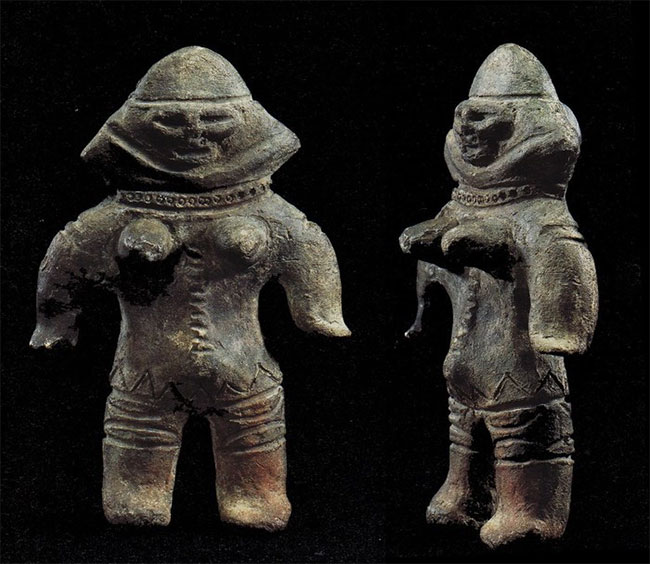
There are several different styles of dogū shaping.
Many scholars believe that these figurines are representations of a mother goddess in ancient Japanese civilization. This is suggested by the dogū's resemblance to other Neolithic figurines such as the Venus of Willendorf. It is possible that the dogū were items associated with fertility and shamanic rituals.
The dogū's appearance looks as if it is wearing swimming goggles or has a distinct heart-shaped face. Interestingly, most dogū found have markings on their face, shoulders, and chest that may indicate they are tattooed.
There are four different forms of dogū : the "pregnant woman type", the "horned owl type", the "squinty-eyed type", and the "heart- or crescent-shaped eyebrow type" . The squinty-eyed type, also known as Shakōkidogū , has become so popular and recognizable that many Japanese people think of Shakōkidogū when someone mentions dogū characters.
The goggle-wearing dogū gets its name from shakōki , literally "light-blocking device". The goggles are similar in appearance to the traditional snow goggles of the Inuit and Yupik peoples of Alaska and Siberia.
It is rare to find an intact dogū. Most dogū that are found are missing a leg, arm, or other body part. While some are broken, there have been some dogū found whose limbs have been deliberately severed.
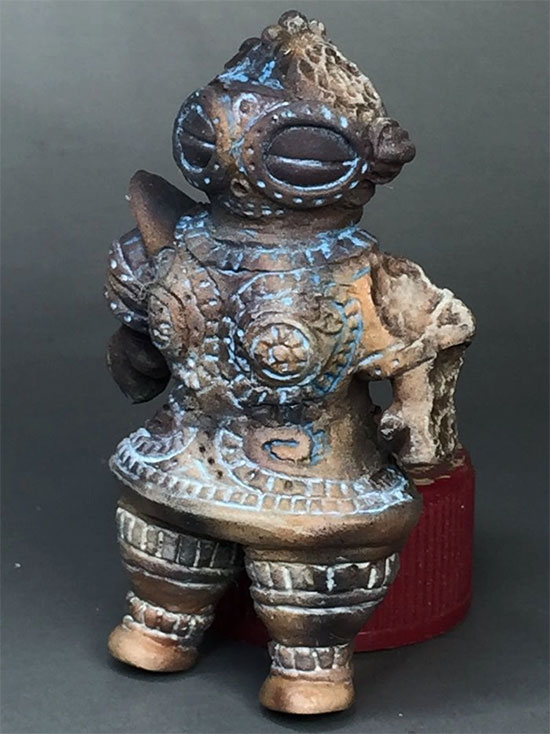
It is very rare to find an intact dogū.
We will probably never know what the true purpose of dogū was. Since there was no written language at the time they were created.
It is believed that dogū were created and owned by women (there is no evidence that they were created by women or who would own them, so this is purely speculative) and are symbols of rebirth and fertility .