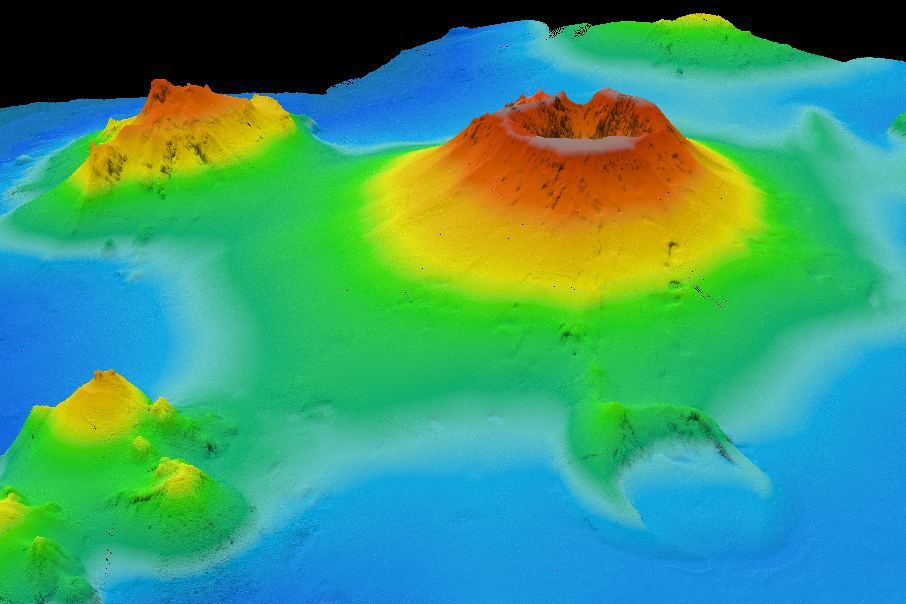
New Zealand scientists discovered dozens of animals that have never been known in a large-scale survey at the southernmost tip of the earth.
Experts from New Zealand Water and Climate Research Institute surveyed Antarctica in February and March. They collected data of 30,000 species, including many new species, in 35 days here. The survey is part of a census of Antarctic flora and fauna program.
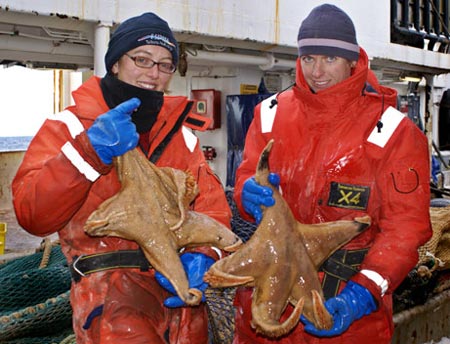
Two experts, Sadie Mills and Niki Davey of New Zealand's Water and Climate Research Institute, hold sea stars with a width of up to 60 cm.
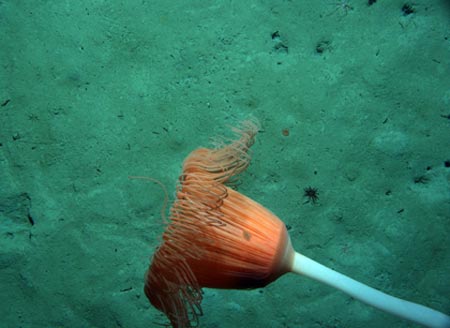
This may be a new aquatic species. Its head has a diameter of 6.5 cm, and its body is 100 cm long. Scientists found it on the surface of the Antarctic continental shelf.
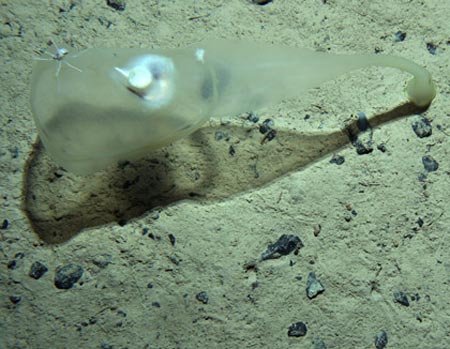
A mysterious animal swims at a depth of 2,200 m above the water in the Ross Sea of Antarctica. The animal is about 50 cm long and has a small hard shell on its back.
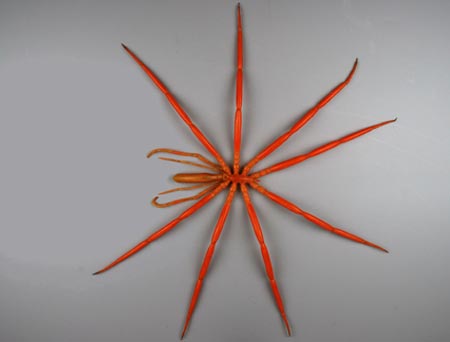
Scientists found this new sea spider in the Ross Sea of Antarctica. It has a length of up to 25 cm. Low temperatures, less enemies, abundant oxygen in seawater are the reasons they are larger than most sea spiders.
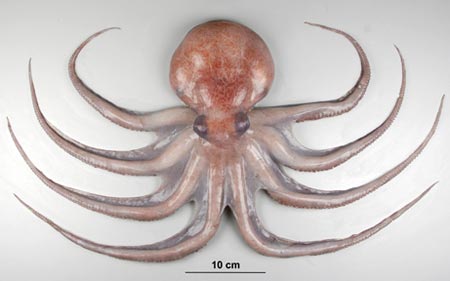
The octopus was discovered at a depth of about 1,000 m in the Ross Sea of Antarctica.
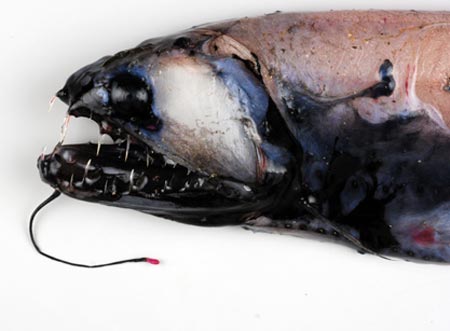
The predatory fish's jaw emits red light. They use that light to lure prey into their mouths.
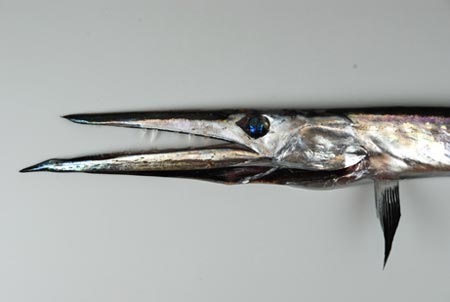
The body of this predatory fish is about 50 cm long and emits many colors. They own dagger-shaped teeth and jade green eyes.
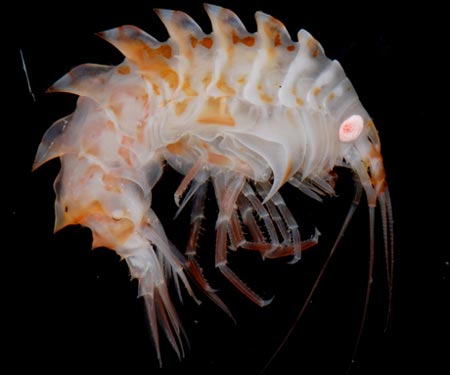
This is a shrimp-like crustacean found at a depth of 300 m under the Ross Sea, Antarctica.
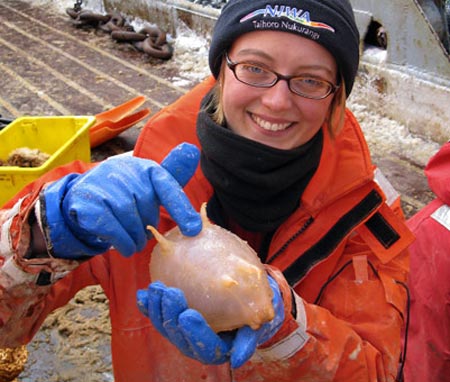
People call the creature in the image a melon or a manatee. They live on the ocean floor with sea urchins, starfish, squid, corals, clams and many other species.
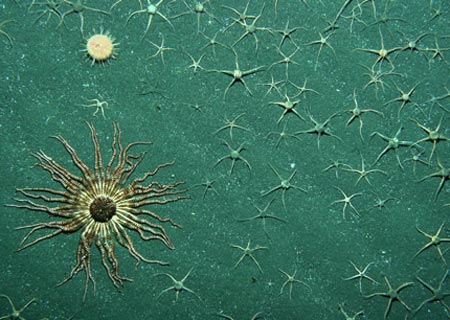
Ultra-high resolution cameras found Labediaster starfish at a depth of 150 m below the surface of the Ross Sea, Antarctica.