Many people are impressed by the resilience of beach palms. After storms, many plants are destroyed, but palms often survive. So why?
Why Palm Trees Can Survive Tornadoes and Hurricanes
If you have ever watched footage of hurricanes or typhoons hitting land, no matter where you are, you have a good chance of seeing a familiar image. That is fierce winds and strong waves knocking down, knocking down or uprooting trees. However, when famously sturdy trees such as pine, oak or acacia fall, most palm trees (palms, areca, coconuts…) show their resilience, bending in the wind but still holding on to the harsh weather conditions.
And the secret to that resilience is because these palm trees have been blessed by Mother Earth with special characteristics that help them withstand damage caused by storms.
Palm is not a tree
Palms are monocots . Palm seeds typically contain just one cotyledon, meaning they produce just one leaf when they germinate. Palms are members of the Arecaceae family, a group of plants that has been around for about 100 million years. The family includes about 181 genera and about 2,600 known species. Although palms are called trees, they are monocots, meaning they are more closely related to grasses, corn, and rice than other plants, according to Uriarte. Palms have a single trunk and triangular leaves called fronds that grow from the top.
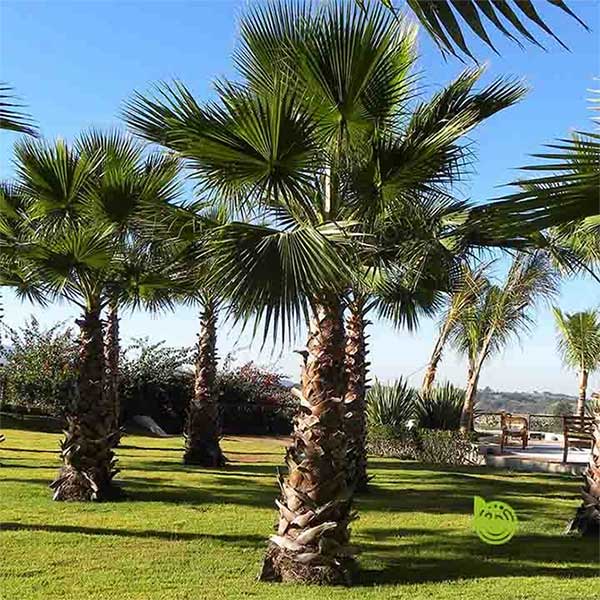
Palm trees are not woody plants like many other plants.
Simply put, palms are not your typical woody plants. They are grasses and have more in common with grasses than trees. This makes palms flexible despite their large size. Some palms can bend 40 to 50 degrees before their trunks tear or break. This flexibility makes palms prime candidates for withstanding strong winds and even tropical storms.
"In a hurricane, palm trees are very pliable, so they can move with the wind and the fronds often fall off, but they can grow back very quickly once the storm has passed. That makes palm trees very storm-resistant ," explains Maria Uriarte, a forest ecologist at Columbia University.
Palm trees bend easily in the wind because their trunks are rich in fibers and relatively wet. When cut, the trunk looks like a bundle of fibers used to transport water and nutrients. The trunk is also quite soft, making it more flexible. This flexibility makes the palm tree well adapted to areas with high winds and storms.
Few branch palm tree
Have you ever noticed that palm trees usually have very few branches? Well, some palms do have branches, but they are much fewer than any other tree that lives in coastal areas.
And although palm trees do have branches, most of these branches fall off as they grow. When they reach maturity, palms usually only have the top branches remaining.
Having no branches means that the palm tree does not have to carry as much weight on its trunk. This also reduces the 'load' when it is exposed to strong winds. Fewer branches also help ensure that the tree does not sway back and forth too much when a storm hits.
Palm leaves
While some other trees have a dense network of branches and leaves to absorb maximum sunlight during photosynthesis, palm trees have relatively few leaves but are very large in size. More specifically, palm leaves can fold from the middle, reducing the surface area and significantly reducing the tree's air resistance in strong winds.
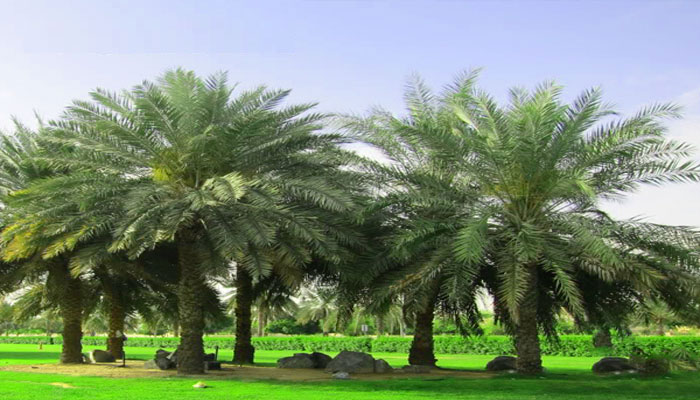
Palm roots are usually short, extending into the top layer of soil.
Unique root system
Oaks and many other large trees have strong roots that extend several meters underground. Palms, however, have a very different root system. They are short and spread out in the top layer of soil, allowing the tree to anchor itself to a large area of land.
Palm trees are difficult to uproot. This is because they have a unique root system, made up of a large number of short roots that spread out across the topsoil, helping to anchor the tree in place.
If the root system of a tree has many roots growing horizontally under the ground, when there is a strong wind, this force will be transmitted to the roots and spread in many directions. This helps prevent the tree from being uprooted quite well. It can be said that the unique root system is the reason why palm trees can 'withstand' hurricanes and violent storms.