No one could have imagined that this odorless, colorless gas could incapacitate a person so quickly!
With the sudden drop in temperature, many families buy heaters or use dual-mode air conditioners to stay warm. However, not everyone can afford them, especially those in mountainous areas with underdeveloped economies. Burning charcoal for heating is their way of coping with the weather. Every year, there are cases of death or carbon monoxide poisoning due to burning charcoal for heating in enclosed rooms.
Dr. Le Hoan, deputy head of the Department of Endocrinology and Respiratory Medicine at Hanoi Medical University Hospital, said that burning honeycomb charcoal or firewood for heating in oxygen-deficient conditions produces CO2 and CO2, two gases unnecessary for the body. CO2, in particular, is an extremely toxic gas, colorless and odorless, so many people are unaware of it. They gradually experience shortness of breath and then faint or pass out while sleeping. Victims who inhale CO2 often suffer brain and heart damage; mild cases may result in respiratory illnesses such as asthma, bronchitis, and pneumonia, while severe cases can be fatal.
The question is, is burning coal gas potentially deadly?
Unfortunately, the answer is yes . You need to know that burning charcoal in a lack of air produces a highly toxic gas called carbon monoxide (CO) .
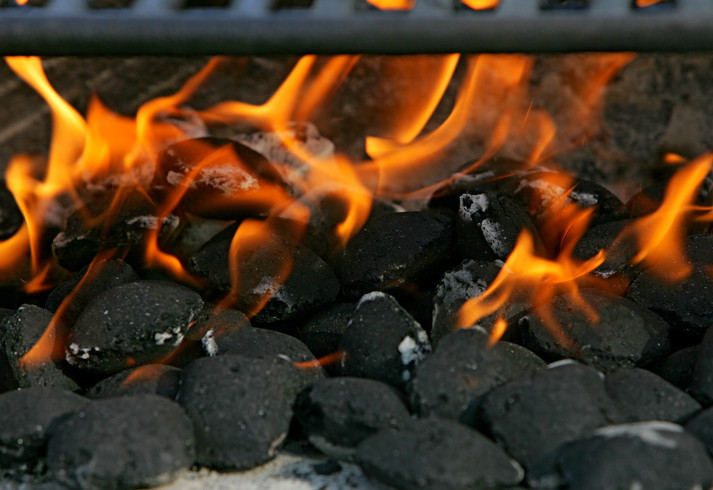
Coal gas releases a lot of CO – a silent killer.
Victims who inhale this gas in large quantities may die, while those who inhale less severely may suffer neurological and psychiatric sequelae.
How does carbon monoxide (CO) kill people?
To clarify, carbon monoxide (CO) is a colorless, odorless gas released from fuels such as charcoal, propane, methane, or petroleum that are partially burned (incomplete combustion).
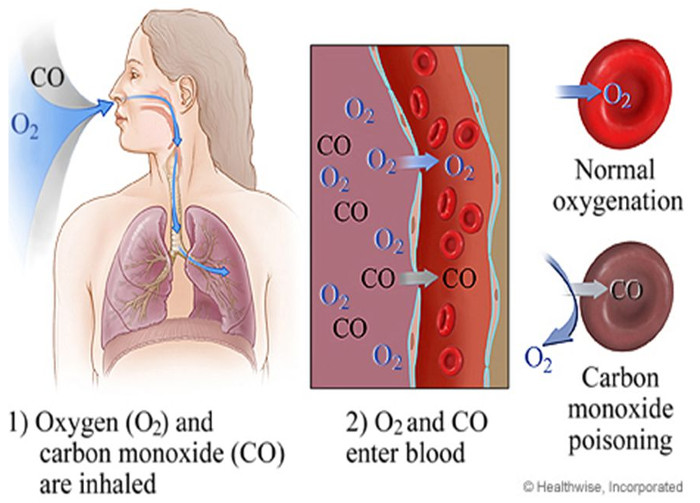
When the body inhales this gas, it enters the lungs and then the bloodstream, where CO combines with hemoglobin (red blood cells) in the blood to form carboxyhemoglobin (HbCO).
This substance inhibits the release of oxygen in cells, reducing the blood's ability to transport oxygen, leading to oxygen deficiency.
When red blood cell pigments run out of oxygen, the body also runs out of oxygen. In addition, carbon monoxide (CO) can combine with myoglobin (the pigment in muscles), damaging cells and creating an acidic metabolic environment.
Because it is a colorless, odorless, and non-irritating gas, even the victims themselves find it difficult to sense the presence of CO in the air.
Only when the victim begins to feel "unusual" sensations do their limbs become immobile, they fall into a coma, and eventually die. This is because carbon monoxide (CO) gradually infiltrates the body, causing a decrease in oxygen in the blood and in all organs.
The more oxygen an organ, such as the brain or heart, requires, the greater the risk to that organ.
Symptoms of carbon monoxide poisoning
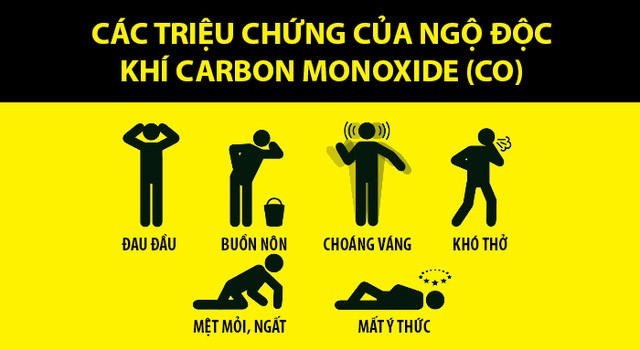
Symptoms of carbon monoxide poisoning typically begin with headache, nausea, dizziness, and difficulty breathing, gradually progressing to coma.
In more severe cases, victims will experience chest tightness, blurred vision, difficulty breathing, rapid pulse. their lungs will appear completely blocked and unable to function.
At this point, the victim may experience seizures, lose consciousness, suffer permanent brain damage, cardiac arrest, and death.
According to scientific research, even in the mildest cases of carbon monoxide poisoning, nearly 50% will experience mental health complications, neurological damage, and brain damage later on. The mildest symptoms may include varying degrees of memory impairment, and in some cases, coma or complete amnesia.
Therefore, Dr. Nguyen Trung Nguyen - Director of the Poison Control Center at Bach Mai Hospital - advises the public: Absolutely do not burn fuels such as honeycomb charcoal, firewood, charcoal, gas, etc., in enclosed spaces. If it is absolutely necessary to use them, do not use them in enclosed rooms; keep the doors open for adequate air circulation. It is best to choose other heating methods.
Another problem is that the current housing structures have significant ventilation issues; most are self-built and self-designed, and are very airtight without proper ventilation systems, or at least vents, or ways to pump air in from the outside and draw air out from the inside.
What should you do if you discover a victim has been poisoned by carbon monoxide (CO)?
If you suspect carbon monoxide poisoning, you must immediately remove the person from the area or open all doors and windows to allow fresh air into the house – do everything possible to stop the patient from being exposed to carbon monoxide.
If the poisoning is mild, the patient will quickly recover and regain consciousness. However, in more severe cases, artificial respiration should be performed, and the patient should be quickly taken to the emergency room.
The person providing first aid to the victim should also call for additional support, in case they are affected by toxic fumes.
Oxygen is considered the "antidote" for carbon monoxide poisoning. Therefore, during first aid, family members should immediately give the victim oxygen via a mask. If the victim experiences respiratory and circulatory arrest, cardiopulmonary resuscitation (CPR) must be performed, and the victim should be quickly transported to the nearest medical facility.
Dr. Nguyen Khanh Duong, from the Emergency Department of the University Medical Center of Ho Chi Minh City, advises people not to place charcoal stoves for heating in bedrooms, not to sleep in car garages, or to leave generators or power generators in enclosed spaces (basements, under staircases) to avoid carbon monoxide poisoning.
Heating with charcoal is even more dangerous for the elderly and young children, who have weak respiratory systems and low immunity. Placing charcoal indoors or in rooms for heating can also cause fires or severe burns. Therefore, people should limit burning charcoal for heating, especially families with new mothers and young children.
If you frequently use a charcoal stove for cooking, place it in a well-ventilated area. Do not place the charcoal stove in the bedroom or in a poorly ventilated area. Do not burn it overnight. Install a heater or a two-way air conditioner to increase the room temperature. Maintain the room temperature at 25-28 degrees Celsius, ensuring good ventilation but avoiding drafts. Avoid making the room too warm, as this can cause burns to infants or thermal shock when going outside in cold weather, increasing the risk of numbness, poor blood circulation, and even hypothermia or stroke.
- The truth behind the mysterious ape species that can hunt and eat lions in Africa.
- This is the oldest known map in the world, produced in Babylon approximately 2,600 years ago.
- The mystery of the Yangtze River dolphin: The world's only freshwater finless dolphin species.