We all know the terrible consequences of a comet colliding with Earth. But what would happen if Jupiter crashed into the Sun?
Scientists have hypothesized that one of the factors contributing to the extinction of the dinosaurs was a comet colliding with Earth. According to their calculations, this comet, with a diameter of approximately 10 km, was traveling at 40 times the speed of sound when it struck Earth. The collision created an explosion with the destructive power of up to 100 trillion tons of TNT.
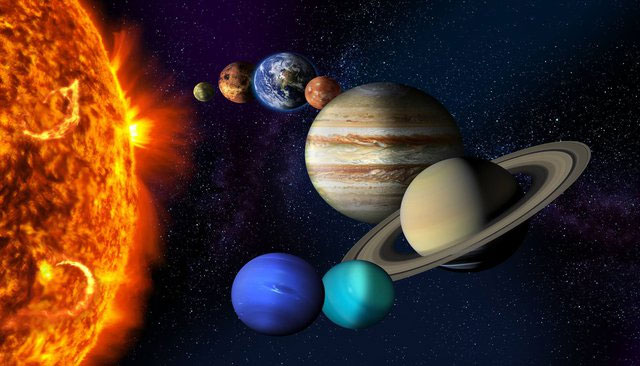
In the Solar System, Jupiter is the largest planet. (Image: Pixabay)
Meanwhile, the Sun has a total volume of 1.4122 × 10¹⁸ km³, enough to fit over a million Earths inside it. The Sun accounts for 99.9% of the mass of the entire Solar System. Jupiter, the largest planet in the Solar System, has a volume of 1.43128 × 10¹⁵ km³ , enough to contain 1,321 Earths with room to spare.
Jupiter has a mass 2.5 times that of all the planets in the Solar System combined. Despite its enormous size, Jupiter's mass is only about 1/1047th the mass of the Sun. If a comet colliding with Earth could destroy life, what would happen if Jupiter were to crash directly into the Sun?
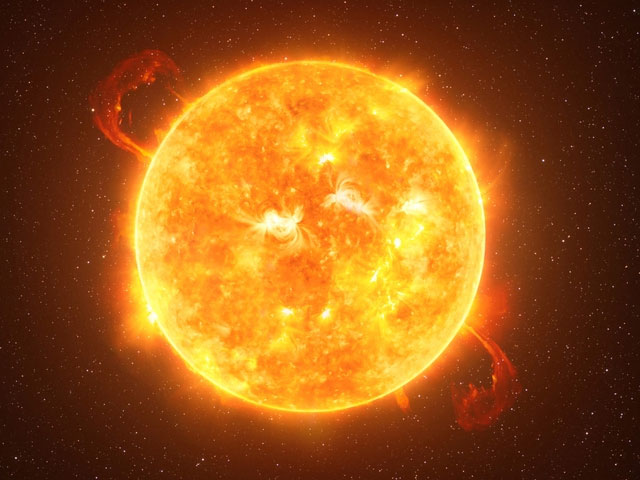
Despite its enormous size, Jupiter's mass is only about 1/1047th the mass of the Sun. (Image: Pixabay)
Terrible consequences
Many people compare the Sun to a giant ball of fire. This is because the temperature on the Sun's surface is incredibly high, around 5,700°C. Every minute and every hour, it radiates immense energy, emitting light and heat into the universe, including our Earth. The solar energy that our planet receives is only about 1/2.2 billionth of the Sun's total radiant energy. We can imagine the Sun's power as follows: if a 12-meter-thick layer of ice covered the Sun's surface, the Sun's heat would melt the entire layer of ice in just one minute.
Furthermore, the Sun possesses a gravitational force . This immense gravitational force has created a boundary called the Roche Limit . This boundary, along with the Sun's enormous energy, acts like a protective "wall" for it and tears apart anything that crosses it.
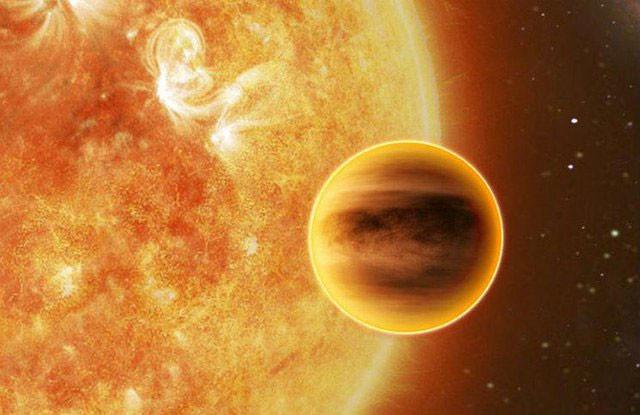
Jupiter could hold 1,321 Earths inside, but what would happen if it collided with the Sun? (Image: Pixabay)
Most stars, upon reaching the Roche Limit, are extinguished within a short time. However, if the star's mass and size can overcome this "wall" and penetrate the Sun's atmosphere , the Sun's gravitational pull will cause it to travel at a speed of 600 km/s. It will then be compressed by the Sun's ultraviolet and X-ray radiation, causing an explosion.
Jupiter is a gas planet without a protective atmosphere, so as it approaches the Sun, it will gradually melt due to the intense heat. The rare gases heavier than helium in Jupiter's atmosphere will gradually merge into the Sun, which will make the Sun's surface more active.
Although Jupiter's collision with the Sun wouldn't cause significant damage to the Sun, it would affect other planets , including Earth. The explosion would release a large amount of UV radiation and radioactive material. Furthermore, Earth's temperature would rise dramatically, causing the ice at the poles to melt, sea levels to rise, and consequently submerging low-lying coastal areas around the world. The world would have to contend with extreme weather events and many other terrifying disasters .