Marimo, also known as Aegagropila linnaei, is a type of algae commonly found in the northern hemisphere.
Marimo is a rare growth form of the algae Aegagropila linnaei, in which this aquatic plant grows in spherical shapes like large green balls with a velvety texture and appearance. This algae is also considered a natural treasure of Japan, as well as a popular pet.
The algae Aegagropila linnaei has long been considered a mystery in biology , not least because of its fascinating spherical growth form. This algae can only be found in a handful of aquatic environments in four countries: Iceland, Scotland, Estonia and Japan. They exist as free-floating filaments, growing on flat rocks. These 'green balls' can reach up to 40 cm in diameter. And obviously this biological life form has also attracted a lot of attention from scientists and algae enthusiasts for centuries.
Of the four countries mentioned above, Marimo (literally meaning 'water balloon plant') is especially popular in Japan. The large and impressive-looking algae are mainly found in Lake Akan, east of Hokkaido.
Given enough time to grow in the wild, the Marimo algae plants at Lake Akan can reach large sizes with diameters of up to 40 cm, much larger than moss balls found anywhere else.
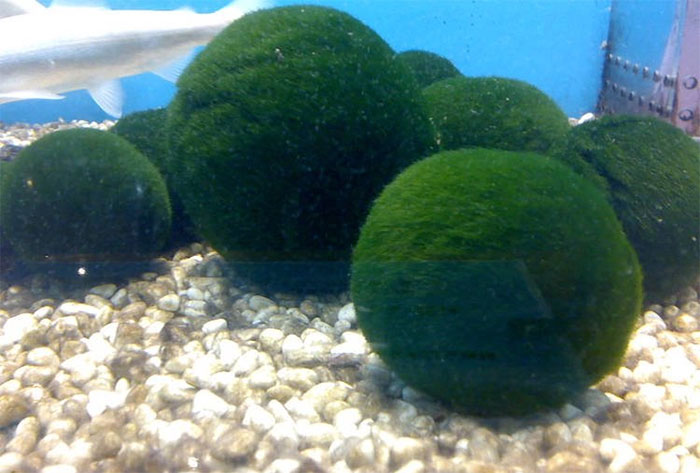
Marimo seaweed is considered a natural treasure of Japan.
Japanese algae enthusiasts have been fascinated by the beauty of Marimo for centuries, and it was declared a national treasure in 1921. But that actually made things worse for the algae, as the attention it garnered was turned into a commodity, and the number of Marimo in the wild has been dwindling. At one point, a Marimo ball in Tokyo could fetch as much as 1,000 yen (over $6,500 today). Now, things seem to have gotten even worse, with a water plant being built on Lake Akan, causing the water level to drop dramatically, killing hundreds of Marimo.
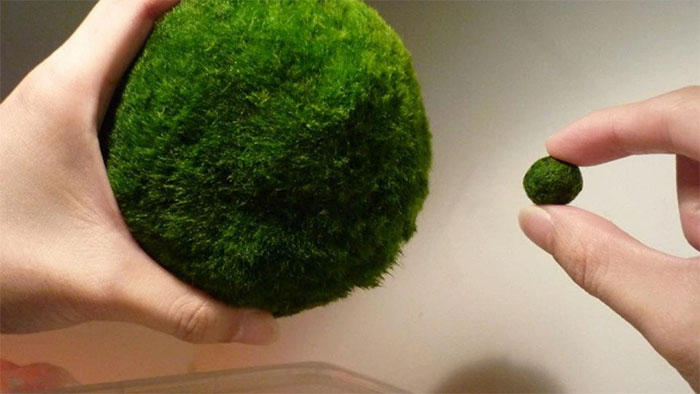
The algae Aegagropila linnaei has long been considered a mystery in biology.
Meanwhile, Japan's conservation efforts began in 1950, when photos of piles of dead Marimo were published in national newspapers and shocked the nation. In response, many people from all over Japan bought moss balls from Akan and returned them to their natural home. To honor their generosity, the world's first Marimo Festival was held on October 7, 1950, and it is still held annually to this day.
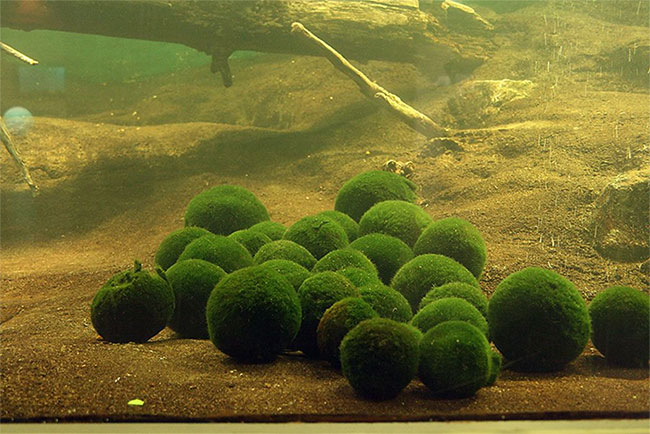
Marimo are sometimes sold for display in aquariums, these are often sourced from Ukrainian lakes such as Lake Shatsk. The ball-shaped Marimo sold in Japanese aquarium shops are either of European origin or bred by the locals of Lake Akan, shaped using light wave-making devices, harvesting them from Lake Akan is prohibited.
Nowadays, you can still buy Marimos as souvenirs and as 'pets', but they are artificially rolled from free-floating filaments, not the natural Marimos that are formed by the currents rolling at the bottom of lakes. However, they are still as soft and smooth to the touch as natural Marimos, and can literally last a lifetime, if cared for properly.
Also, Knockoff Marimo - a plastic ball with a thin layer of algae is also very popular and is the perfect choice for those who want to keep Marimo.
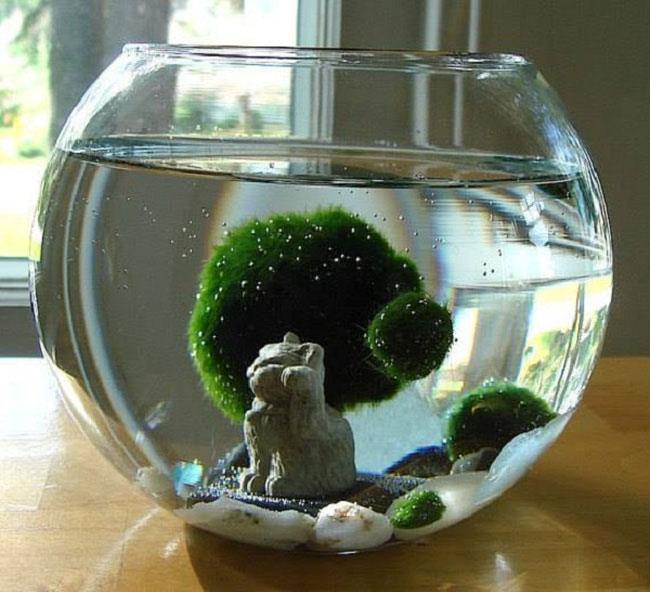
Because of their attractive appearance, spherical Marimo also serve as vehicles for environmental education. The small balls sold as souvenirs are hand-rolled from free-floating filaments. A widely marketed stuffed toy character called Marimokkori takes the humanoid form of Marimo algae as part of its design.
One thing to note about Marimo is that they grow very slowly . They grow at an average rate of 5mm per year, so it would take decades to get a giant ball of algae like the ones at the bottom of Lake Akan. But if you have the time to wait and care for them properly, they will actually live a very long time, possibly even outliving you.
Although Marimos grow in the wild, they cannot reproduce on their own . However, if you have a large Marimo and want to get a second one , all you have to do is split it in half and roll it into smaller spheres.
Marimo commonly found in the trade usually grow in a large ball-like form, with dense filaments radiating from a central point, with no nucleus. On average, the ball-like marimo grows about 5mm per year. The largest ball-like marimo ever found lived for 200 years, with a diameter of 95cm. The ball-like marimo is a rare delight.
Scientists have come up with several theories as to why Aegagropila linnaei algae grow into spherical balls. Some believe it is a natural defense mechanism, as free-floating filaments make them more vulnerable to fish. Others believe that spherical shapes make it easier for them to return to the water if they accidentally wash ashore. But these are just theories, and so far there is no definitive answer to explain this mysterious formation.