The asteroid that wiped out the dinosaurs 66 million years ago created a kilometer-high tsunami in the Gulf of Mexico, according to a study published on October 4 in the journal AGU Advances.
Related reading: The meteorite that wiped out the dinosaurs created a 1.5km high wave, 30,000 times stronger than the strongest tsunami in history..
Researchers found evidence of the giant tsunami after analyzing samples from more than 100 sites and creating digital models of the waves from the asteroid impact in Mexico's Yucatán Peninsula. The tsunami was powerful enough to disrupt and erode sediments in ocean basins halfway around the world, according to lead author Molly Range of the University of Michigan's Department of Earth and Environmental Sciences.
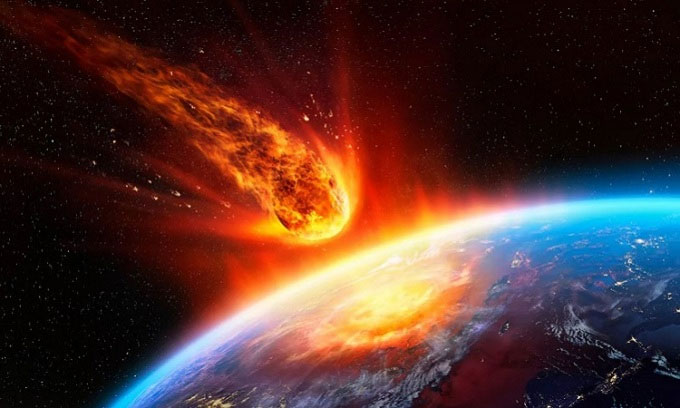
Simulation of an asteroid hitting Earth. (Photo: RomoloTavani)
Range studied the tsunami's path immediately after the asteroid hit. Building on previous findings, her team modeled the asteroid as being 14 kilometers wide and traveling at 43,500 kilometers per hour, 35 times the speed of sound, when it hit Earth. After the asteroid struck, many forms of life died out. Non-avian dinosaurs became extinct, and three-quarters of plants and animals were wiped out.
Researchers noted many of the asteroid's devastating effects, including wildfires that burned animals alive and vaporized sulfur-rich rocks that led to acid rain and a global winter. To learn more about tsunamis, Range and his colleagues analyzed 120 samples of Earth's marine sediments from before and after the mass extinction event that marked the end of the Cretaceous period. The results matched the model's predictions for wave height and range. The initial energy from the impact tsunami was 30,000 times greater than the energy released by the Indian Ocean earthquake tsunami that killed more than 230,000 people in December 2004.
As soon as the asteroid hit Earth, it created a 100km-wide crater , spewing a thick cloud of dust and soot into the atmosphere. Just 2.5 minutes after impact, the ejected material pushed a wall of water outward , forming a 4.5km-high wave that crashed ashore , according to the simulation. Ten minutes later, a 1.5km tsunami traveled 220km from the impact site, sweeping across the gulf in all directions. An hour after impact, the tsunami left the Gulf of Mexico and flooded into the North Atlantic. Four hours later, the tsunami swept across the Central American Seaway that separated North and South America at the time, entering the Pacific Ocean.
The day after the asteroid impact, the wave traveled across much of the Pacific and Atlantic Oceans, entering the Indian Ocean from both sides, and hitting much of the world's coastlines within 48 hours. The tsunami was strongest in the east and northeast. The water in these areas moved so fast that it likely reached speeds of more than 0.6 km/h, a speed that could erode fine sediment from the seafloor.
Other areas that were largely spared the tsunami include the South Atlantic, North Pacific, and Mediterranean Sea. The team's simulations show that water speeds in these areas were less than 0.6 km/h.
The team even found outcrops from the impact event in the North and South Islands of New Zealand, more than 12,000km from the Chicxulub crater in Mexico. Initially, scientists thought they were formed by local tectonic activity. But because of their age and their location on the tsunami path in the model, the team concluded that they were formed by the asteroid impact.
Although it did not assess coastal flooding, the model revealed waves in the Gulf of Mexico were higher than 100m and reached heights of over 10m when they reached the North Atlantic coast and parts of the Pacific coast of South America.