According to new research, the meteorite also created a giant super tsunami, thousands of times larger than any wave ever recorded by humans, according to ScienceAlert.
66 million years ago, the Chicxulub meteorite , which originated in the outer reaches of the solar system, slammed into the shallow sea near what is now Mexico's Yucatan Peninsula. The impact was so powerful that it left scars on the Earth's surface. In 2021, researchers discovered that the shockwaves from the explosion even 'carved' into the Earth's crust, beneath what is now central Louisiana.
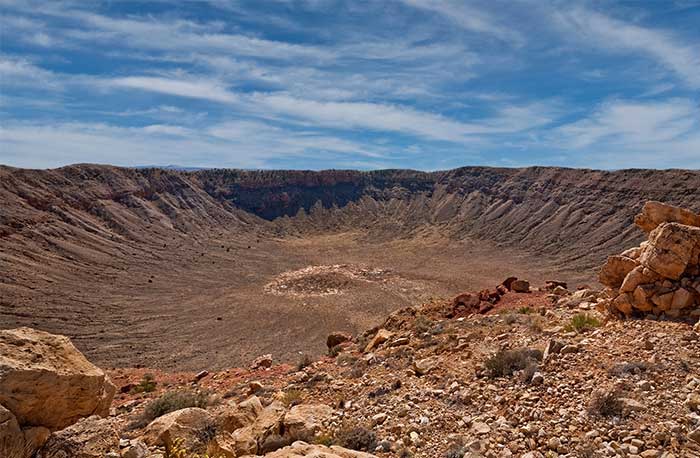
View from close to the Chicxulub crater, the remnant of the collision 66 million years ago that caused the complete extinction of dinosaurs
Now, a new study led by University of Michigan paleontologist Molly Range suggests that Chicxulub may have even generated a giant tsunami. In its path, the tsunami was so powerful that it could have wiped out the seafloor and eroded sediment halfway around the world. It was also larger than all the strongest tsunamis ever recorded by humans, both in energy and size.
1.5km high, 30,000 times stronger than the strongest tsunami in human history
Accordingly, the research team at the University of Michigan modeled the first 10 minutes after the Chicxulub meteorite hit Earth. The team also simulated the subsequent ripple effects that spread to the world's oceans to learn about the tsunami caused by the Chicxulub meteorite.
Results from the simulations show that the megatsunami after Chicxulub collided with Earth was up to 30,000 times stronger than the 2004 Indian Ocean tsunami , which is considered one of the largest tsunamis ever recorded.
The initial explosion as Chicxulub descended threw an incredible amount of water into the ocean near the Yucatan Peninsula at the impact point, creating a wave up to 1.5km high – nearly twice the height of the world's tallest building, the Burj Khalifa (828m).
Related reading: Meteorite that wiped out dinosaurs created a 4.5km high tsunami.
At that time, the crater on the sea floor that was created after the impact was almost bare. However, this period of time did not last long, as water from the surrounding area immediately rushed in to fill the crater. However, this water continued to collide with each other, creating more waves. From there, a tsunami more than 10 meters (33 feet) high traveled across the deep ocean at a speed of 1 meter per second to strike coastlines around the world.
" This tsunami was powerful enough to disturb and erode sediments in ocean basins halfway around the world , leaving either a gap in the sedimentary record or a jumble of older sediments," said paleontologist Molly Range.
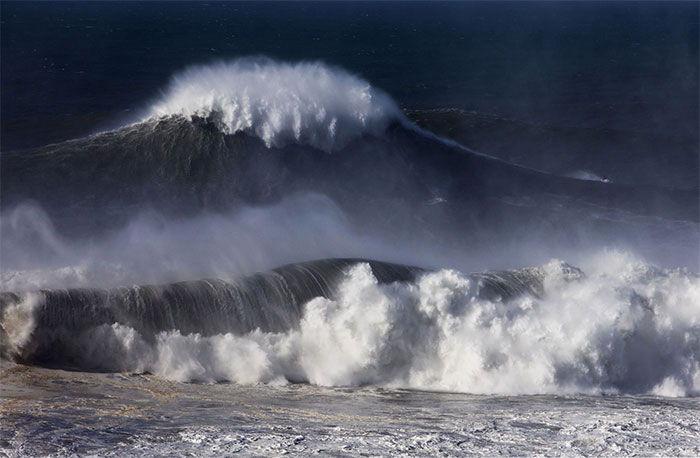
The super tsunami generated after the collision was up to 1.5km high, with a force 30 thousand times greater than the tsunami in the Indian Ocean in 2004. (Illustration photo)
The largest and fastest-moving waves were generated near the impact point, in the open waters of the Gulf of Mexico, measuring more than 100 meters (328 feet) high and traveling at more than 100 meters per second. The researchers added that earthquakes and underwater landslides in the area may have also contributed to the tsunami's strength .
Remarkably, such a devastating event would have left a 'scar' across the Earth. However, the time span of tens of millions of years has erased almost all traces of the event, forcing scientists to learn based on the scant evidence that remains.
Now that scientists know how the tsunami ripped through the world, they can glean insights from sediments at sites far from the Chicxulub crater in the Yucatan Peninsula to detect more traces of the tsunami.
This is important, given the extensive research that has gone into sorting out all the kinks about how dinosaur biodiversity declined after the event. Of course, it also provides a fresh perspective on a catastrophic part of Earth's history.
Erase all traces of history
To get the terrifying numbers on the energy, height, and range of the megatsunami, the researchers used bathymetric data to estimate where the seafloor lay some 66 million years ago. While the models can't accurately simulate the coastlines of ancient continents, the impact of the megatsunami is unquestionable.
'Depending on the shape of the coastline and the speed at which waves hit, most coastal areas will experience some degree of flooding and erosion.'
'Any tsunami recorded in history pales in comparison to an event with such global impact ,' the researchers said.
In many places along the tsunami's path, the geological boundaries that scientists now use to determine the dinosaur extinction event were disrupted by the force of the tsunami. The greatest geological disruption was found in the North Atlantic and South Pacific, where the tsunami traveled extremely fast.
"The clearest evidence of the global destruction caused by the megatsunami is the severely disturbed and incomplete sections on the east coast of the North and South Islands of New Zealand".
'These locations were directly in the path of the tsunami, more than 12,000km [7,500 miles] away from where the asteroid impacted Earth.'
In the next phase of the study, scientists will continue to look at how shock waves generated by the impact could trigger a series of tsunamis around the globe, a line of research that was taken up after the Tonga volcano eruption earlier this year.
Scientists have found out how powerful the air pressure waves generated by the eruption can be, creating waves up to 1 meter high in some parts of the Pacific Ocean.