The asteroid that NASA's spacecraft is about to approach is called Psyche. The asteroid Psyche is considered a valuable resource, with huge amounts of gold and diamonds, worth 70,000 times the world economy.
The asteroid was discovered by Italian scientist Annibale de Gasparis in 1852 and named after the Greek goddess.
NASA revealed that the launch of the spacecraft to Psyche will be carried out at the Kennedy Space Center in Florida, the US. The spacecraft is expected to launch on SpaceX's Falcon Heavy rocket in October. The contract for the launch that billionaire Elon Musk's SpaceX won in 2020 is worth $ 117 million.
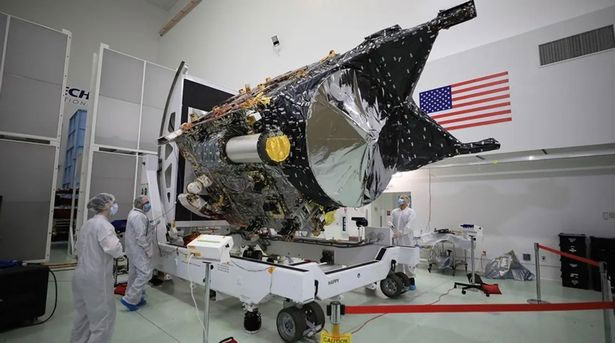
NASA's rocket will launch to the asteroid Psyche in October 2023. (Photo: NASA).
The rocket will travel for about three and a half years before reaching the asteroid Psyche, NASA's website says. It will then spend 21 months studying the giant asteroid, which NASA hopes will allow it to learn more about its structure and formation history.
Psyche is one of the largest asteroids in the Solar System with an average diameter of 220km. This giant asteroid is located in the Asteroid Belt , making up 1% of the entire belt's mass and is speculated to be the core of an ancient planet.
The belt is made up of about 1.1–1.9 million asteroids larger than 1 km, along with millions of other smaller asteroids.
However, it is not the size of Psyche that has scientists most excited, but the abundance of metals and the origin of this asteroid . It is believed to contain iron, nickel and gold worth an estimated $10 trillion, or about 70,000 times the global economy.
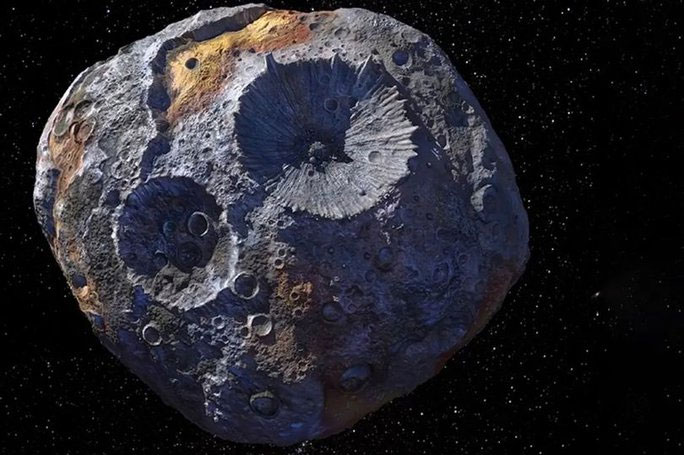
The asteroid Psyche contains so much gold that it is estimated to be worth 70,000 times the world economy. (Photo: NASA)
"While Psyche contains a lot of iron, nickel and gold, the other planets are mainly made of rock and ice. This suggests that it could be the remaining core of a protoplanet that formed billions of years ago," the Daily Star quoted scientists as saying.
NASA's mission not only aims to learn more about the asteroid Psyche, but it is also testing new deep-space communications technology that NASA says could lead to more efficient interstellar communications than current technology.