At that point, humans and most other life forms that rely on oxygen for survival have almost no chance of surviving on Earth .
Life is thriving on our oxygen-rich planet right now. But the good times won't last forever. Instead, Earth's atmosphere will revert to a methane-rich, oxygen-poor state in the future, according to a study published in the journal Nature Geoscience.
Accordingly, this probably won't happen for another billion years or so. But when it does, it will happen quite quickly . This shift will return the Blue Planet to a state similar to that before the so-called Great Oxidation Event (GOE) about 2.4 billion years ago.
At that point, humans and most other life forms that rely on oxygen to survive will have little chance of surviving on Earth. In other words, humans will have to find a way to leave Earth at some point in the next billion years.
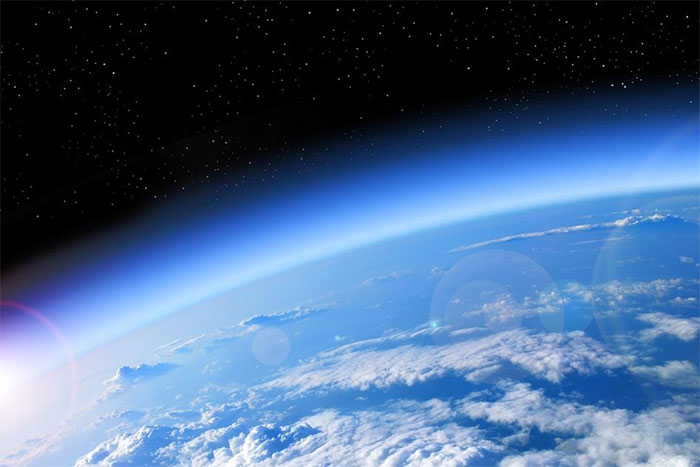
In 1 billion years, the Earth will not run out of oxygen.
To reach their conclusions, the researchers ran detailed models of Earth's biosphere , taking into account changes in the Sun's brightness and corresponding drops in carbon dioxide levels, which are broken down by increased heat. Less carbon dioxide means fewer photosynthetic organisms (like plants), which in turn means less oxygen.
Scientists have previously predicted that increased radiation from the Sun would 'evaporate' the oceans from our planet's surface in about 2 billion years. But this latest model – which averaged nearly 400,000 simulations – says the Earth's loss of oxygen would first kill off all life.
"The drop in oxygen was very, very severe. We're talking about about a million times less oxygen than today," Earth scientist Chris Reinhard, from the Georgia Institute of Technology, told New Scientist.
According to calculations by expert Reinhard and environmental scientist Kazumi Ozaki, from Toho University, Japan, the period of time when life forms thrived thanks to Earth's oxygen-rich atmosphere may have accounted for only 20-30% of the total life cycle of the Blue Planet.
However, microbial life will persist long after humans are gone.
"The atmosphere after the Great Deoxygenation was characterized by high methane levels, low CO2 levels , and no ozone layer. Earth would likely have been a world of anaerobic life forms ," said Ozaki.
Remarkably, this latest research also has a lot to offer in the search for habitable planets outside the Solar System. As powerful telescopes come online in droves, scientists want to know what to look for in the deluge of data these instruments are collecting.
Specifically, atmospheric oxygen may not be a prerequisite when looking for a new home for humans, since the time period when a planet is rich in this gas is not very long. Instead, we need to hunt for biosignatures other than oxygen to have a chance of discovering the best place in the universe to support life.