Mother Nature gives us many wonderful things and also strange things. One of them is probably the tree that makes many people surprised because it "bleeds" when cut on the trunk.
It is known that this special plant is called Corymbia opaca (originating from Australia) or is also known by the locals as the desert blood tree.
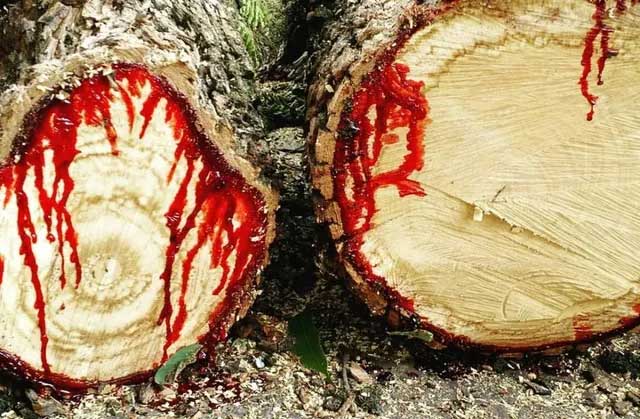
Desert Bleeding Tree.
At first glance, Corymbia opaca looks very similar to many other plants, but it is only when it is "wounded" by a certain cut that it becomes truly different. Because this plant will appear streaks of dark red liquid like blood that look very scary.
Although, on the outside they look no different from other varieties, something special happens when you cut a line on the trunk, causing streaks of dark red liquid to appear.
The "blood" of this desert blood tree is not liquid like water but rather thick and viscous like glue. It flows down in streams and then quickly dries, clinging tightly to the tree trunk.
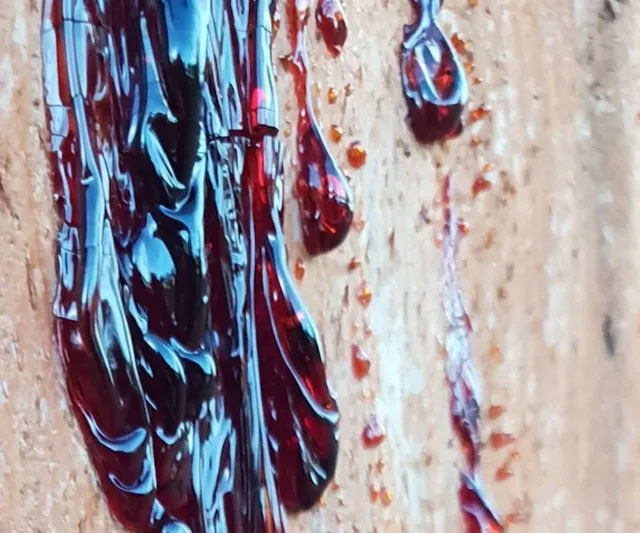
The "blood" of this plant is quite thick and sticky like glue.
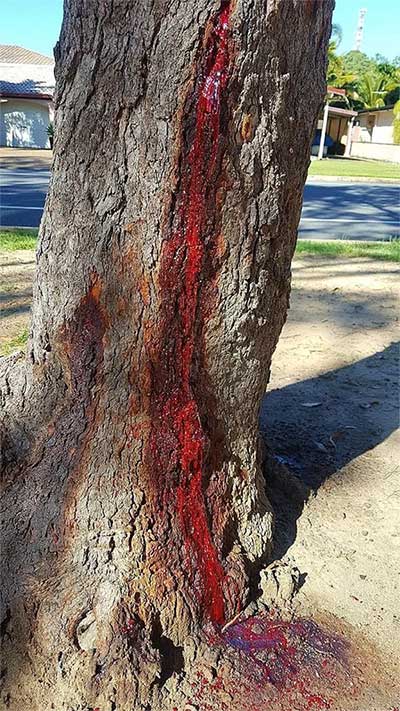
The resin of this tree is used to make medicine to treat colds as well as other ailments.
Not only is Corymbia opaca known for its strange "blood" , it is also known for its wonderful uses. According to research, Australian aborigines often harvest tree resin (containing a large amount of tannin - a substance commonly used in medicine) to make medicine to treat colds as well as some other diseases.
Although it is harmless to humans, seeing this tree sap must make many people shudder.
Not only in Australia, in South Africa there is also a plant that can bleed like Corymbia opaca, that is Pterocarpus angolensis .
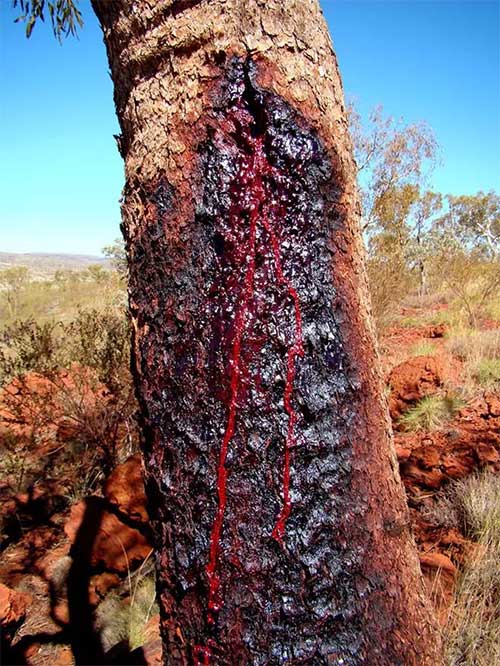
Pterocarpus angolensis bears a red, sticky resin.
Pterocarpus angolensis is a tree with a strange ability: bleeding. This tree is also known by other names such as Kiaat, Mukwa or the bleeding tree.
Pterocarpus angolensis bears a red, sticky sap. The leaves are alternate, opposite, and relatively sparse, with evenly spaced leaflets and parallel curved lateral veins. The flowers are bisexual, pea-like, in clusters, with wrinkled, pale yellow petals. The fruit is a distinctive flat, hard, globose, and indehiscent.
Pterocarpus angolensis has many economic and medical benefits: it cures diseases of the eyes, stomach or blood. The resin of the tree is used by the natives as a dye. They also mix it with animal fat to create a skin care product.
The wood of the tree is used to make many valuable items such as boat building and flooring.