Space science
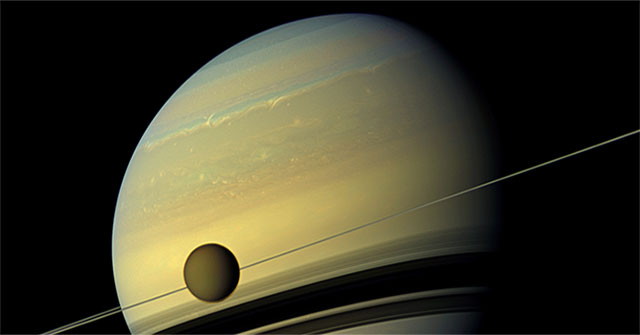
Announcing the first geological map on Saturn's Titan satellite
The map shows that the Titan has lots of plains and mounds, including frozen organic matter and many liquid methane reservoirs.
Explore astronomy, NASA missions, planets, galaxies, the Moon, the Solar System and discoveries that expand our understanding of the universe.
8,698 published items in this category and its subcategories.
The map shows that the Titan has lots of plains and mounds, including frozen organic matter and many liquid methane reservoirs.
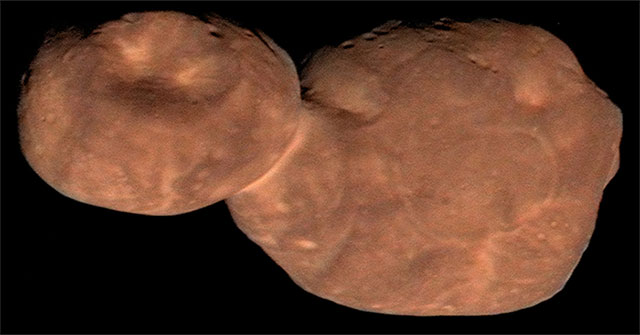
Scientists at the US Aerospace Agency (NASA) have named the outer planet Neptune (Kuiper belt object - KBO) Ultima Thule a new name is Arrokoth.
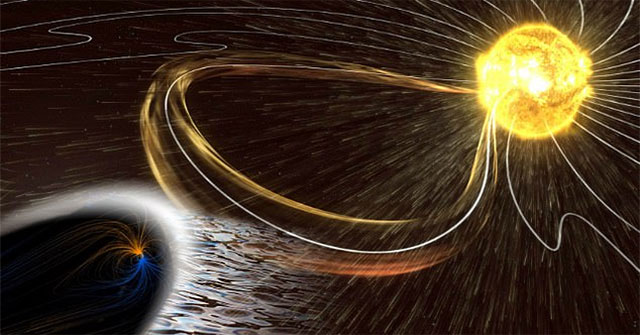
Astronomers first recorded the mysterious 'song' of the Earth's magnetic field during a solar storm attack.
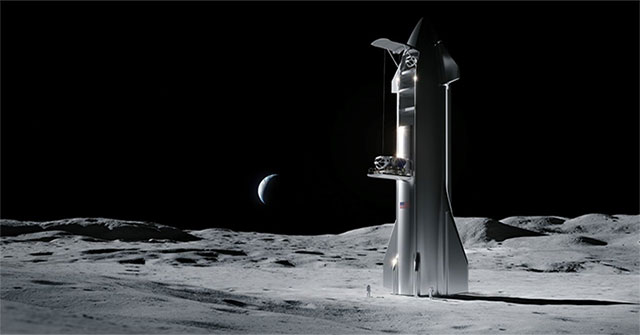
The pair of Starship and Super Heavy spacecraft are likely to be selected for NASA's lunar mission.

Despite many achievements in the field of science and technology, many people still think that the US spending money for NASA is a waste.
For the past 10 years, scientists have observed gravitational waves and captured images of black holes. These technological advances have strongly motivated the desire t…

The National Institute of Polar Research of Japan in Tatikawa (suburb of Tokyo) has introduced a model of a mobile home designed for Antarctic explorers and in the futur…
The Heritage algorithm of two French scientists will give us the answer.

Up to now, mankind has achieved many great scientific achievements. From the time of hunting, gathering until the first steps on the Moon
Along with the discovery of celestial objects from a distant universe, panspermians (the theory that life exists throughout the universe) began to find ways to prove tha…

A team of astronomers at Ohio University found that the object is most likely a black hole about 3.3 times the mass of the Sun.
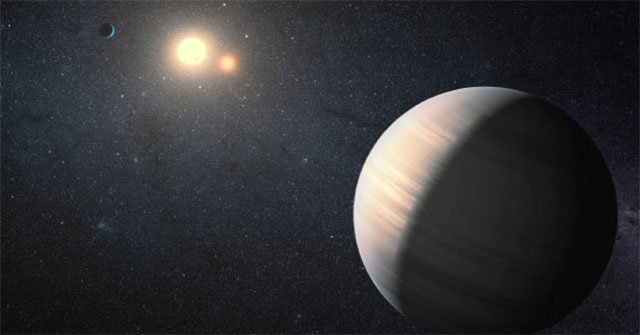
With the presence of a large and mysterious Neptune superstar, Gliese 15A officially became the most polycentric planet near the Solar System ever known.

Traveling into space is a dangerous journey when astronauts suffer the same fate with their spacecraft.
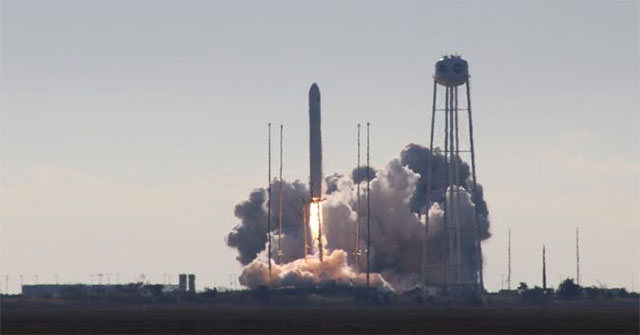
The Antares 230+ rocket takes the Cygnus NG-12 spacecraft off the launch pad at the Wallops Flight Facility (NASA), Virginia, on the morning of November 2.