Space science
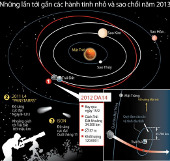
Small planets, comets near Earth in 2013
According to astronomers, the super comet named ISON will approach the Earth but does not cause any impact on human safety.
Browse ScienceInfo articles and explainers related to Astronomer.
968 published items.
According to astronomers, the super comet named ISON will approach the Earth but does not cause any impact on human safety.
Astronomers from the University of Pennsylvania (USA) have discovered that the oldest star in cosmos was formed at least 13.2 billion years ago.
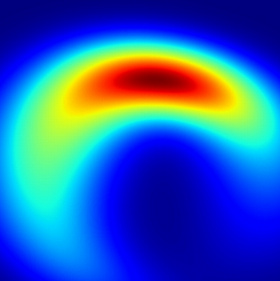
Astronomers have just published their first speculative images of the shape of a black hole, very different from previous illustrations.
Astronomers use telescopes in Australia to measure the temperature of the universe, and draw conclusions that it is cooling like predicted by experts according to the Bi…
In 2013, Vietnamese astronomers will twice have the opportunity to admire the eclectic astronomical phenomena, according to Dang Vu Tuan Son, Chairman of Vietnam Young A…
A giant meteorite about 270 meters in size has just passed through the Earth, but is unlikely to pose a danger to our planet.
American astronomers say they have discovered six possible objects, comets around distant stars, a sign that comets are also popular out there rather than a special feat…
With a radius of 1.5 times the globe, a planet orbiting a star like the sun is the most earth-like celestial object that people ever know.
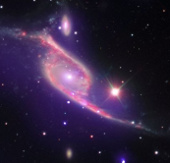
Astronomers have suddenly located the largest galaxy ever, five times larger than our Milky Way galaxy.
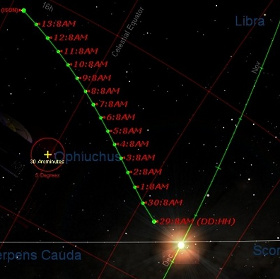
Astronomers believe that ISON, comet will appear on November 28, 2013, the brightest ever.
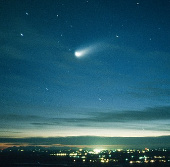
Comet giant is discovered by two Russian astronomers
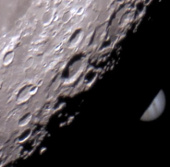
An astronomer recorded a detailed image of a rare astronomical phenomenon, in which the moon appears to be 'devouring' Jupiter, the solar system's largest planet.
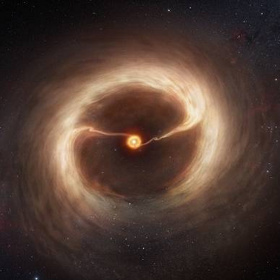
The January 2 issue of Nature published the findings of Chilean astronomers, who discovered the origin of the giant planets in the universe, similar to Jupiter and Satur…
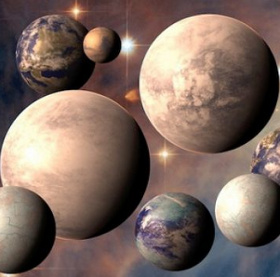
American astronomers predict the Milky Way is home to at least 100 billion stars and 100 billion planets.
Tau Ceti, one of our closest stars, is a potential candidate that can contain Earth-like planets.