
Space science
Detecting diamonds in
Scientists have found the rest of the 2008 TC3 meteorite rushing into the atmosphere half a year ago. Scientists were surprised to find diamonds in them.
Browse ScienceInfo articles and explainers related to Atmosphere.
902 published items.
Scientists have found the rest of the 2008 TC3 meteorite rushing into the atmosphere half a year ago. Scientists were surprised to find diamonds in them.

The sun is in an unusually silent period, with less black streaks and a sudden weaker magnetic field from 1913 to the present.

After many years of research, the scientific community has finally identified what is called the edge of space - the dividing line between the earth's atmosphere and the…

The former 9th planet of the solar system possesses a completely opposite atmosphere to the Earth, meaning that the higher the temperature, the higher the air temperatur…

Yesterday morning, the US aerospace agency (NASA) introduced a satellite named OCO to assess the density of CO2 emissions in the earth's atmosphere into space.
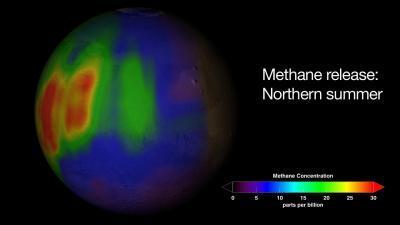
A group of NASA researchers and universities have for the first time discovered methane in Mars's atmosphere.

The Hubble Space Telescope has just discovered CO2 and CO in the atmosphere of a distant planet.

Themis satellite of NASA has discovered two major holes in the Earth's magnetic field.

Last week an astronomical object exploded in the sky of Africa and did not harm the Earth, exactly as astronomers predicted for the first time.
In the journey to conquer the vast universe, people have discovered so many new things, but still, there are countless unknowns to date.
Physicists at Granada University and Valencia University have recently discovered a specific data analysis process sent from Huygen probe at Titan - Saturn's largest moo…
With a negative average temperature of 260 degrees Fahrenheit, the atmosphere is almost non-existent, with a complex network of cracks in the ice that completely covers…
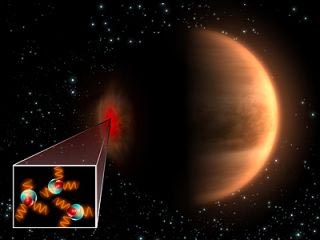
Venus Express first detected hydroxyl molecule on another planet. This discovery gives scientists a new tool to decipher the mechanism of Venus's dense atmosphere.
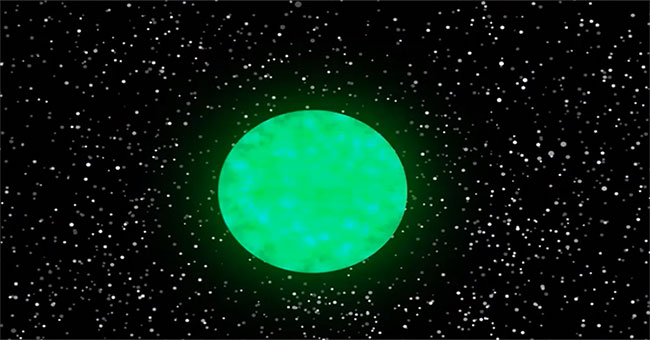
People often see the Sun yellow but actually, this star emits the most intense blue light.

According to calculations by University of Sussex astronomers, the earth will be swallowed by the sun within 7.6 billion years if Earth's orbit doesn't change.