
Medicine - Health
Can predict a child's ability to learn?
Scientists at Stanford University (USA) have developed a new method, applying brain resonance imaging to predict children's learning ability as soon as they are unable t…
Browse ScienceInfo articles and explainers related to Brain.
2,956 published items.
Scientists at Stanford University (USA) have developed a new method, applying brain resonance imaging to predict children's learning ability as soon as they are unable t…
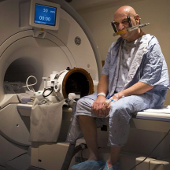
Shivering is a common syndrome in older people, with shaking hands increasing over time, like Parkinson's or multiple sclerosis.

A simple eye test that takes only a few minutes, developed by American scientists, promises to be a simple and quick method of early detection of multiple sclerosis.

According to a recent study by researchers at the University of Western Ontario in Canada, the idea that intelligence can be measured with a single index - IQ is wrong.
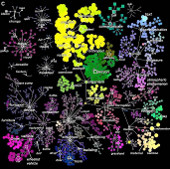
A research team from the University of California (USA) discovered that the human brain is zoned to handle all kinds of information that the subject receives.

Infection with small amounts of organophosphates in pesticides can still cause long-term damage to the brain. Specifically, these chemicals can reduce memory and ability…

Scientists at the University of California, Los Angeles (UCLA-USA) on December 4 published a survey showing that women with respiratory obstruction during sleep are at h…
The water that humans throw out of their bodies daily can become a source of brain cells for scientific research.
By using bio-foam implants, scientists have succeeded in reconstructing teeth, tendons, heart tissue, bones and cartilage in the human body. This material acts as a fram…
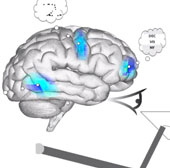
A Canadian team of neuroscientists and software claims they have created an artificial brain that functions like the most human brain.

A new study has discovered a gene called RASGRF-2 that plays an important role in the stimulation of alcohol to release dopamine in the brain.

Scientists at Durham University have discovered that the fetus in the womb is not only hiccup, swallowing, stretching and yawning.

Girl Katie Renfroe, 4, has a rare congenital hypertrophy syndrome, causing some of her facial parts to be unusually large.

This is a new study published at the annual meeting of the North American Radiology Association in the United States.

Canadian neurophysiologists claim that people in a coma can still communicate with the outside world, following a 39-year-old man within 12 years.