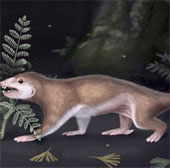
Archeology
The discovery of the 165 million-year-old ancestor of humanity
Fossils of an animal believed to be the 165 million-year-old ancestor of modern humans have been discovered in China.
Browse ScienceInfo articles and explainers related to Human.
6,757 published items.
Fossils of an animal believed to be the 165 million-year-old ancestor of modern humans have been discovered in China.
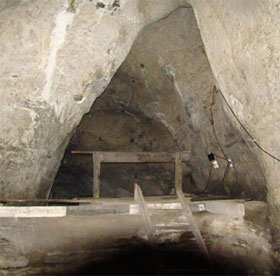
Studying the genome of the remains found in the famous Denisov cave today, scientists have determined a 17% coincidence with the Neanderthal gene, another 4% of the homi…
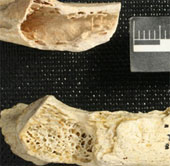
A tumor lying on the rib of a 120,000-year-old skeleton shows that at least one Neanderthal who had been cancerous seemed to only haunt modern humans.

The hominin, our ancient ancestor, must be attracted by the terrain of the rocky uplands and these topographic canyons giving them shelter and many opportunities to trap…
The Live Science website said on May 21 that there was evidence that the favorable climate period was also when humans invented new tools, and began to use symbolic imag…
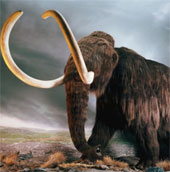
Mammoths disappeared from the ground after massive meteorites fell to Earth 12 thousand years ago. Many animals that cannot adapt to such sudden changes in climate have…
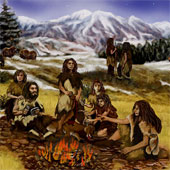
Universitat Rovira i Virgili (Spain) researchers have come up with a very creepy hypothesis about the demise of Neanderthals, that our ancestors have been clean.
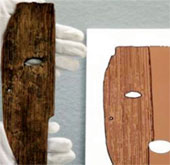
A group of Japanese archaeologists said they found a piece of a wooden mask used in rituals and believed it to be the oldest specimen in Japan.
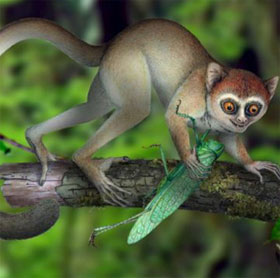
Scientists have found the world's oldest surviving primitive skeleton, considered the first ancestor, containing missing links in human evolution.
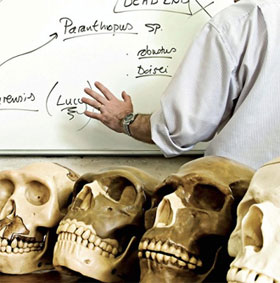
The new theory of evolution is highly controversial, including the hypothesis that human ancestors were aquatic primates that had more authentic evidence.

In recent days, new discoveries about a prehistoric skeleton have made the scientific community wave with controversy over the origins of humanity.

No one knows exactly when humans began to tame wolves. Scientists once found a dog skull in Russia's Siberia Mountains. Chronology of the skull shows that humans began t…
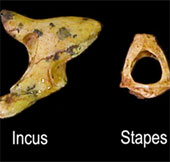
The combination of monkey and human traits in the middle ear bone of two extinct ancient genus shows that human ancestors may have begun to evolve the parts that souther…

The newly discovered fossil has helped explain the transformation at the hands of early humans to become the present form.
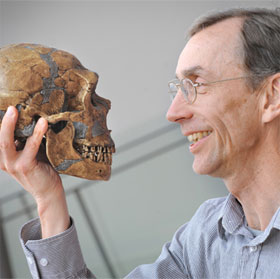
German scientists say they have completed the first high-quality Neanderthal genome decoding work, and are preparing to publish it online for other scientists to study.