Scientists have found the world's oldest surviving primitive skeleton, considered the first ancestor, containing missing links in human evolution.
The skeleton of the Archicebus primates Achilles, dating back 55 million years, is found near the Yangtze River in Central China.
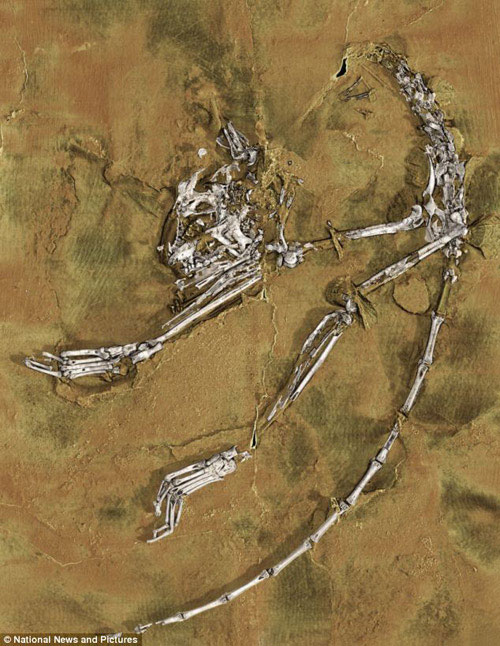
The skeleton of primates of 55 million years old has just been discovered.
The almost complete skeleton of the Archicebus species Achilles marked an important transitional moment, when primates began to come to live on tree branches, the key to forming monkeys and modern apes.
The skeleton surgery has found that the primate's eye socket is quite small, indicating that it is active during the day. Meanwhile, biologist Xijun Ni, who led the study, said: 'This area used to be large lakes, surrounded by lush tropical forests in the early Eocene period.
The analysis also showed that the newly discovered primates only owned less than 1 ounce (equivalent to 23 grams). With slender limbs and a long tail, this animal is able to live perfectly on trees during the day, with mostly insect food. Similar to chimpanzees, the Archicebus's big toe Achilles is located opposite the remaining toes, helping it cling to tree branches, with mostly insect food.
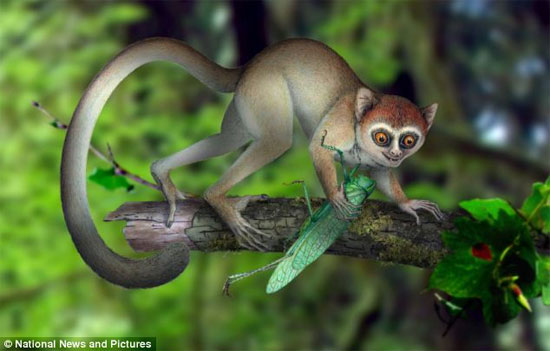
Archicebus Achilles.
Meanwhile, Dr. Christopher Beard, Carnegie Natural History Museum in Pittsburgh, USA, said Archicebus Achilles' skeleton is completely different from any primates, regardless of whether the living or fossil individual has been known earlier. Dr. Dan Gebo of the University of Northern Illinois believes that this is the most mature and primitive skeleton of the primates compared to the fossils of primitive primates ever discovered.
Not only did it help decipher the missing links, the discovery of primate skeletons in China also contributed to supporting the notion that Asia is truly the cradle of primates, not Africa. as previous documents.