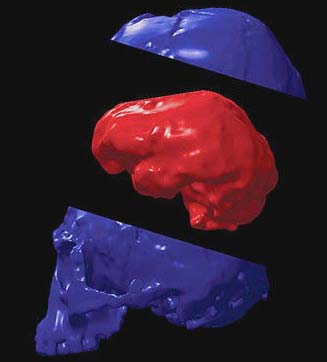
Archeology
Continued controversy over Flores dwarf
The dwarf fossil skeleton bearing the nickname 'Hobbit' at a height of only 1m was discovered on the island of Flores (Indonesia) dating to 18,000 years of a new breed o…
Browse ScienceInfo articles and explainers related to Human.
6,757 published items.
The dwarf fossil skeleton bearing the nickname 'Hobbit' at a height of only 1m was discovered on the island of Flores (Indonesia) dating to 18,000 years of a new breed o…
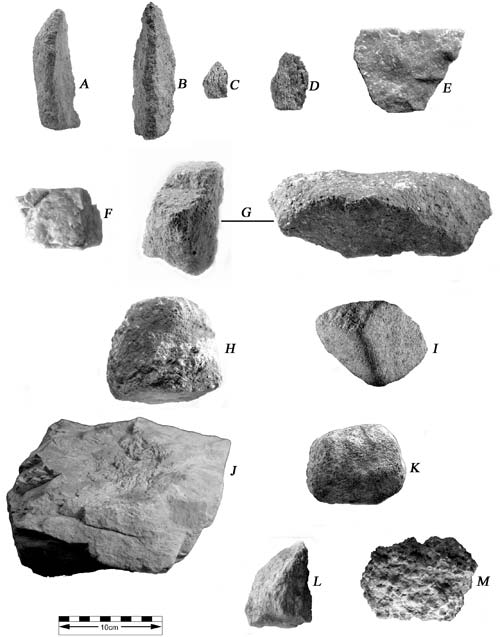
A new study reveals that chimpanzees have used stone tools in prehistoric times, reinforcing the hypothesis that humans and large monkeys have inherited ingenuity from a…

According to Science magazine, peppers originated in South and Central America and have been grown for more than 6,000 years, even before the craft industry was born. An…

The international team examined charcoal from a fireplace in the Pedra Furada archaeological site (in Serra da Capivara National Park, Brazil).

Continuing the search and research of fossil bones in the cave Pesteracu Oase, Romania, the group of international paleontologists affirmed that today modern Europeans h…

Ethiopian archaeologists found the remains of a 3-year-old girl called Dikika. She lived and died in the early days of human formation on earth. Try it

Because of Selam's skull, the gradual growth means that the brain's mass will be large. That's what monkeys can't get. Two thigh bones show Selam has stood up and walked…

Some anthropologists argue that Neandertals are different from modern humans due to rapid growth in short childhood. However, the analysis of two Neandertal molars was c…

The oldest bird known to humans has feathers on their feet, allowing it to use these legs as an extra pair of wings,
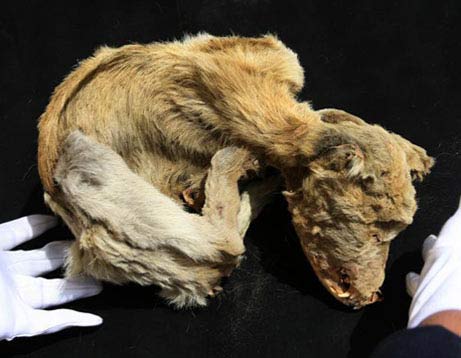
Even in ancient Peru, dogs seem to be close friends of humans. Archaeologists found that prehistoric dog lovers built cemeteries for pets, wrapped with animal carcasses.

Bulgarian archaeologists claimed to have found evidence that the first brain surgery was performed 4,000 years ago.

This new study has proved completely and convincingly that the skull of a woman discovered in Flores, Indonesia in 2003 is not the skull of a breed.
Kangaroos and koalas (large sized hippopotamus) in prehistoric times are not destroyed by humans but rather by changing weather and depleting food sources, scientists

Human skeletons found in an excavation area in Mexico show that the Aztecs had captured, sacrificed and eaten hundreds of Spanish soldiers to invade in 1520.
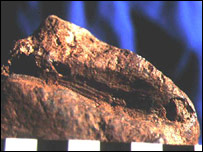
A scientist working in Africa stated that the evidence found in Africa showed that humans knew how to use colors to symbolize perhaps some 200,000 years ago.