Space science
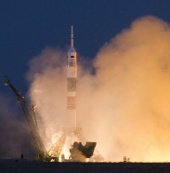
The Soyuz left the launch pad to take three astronauts to ISS
On the evening of December 19, the Russian Soyuz spacecraft left the launch pad in Kazakhstan to bring three astronauts flying to work for five months on the Internation…
Browse ScienceInfo articles and explainers related to Mars.
1,602 published items.
On the evening of December 19, the Russian Soyuz spacecraft left the launch pad in Kazakhstan to bring three astronauts flying to work for five months on the Internation…
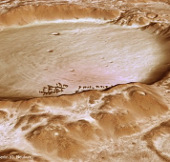
With snow-covered craters, Mars gives explorers a sense of winter on Earth, like Christmas exists on the surface.
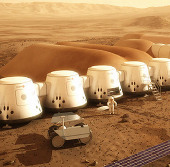
The Dutch company called Mars One has just announced that 1,000 volunteers have joined their plans to return to Mars by 2023.
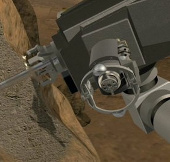
NASA's Curiosity can destroy its own electrical system right after activating an integrated drill to dig a Martian rock sample.

The article was done by collaborator Scott C. Waring, who worked for the US Air Force at SAC base.
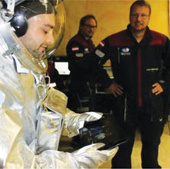
Austrian scientists have announced a scientific task for a month to simulate future missions on Mars.
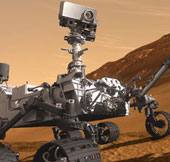
According to Radio Voice of Russia, America's Curiosity probe has found on Red planet simple organic molecules.
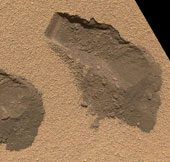
Mars exploration robots deploy the final equipment. Soil analysis showed organic compounds of uncertain origin.
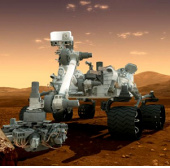
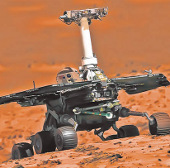
Astronauts on a long-term mission to Mars will face significant radiation, but fortunately they can still withstand.
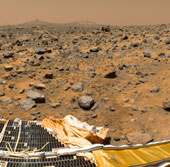
The Curiosity probe has discovered a secret worthy of 'going into history' on Mars, but the US Space and Aeronautics Agency (NASA) only revealed this in a few weeks.
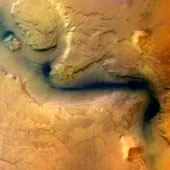
The water on Mars and Earth is of the same origin, most likely from meteorites hitting the surface of these bodies during the formation phase.
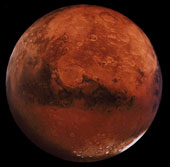
The European Space Agency (ESA) and the Russian Federal Space Agency (Roscosmos) will sign an agreement to explore Mars in the next few years.
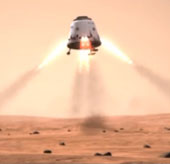
Billionaire Elon Musk, founder and CEO of Space X Universe Company, is planning to set up a spacecraft capable of 80,000 people to conquer Mars, with the cost of each fl…
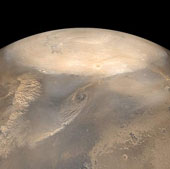
The US Aeronautics and Space Administration (NASA) said it was keeping a close eye on a giant dust storm on Mars that created many atmospheric changes in the planet.