
New technology
NASA tests the first 3D printing technology in the universe
The first 3D printer of the International Space Station ISS has now been officially installed, put into operation and has created the first 3D printing products.
Browse ScienceInfo articles and explainers related to NaSa.
3,231 published items.
The first 3D printer of the International Space Station ISS has now been officially installed, put into operation and has created the first 3D printing products.
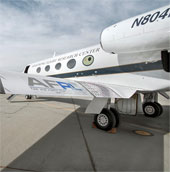
For all aircraft designs over the past decade, the wings are still very basic and the design has not changed much.
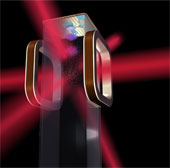
NASA announces the birth of a new material state called Bose-Einstein condensate (BEC).
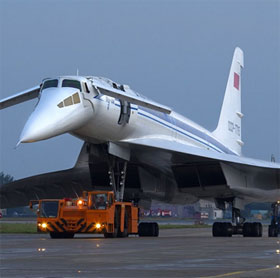
At Aviation 2014 - an annual exhibition organized by the US Aeronautics and Space Institute, NASA demonstrated new technologies being studied by the agency to revive the…
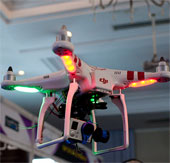
Delivery by airplane drone is a great idea, but according to NASA, this service is still a prospect in the future.
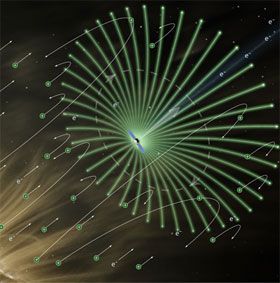
NASA has just announced 12 futuristic designs that promise to bring people to new worlds, such as submarines on Titan moon and giant grid of asteroids.
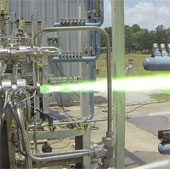
3D printing technology has shifted from technical research departments to households, and it is now beginning to encroach into space.
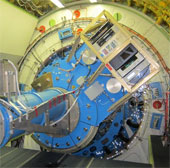
Scientists at NASA recently introduced a new spectrophotometer called Echelon-Cross-Echelle Spectrograph (EXES).

The tiny robots, capable of working inside the astronaut's body, could someday help with emergency surgery to save lives in space.
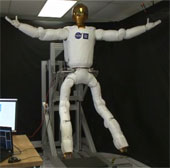
NASA engineers have pinned Robonaut 2 (R2) and will take it to ISS International Space Station.
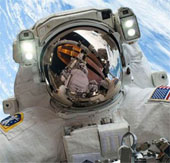
Scientists from the University of Nebraska, USA, and NASA have successfully developed the robotic remote control robot model, which can perform surgery in a non-gravitat…
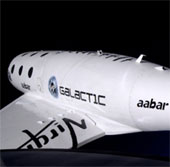
With the Virgin Galactic Company, 2014 is the year in which they will make the first space tour. It is just one of many events, ideas, trends in the field of science and…
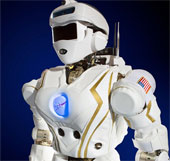
The new NASA launches a new robot, capable of standing on two legs like a human and is used to aid rescue operations.
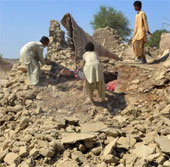
NASA has introduced a new radar detector that will help detect buried victims under the rubble of buildings in disaster.

In 2011, NASA announced a study of a super-black super-black coating to increase sensitivity for optical sensors and devices used in space.