New technology
Google developed a cancer detection device
US technology firm Google is developing a device that can detect early signs of cancer, heart failure and many other serious diseases.
Browse ScienceInfo articles and explainers related to Nanoparticles.
96 published items.
US technology firm Google is developing a device that can detect early signs of cancer, heart failure and many other serious diseases.
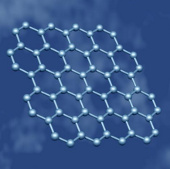
Graphene has always been considered a magic material and so far there has been a lot of scientific research to exploit graphene to apply in life.
The higher the engine temperature, the more fuel it will deliver.
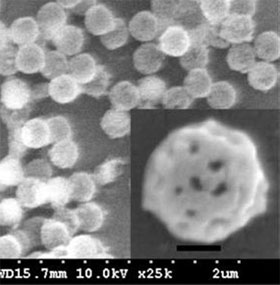
Scientists have devised a special material that can be coated on surfaces, keeping them dry or wet, making the surface never need to be cleaned.
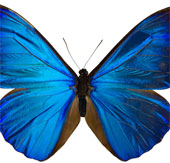
Butterfly Morpho has natural features that are more reproducible than current technologies. They are light, thin, flexible, can absorb solar energy, waterproof and self-…

Dr. Truong Van Chuong and colleagues from the College of Sciences, Hue University succeeded in making silver nanoparticles.
'Not only does it save fuel, the nanoparticle additive also helps reduce emissions that pollute the environment of diesel-powered vehicles.

Researchers from Spain's Universidad Carlos III de Madrid (UC3M) and a private company have patented a new material for making braces.

Breakthrough in nanotechnology allows for the study of materials that can detect and block harmful molecules, or even act as human skin.
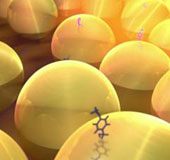
UK researchers have successfully developed a system capable of rapidly detecting chemicals in small quantities, whether it be contaminants, explosives or drugs.
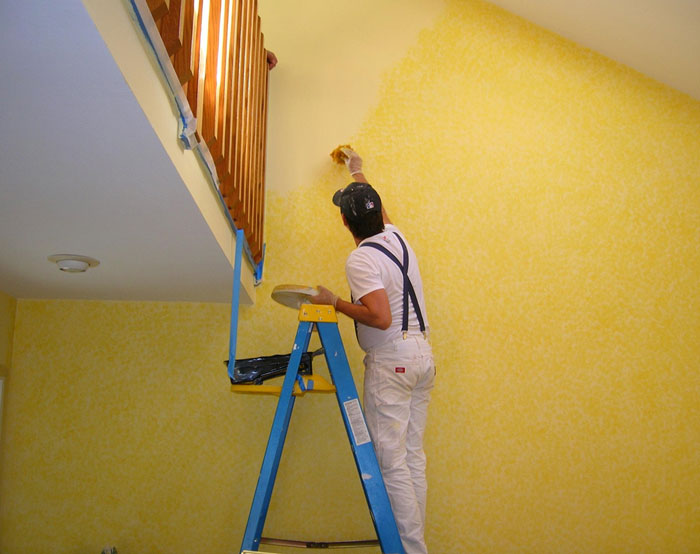
Solar panels will soon become the past because researchers have invented new paints, generating electricity from energy nanoparticles that can provide enough electricity…
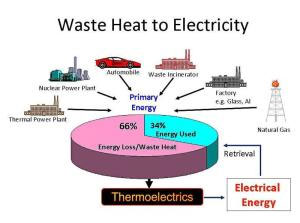
The researchers were led by Dr. Ole Martin Løvvik, working at the Center for Nanoscience and Materials Science, University of Oslo, Norway, claiming to have made thermoe…

A team of Dutch scientists has created a super-small, four-wheeled nanoparticle, according to a study published today in the journal Nature.
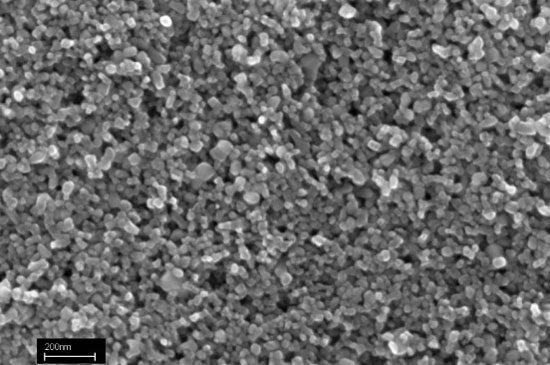
The team of scientists led by Professor Robert Dorey, director of the Cranfield University's Center for Nanotechnology and Micro Systems, is developing a new sensor that…
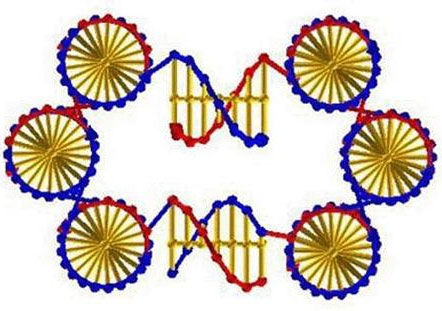
Scientists working at New York University (NYU), the United States believe they can create materials that are self-replicating, based on new research.