
Environment
2010 will be the hottest year in history?
The global warming combined with the ocean warming up due to the El Nino weather phenomenon, 2010 is considered one of the hottest years in history.
Browse ScienceInfo articles and explainers related to Ocean.
1,955 published items.
The global warming combined with the ocean warming up due to the El Nino weather phenomenon, 2010 is considered one of the hottest years in history.
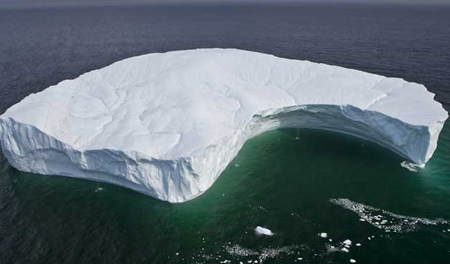
After separating from Greenland, huge ice blocks drifted over the Arctic Ocean, threatening the safety of ships and oil rigs.
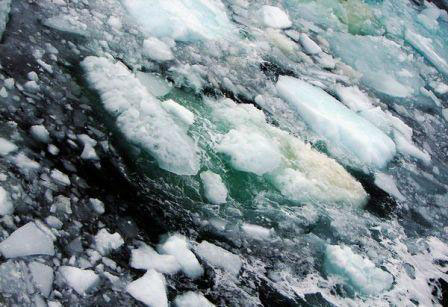
The amount of organic matter, dissolved in deep water parts in the Arctic Ocean, doubled after 12 years. This is a solid evidence that allows the Earth to warm up.

The storms outside the ocean are often extremely aggressive, but when they land, they quickly weaken and dissipate. What happened to them?

The race to control the vast mineral resources in the ocean is once again heated ...

United Nations experts warn humans will not have a chance to see fish in the oceans by 2050 if we do not allow their numbers to recover.

The campaign of destroying thorny starfish to protect corals in Nha Trang bay marine protected area was launched by Khanh Hoa province on May 20 ...

Volcanoes often spray lava, but recently US scientists found 7 volcanoes that used to spray asphalt under the Pacific Ocean.

A large amount of methane is leaking from a huge hole that has just been discovered below the permafrost of the Arctic Ocean.

Although scientists have not been able to predict exactly when earthquakes will occur, they already know the tremors in Chile last weekend.

In July 2009, scientists were stunned to find a landfill of about 696,621 km2 in the Pacific Ocean.

According to the Natural Geological Science magazine on February 21, weather experts were able to predict the El Nino phenomenon before 14 months, much earlier than just…

Recent studies show that the number of white shark species on the oceans is decreasing, even lower than the number of tigers left in the jungle.

Scientists from the US National Oceanic and Atmospheric Administration (NOAA) said countries can use the existing cable network to alert tsunamis.

The Oceanographic Research and Development Agency Japan has embarked on the development of a technology to turn carbon dioxide emissions (CO2) into natural methane gas.