
New technology
World's Fastest Camera: Capturing both chemical reactions
Two major universities in Japan have unveiled a camera capable of shooting 1,000 times faster than current high-speed cameras.
Browse ScienceInfo articles and explainers related to Optical.
351 published items.
Two major universities in Japan have unveiled a camera capable of shooting 1,000 times faster than current high-speed cameras.

This is a handheld laser device used for detecting optical or photovoltaic threats, helping security agencies secure the heads.
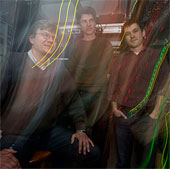
Recently, a group of researchers at Harvard University led by Dr. Mikhail Lukin successfully built a quantum circuit breaker capable of turning on and off using a single…
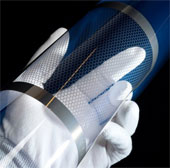
Researchers at the University of Iowa have discovered a way to convert magnetic data into optical data without the need for an external power source.
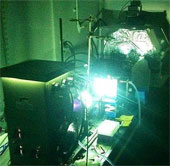
The energy emitted from the Sun in an hour can meet the Earth's energy needs for a year, but the expropriation of this energy is a challenge, especially when it is dark.

Japanese inventors have announced a new technology to produce self-cleaning and scratch-free glass.

Many houses in the Netherlands are built as terraced fields, creating a unique urban landscape of this country.
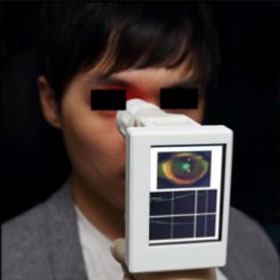
Unlike bulky equipment used by ophthalmologists, the new product is about the size of a small camcorder.
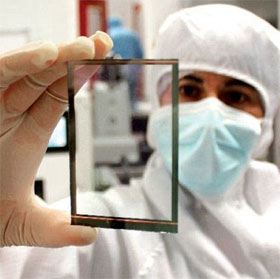
We already have the technology to allow you to locate your phone when the battery is running out or send a message even if the battery runs out of power, but what do you…

According to the journal Science, American scientists have invented the world's most accurate watch with 10 times the accuracy of any watch.

In 2011, NASA announced a study of a super-black super-black coating to increase sensitivity for optical sensors and devices used in space.

Recently, researchers at Bath University and the University of Exeter discovered that with several layers of graphene stacked, they could become a great material for opt…
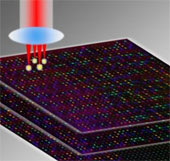
The University of Southampton's Center for Optical Research (OCR) and Eindhoven University of Technology (the Netherlands) have been working on glass disk manufactur…
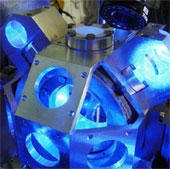
This so-called optical lattice is only 1 second wrong for 300 million years, meaning it is three times more accurate than the current atomic clock.
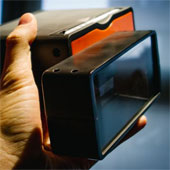
Joe Heitzeberg and Ethan Lowry, from Seattle, introduced a device called Poppy, allowing users to record and share their experiences on the 3D platform.