Space science
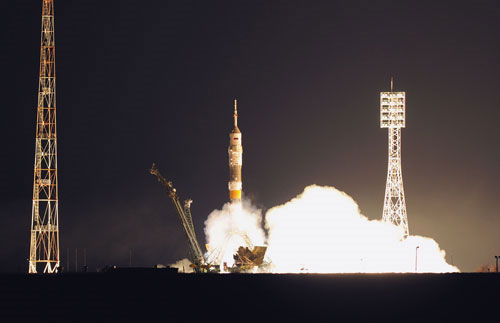
Russia launched Glonass maritime satellite
Russia's Soyuz-2.1B rocket carrying Glonass maritime satellite was launched into orbit this morning (3.10), AFP quoted Russian Defense Ministry sources as saying.
Browse ScienceInfo articles and explainers related to Proton.
91 published items.
Russia's Soyuz-2.1B rocket carrying Glonass maritime satellite was launched into orbit this morning (3.10), AFP quoted Russian Defense Ministry sources as saying.
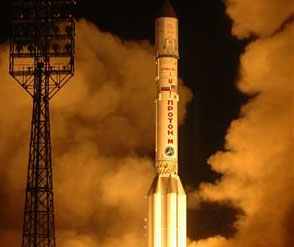
On September 21, Russia successfully launched a military satellite into orbit after three weeks delayed due to successive failures of previous missile launches, AFP quot…
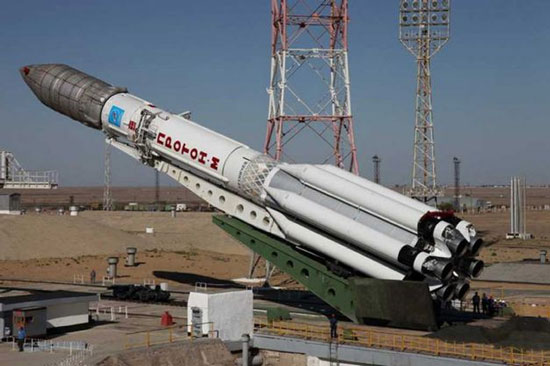
The Russian Federal Space Agency lost contact with a telecommunications satellite as soon as it was launched yesterday.

The Russian proton-M rocket carrying KA-SAT satellite was launched in the early morning of December 27 from Baikonur space airport in Kazakhstan.
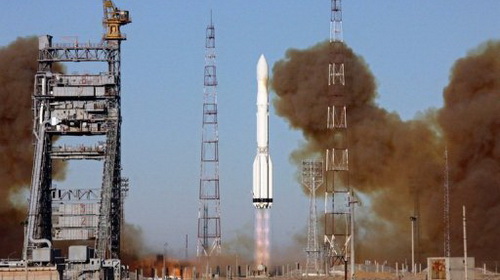
Russian President Dmitry Medvedev on December 29 fired two officials from the space agency after the failed rocket launcher lost three satellites.

In 2010, Russia retained the world's leading position in the number of space-carrying missiles, carrying out 31 launches, compared with 15 times the US and China.
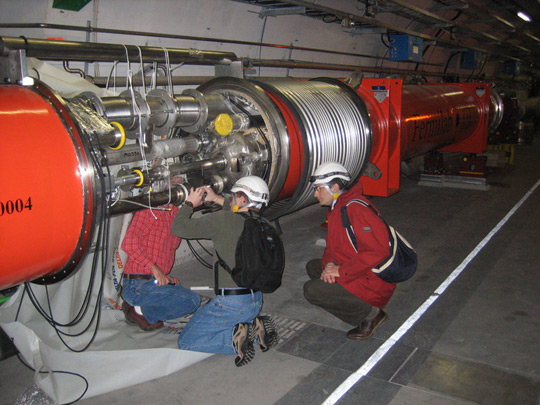
On Monday, December 6, 2010, scientists stopped all experiments on the world's largest particle accelerator LHC. On the website of the LHC, there are large words

Although they are bright stars, supernova cannot create the heaviest elements.

The proton is much smaller than the size still used and mentioned in previous physical studies.

The European Atomic Research Organization (CERN) has successfully conducted experiments to create a direct collision between proton particles producing extremely large e…

American scientists have created a strange kind of material that has never been seen in the world by colliding charged gold atoms at super high speeds in particle accele…

Scientists have created in the laboratory a terrible temperature threshold: 4 million degrees Celsius.

Russia's Proton-M rocket has successfully launched a military satellite into orbit from the Baikonur space station yesterday.
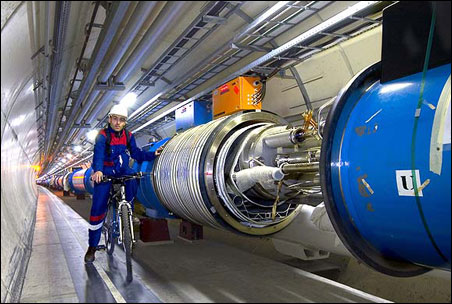
The large particle accelerator re-starts last night after a problem more than a year ago, and will begin the process of simulating the Big Bang explosion.

Russia's Proton-M missile left the launch platform yesterday and brought Europe's Eutelsat W7 communications satellite into orbit.