Space science
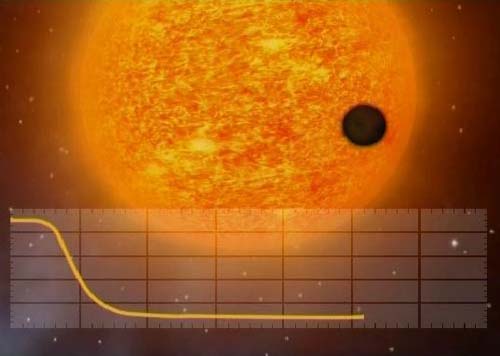
Discovering a small planet like Earth
The first iron-clad evidence of a rocky planet outside the solar system was found using the Kepler Space Telescope.
Browse ScienceInfo articles and explainers related to Saturn.
278 published items.
The first iron-clad evidence of a rocky planet outside the solar system was found using the Kepler Space Telescope.
An article published in Discovery Magazine has revealed that NASA's recently released Saturn photos have been processed in photoshop.
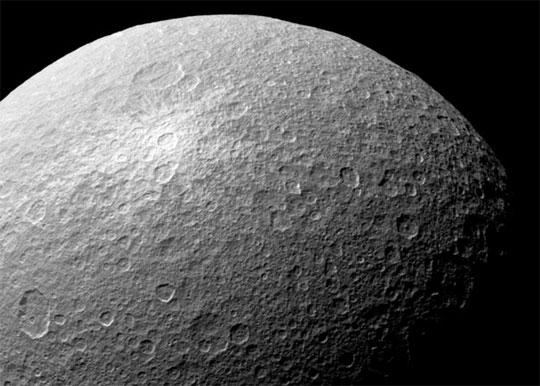
American Cassini spacecraft discovered the existence of the atmosphere on Rhea, Saturn's second largest satellite, in a close-up of this celestial body in March ...
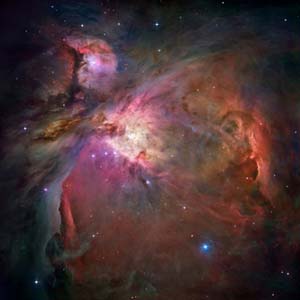
Mars, the Orion Nebula, Jupiter's satellites Europa are places where humans should pay attention in the search for life in the universe.
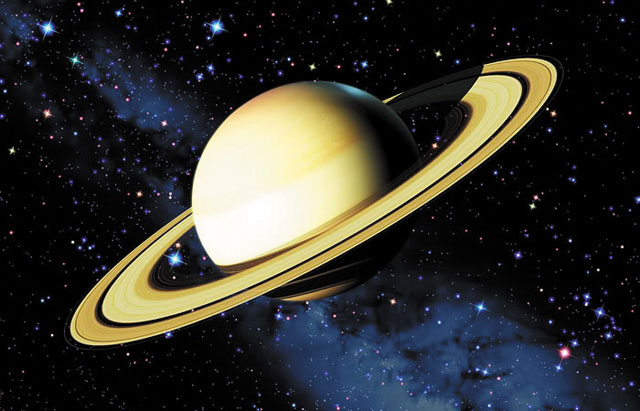
On the surface of Saturn's Titan satellite can exist complex organic molecules that make up the basic units that form life.

With the Kepler space telescope, physicists have discovered two giant planets orbiting a distant star orbit.

The Cassini spacecraft orbiting Saturn has captured a very interesting scene of the small satellite Mimas.

The US Aerospace Agency has just released a photo showing the presence of a liquid in the northern hemisphere of Titan, Saturn's largest satellite.
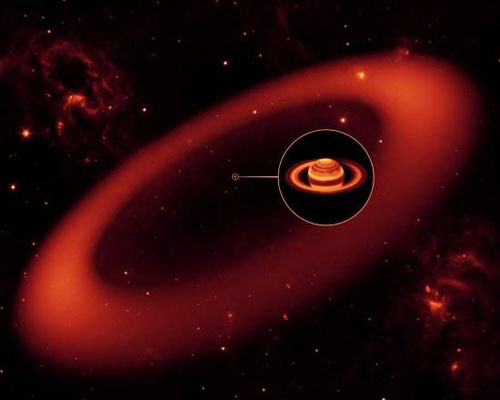
The record-breaking and unprecedented giant belt discovered by Spitzer telescope. The half-dark mystery of the moon Iapetus had the answer.
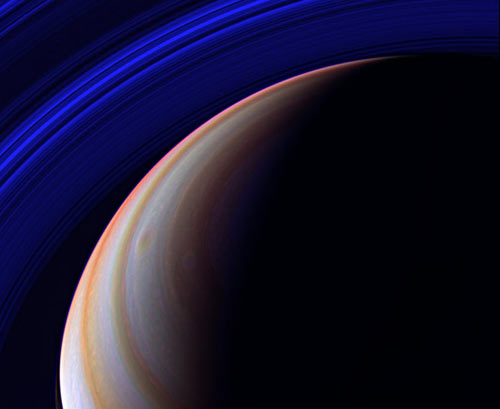
A lightning storm is 3,000 km wide with 10,000 times stronger lightning than Earth's hurricanes. Operating for the past 8 months in Saturn, the lightning storm recorded…

A group of international scientists headed by Oxford University have looked at the dense and hot mass in the center of the planets ...
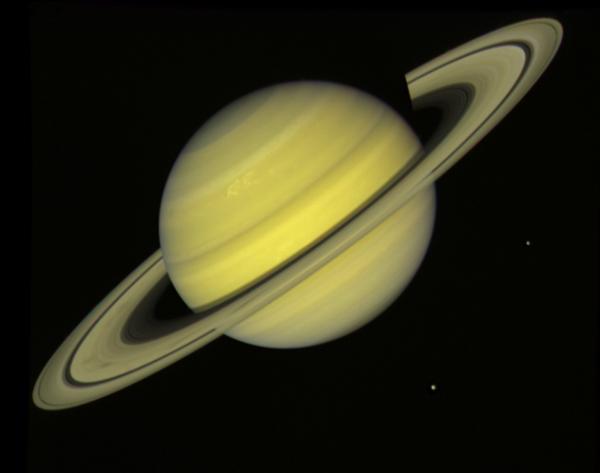
A new method of measuring the rotational speed of large gas planets shows that Saturn's days are 10 hours, 34 minutes and 13 seconds - 5 minutes shorter than previous ca…
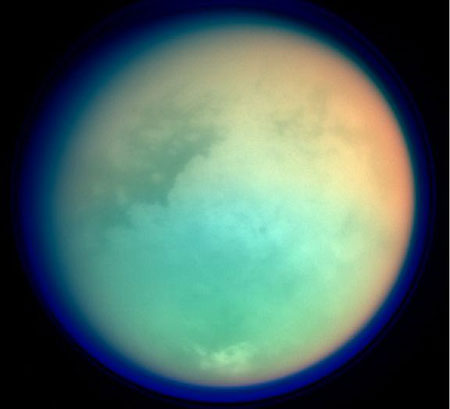
Some environmental conditions on Saturn's Titan satellite are very similar to Earth in the beginning of life.
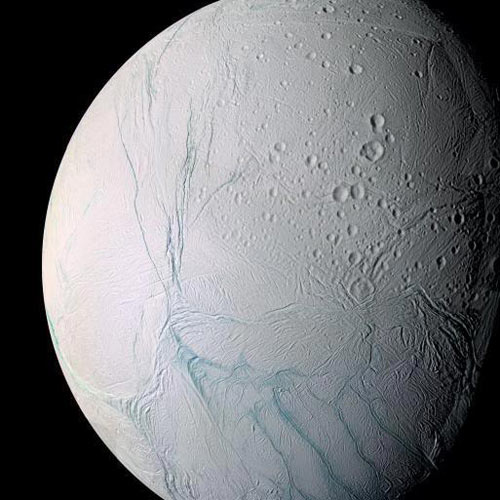
A recent study clarified the origin of tiger stripes and the ocean beneath the surface of Enceladus, one of Saturn's moons.

Scientists have found new evidence that a Saturn satellite has an ocean or saltwater lake beneath its frozen surface.