Space science
Asteroids die
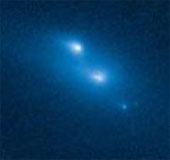
Hubble recorded the self-destruction of a giant meteorite, in an event that was the first to see the Earth's astronomers.
Browse ScienceInfo articles and explainers related to Star.
2,098 published items.
Hubble recorded the self-destruction of a giant meteorite, in an event that was the first to see the Earth's astronomers.
Australian scientists have discovered the oldest star in the universe, formed 13.7 billion years ago, shortly after the Big Bang.
American astronomers used the Hubble space telescope to see for the first time the speed of rotation of a galaxy.
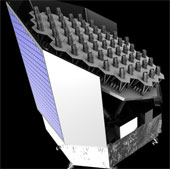
The European Space Agency has chosen a telescope to launch into space and detect unknown planets.
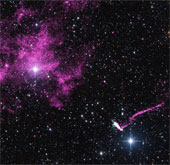
On Feb. 20, researchers working at NASA's Chandra X-ray observatory announced they had taken a picture of the longest stream of particle jets ever discovered in the Milk…
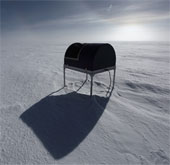
Telescope in Antarctica has just announced a new discovery, showing a giant gas cloud containing star embryos in the pictorial phase.
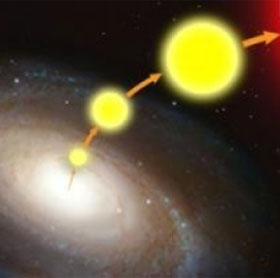
American students find a group of stars that move so quickly that they can escape the Milky Way in the future.
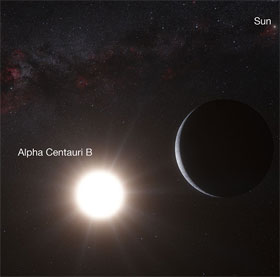
The closest neighbor of the sun may contain a more evolved life-like planet than Earth, with islands on the surface, shallow waters and a sloping sea floor.
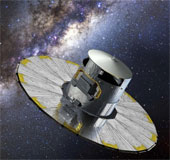
Gaia, the satellite that surveyed one billion European stars, began the Milky Way's most accurate mission to date map.
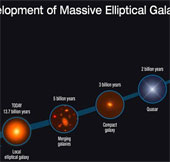
Thanks to Hubble and other telescopes, astronomers are investigating why some giant galaxies quickly grow and stop staring when the universe is less than half of their c…
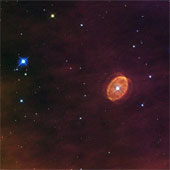
The US Aeronautics and Space Agency (NASA) is focusing its attention on a star that may soon become a supernova more than 20,000 light years from Earth.
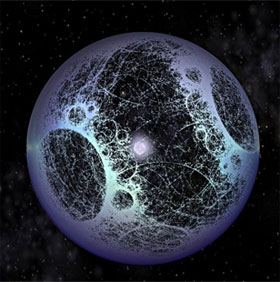
Watching a picture of Earth at night, we will see the world seem to be shining.
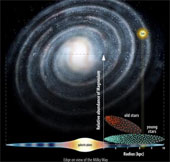
European astronomers have found new evidence that the Milky Way expands inward from the inside out.