Oceanography
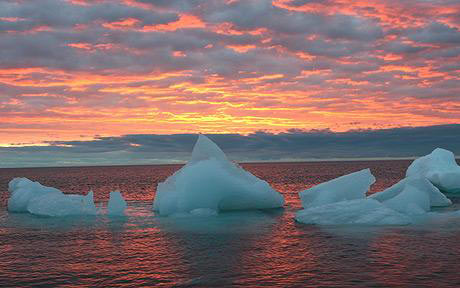
Ice in the Arctic is likely to disappear by 2030
The Arctic ice has melted with unprecedented speed this past summer. US scientists warn that global warming may cause the Arctic ice to disappear by September 2030.
Browse ScienceInfo articles and explainers related to Temperature.
2,022 published items.
The Arctic ice has melted with unprecedented speed this past summer. US scientists warn that global warming may cause the Arctic ice to disappear by September 2030.

Calmly at the sharp teeth that are being spotted out of the 3.66m long leopard, photographer Amos Nachoum desperately takes a close lens to have a good photo despite kno…
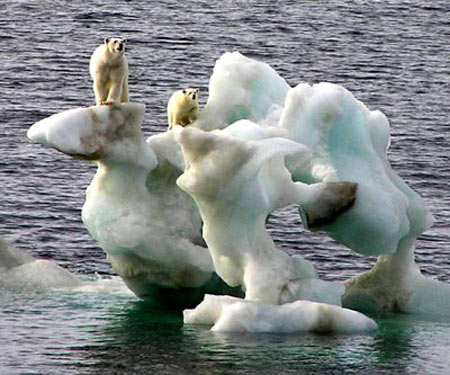
According to scientific calculations, the Arctic will become colder due to changes in earth orbit making it increasingly receive less sunlight.

Sea level worldwide will increase by at least 2 meters in the 21st century and now there is no way for mankind to reverse this phenomenon.

Fossil coral data and temperature records from ice core measurements have been used to set more suitable limits for future sea level rise, and to test predictions about…
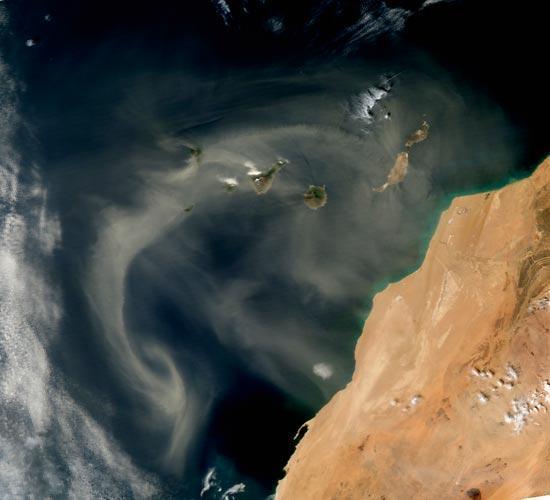
Recent warming trends in the Atlantic are mainly due to air dust reductions and volcanic eruptions in the past 30 years, according to new research.
In some species of scaly oceans, the temperature determines the sex of the fetus. A series of experiments by two Spanish scientists showed that the higher the temperatur…

Antarctic worms, sea spiders, sea urchins and other marine species that live near the shore are often hit by glaciers. New information shows that the habitat along the A…

The Cardiff University research team in Earth and Ocean Sciences and scientists from the Amgueddfa Cymru Science Museum in Wales came to Africa to look for new evidence…

When the home waters become too hot, some fishes swim north for the first time in hundreds of years in search of cooler waters.
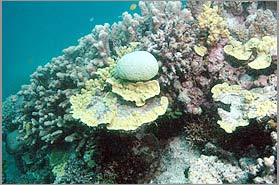
Warming seawater temperatures will cause a serious coral disease called white syndrome according to the latest report on Australia's largest coral reef in the world publ…
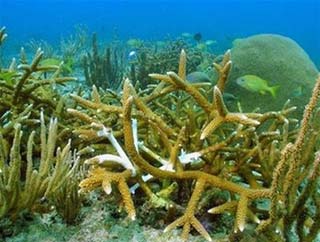
The world could lose more than half of coral reefs in less than 25 years due to rising sea temperatures, algae and other toxic components, scientists warn.
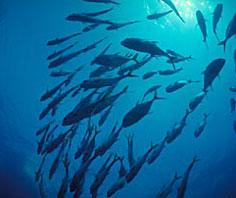
Japanese researchers warn that if the global climate continues to warm up at the current rate, by the end of the century, tuna resources in the Pacific will be seriously…

The warmer global climate phenomenon may have permanently destroyed some of the planet's most rare coral reefs. It is affirmed by a group of international researchers af…
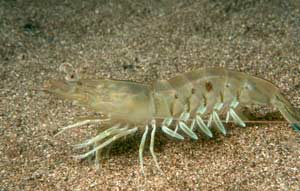
Shrimps are arthropods, one of the important seafood sources of China, the Yellow Sea, and Bohai. This is a large type of shrimp, which used to be paired by pairs, so it…