Space science
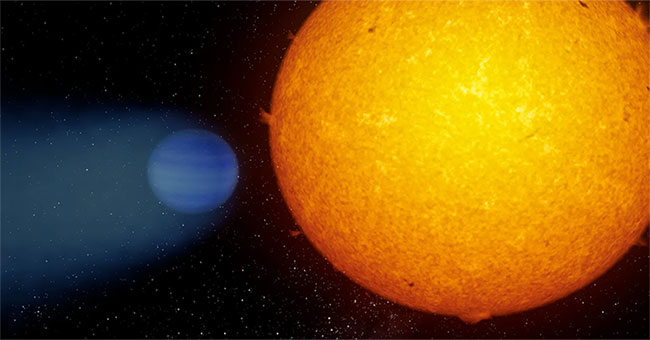
Mysterious giant planet with a helium trail behind
Researchers use the CARMENES device on a telescope in Spain's Calar Alto Observatory to determine a total of five helium-bearing exoplanets.
Browse ScienceInfo articles and explainers related to WASP.
103 published items.
Researchers use the CARMENES device on a telescope in Spain's Calar Alto Observatory to determine a total of five helium-bearing exoplanets.

MIT researchers have discovered an antibacterial ability in the venom of wasps Polybia paulista - a dangerous wasp bee in southeastern Brazil.

With extraordinary stamina, many animals are not at risk of destruction by radiation and can continue to grow even if there is a nuclear war.

We often think that human beings are the smartest creatures. Maybe we are wrong because the reality is not so.
A planet discovered in early 2010 proved to be the hottest planet ever found in the universe - scientists said.

George Poinar, Jr., emeritus professor of zoology at Oregon State University, an insect researcher in amber, recently unveiled images of spider fossils attacking the was…

WASP-104b may be the darkest planet ever discovered. The planet of this hot Jupiter is covered by a mist that absorbs 97 - 99% of the light reaching the surface.

The team used NASA's Hubble Space Telescope to observe extraterrestrial WASP-107b.
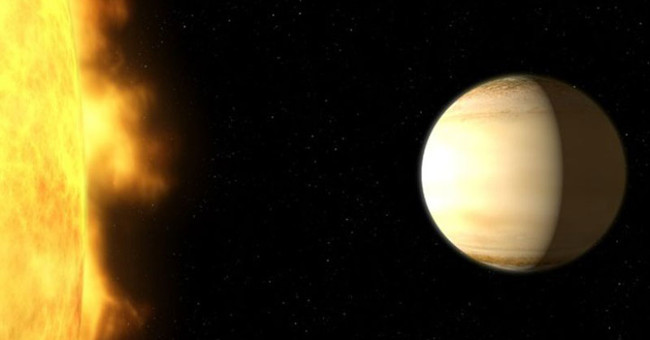
They used the Hubble space telescope and the Spitzer telescope to create a detailed spectrum of the WASP-39b atmosphere, allowing for evidence of water's existence.

Foreign planets may have the same size and mass as Jupiter, but are much hotter than the solar system's largest planet.
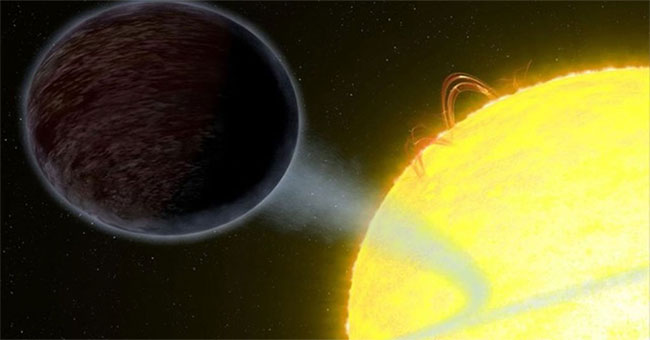
The Hubble Space Telescope of NASA discovered the strange planet WASP-12b is almost completely black, because it absorbs 94% of the light shining on the surface.

A group of international researchers discovered glowing water molecules in the stratosphere of the planet outside the solar system called WASP-121b, New Scientist on 2/8…
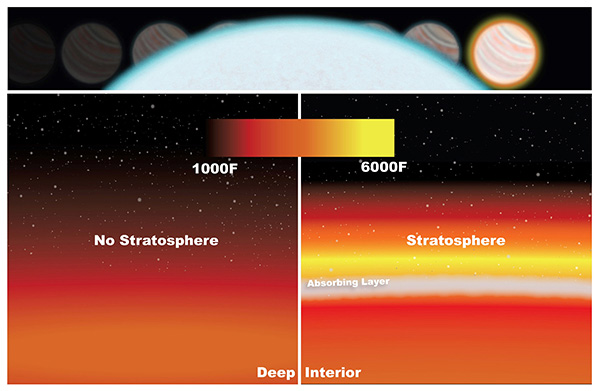
By the Hubble space telescope, scientists at NASA discovered the stratosphere - one of the main layers of the Earth's atmosphere, appearing on a giant, super-hot planeta…

On a planet hundreds of light years from Earth, the wind blows at the same speed as sound, and the temperature is so high that it melts and water evaporates continuously.
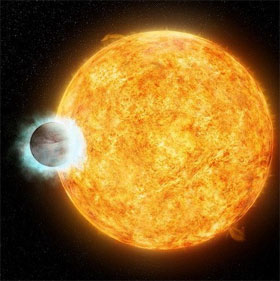
NASA's Chandra X-ray Observatory has discovered an anomalous planet that has the ability to make its star around older than its actual age.