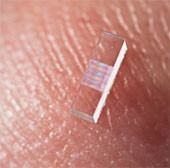
New technology
Accelerator is smaller than grain
In the first experiment, electron particles were accelerated to near the speed of light in a conventional accelerator.
Browse ScienceInfo articles and explainers related to Accelerator.
129 published items.
In the first experiment, electron particles were accelerated to near the speed of light in a conventional accelerator.
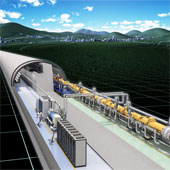
The Japanese government will discuss the project to build the International Linear Accelerator, a machine that will help scientists learn dark matter, with experts on Ju…

Scientists have announced a project to build an accelerator that is bigger than the Large Particle Accelerator, the largest in the planet.

The American Tevatron accelerator stopped working in the fall of 2011, having discovered the Higgs boson. This discovery was made before the Large Hadron Collider announ…

On July 3, the European Atomic Energy Research Organization (CERN) announced that its physicists had discovered a particle with physical properties like the Higgs partic…
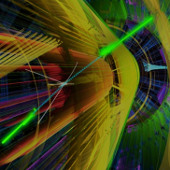
Scientists from the European Atomic Research Organization (CERN) announced yesterday that they might announce the new seed they found this year to be the Higgs particle…

The top of the high-speed train with code L0 is nearly 92 feet (28m) long. The 49-foot (15-meter) aerodynamic cockpit compartment features 24 seats. All 16 cabins can ca…
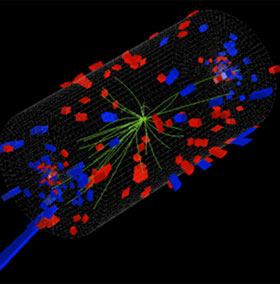
The collisions between the particles inside the atomic crusher machine called Large Particle Accelerator (LHC) seem to have created a new kind of material.

Concerned that a large particle accelerator could create black holes and destroy the earth, a German woman sues the machine in court hoping it will stop working.
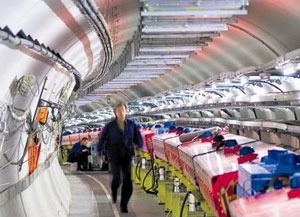
Scientists from the European Atomic Energy Research Organization (CERN) plan to build and install a linear compression accelerator called CLIC in an 80km tunnel in the t…
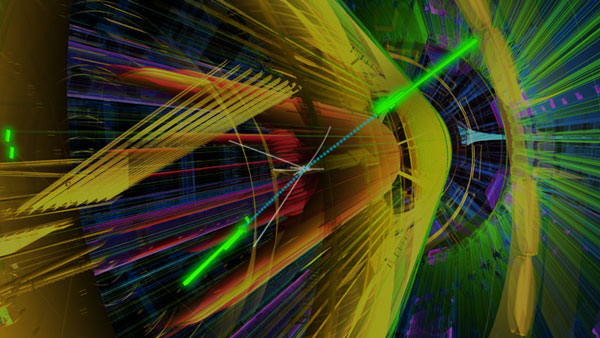
The European Atomic Research Organization (CERN) invited the world's top 5 physicists to an event tomorrow, the move that led analysts to guess the discovery of
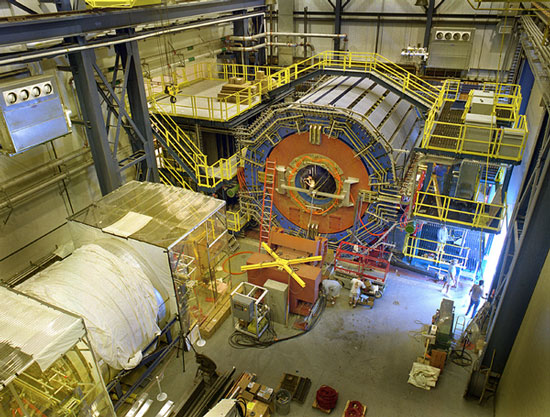
Physicists at Brookhaven National Laboratory (USA) have been included in the Guinness Book of Records because, in a series of experiments on the collisions of gold ions…
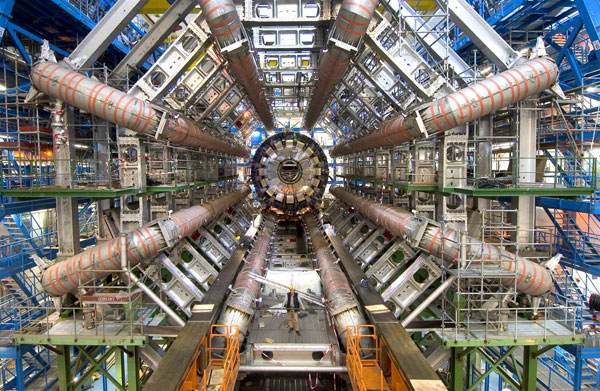
This finding is published in the journal Physical Review Letters and the proofreading can be read on the Cornell University website, while more detailed, on the CERN web…

New evidence suggests that 2012 will be the most probable year for physicists to find the legendary particle: the Higgs.

Last year, physicists surprised the world by announcing neutrinos could move at a faster rate than light.