Space science
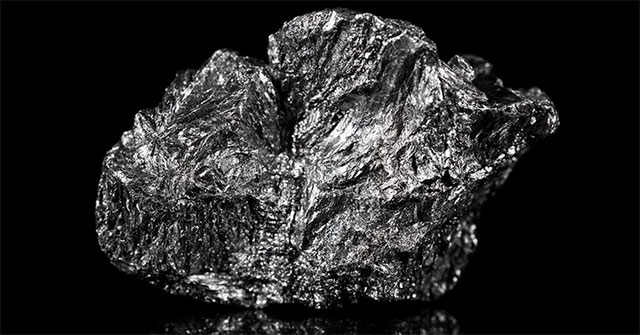
What matter on Earth can get close to the Sun without melting?
Many people might think that tungsten is the substance with the highest melting point on our planet, but that is not the case at all.
Browse ScienceInfo articles and explainers related to Core.
413 published items.
Many people might think that tungsten is the substance with the highest melting point on our planet, but that is not the case at all.
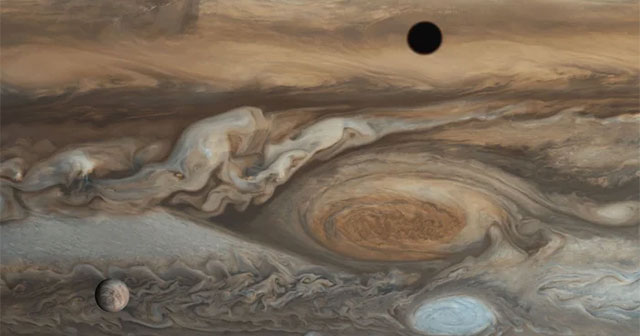
Jupiter's atmosphere is divided into four layers: the troposphere, stratosphere, thermosphere, and exosphere. Each layer has its own function and role in Jupiter's activ…

Scientists have confirmed that an almost completely ice-covered area in Antarctica hides a

Astronomers have discovered two active black holes merging at the furthest distance ever seen, about 900 million years after the Big Bang.

A supernova is an explosion that releases so much energy and brightness that it outshines entire galaxies containing several hundred billion stars.
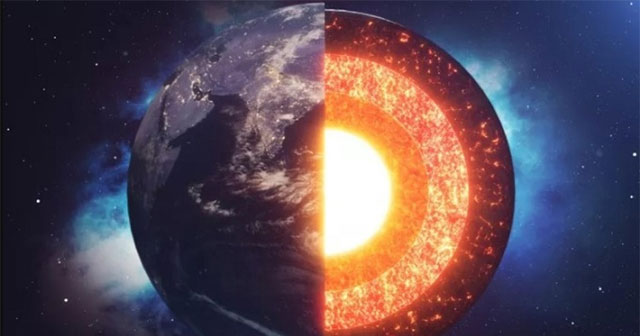
New research published on January 23 in the journal Nature Geoscience reveals that changes in the rotation of the Earth's inner core could occur within the next few deca…

The idea of digging a hole through the Earth and jumping into it has captured the imagination of many.

At its core, stealth technology relies on manipulating light waves, which are responsible for our visual perception.

According to Science Alert, scientists have discovered that the structure of Mars' core is quite similar to Earth's core. However, it is somewhat more compressible and l…

Scientists have found an ancient ocean floor deep inside the Earth with mountains five times taller than Mount Everest through seismic data.
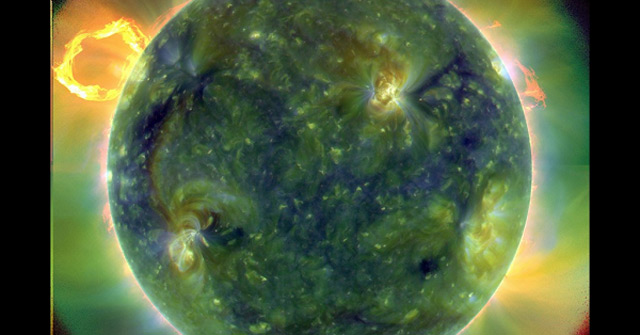
Surrounding the sun is a layer of gas called the corona in plasma form with temperatures reaching over 3 million degrees.
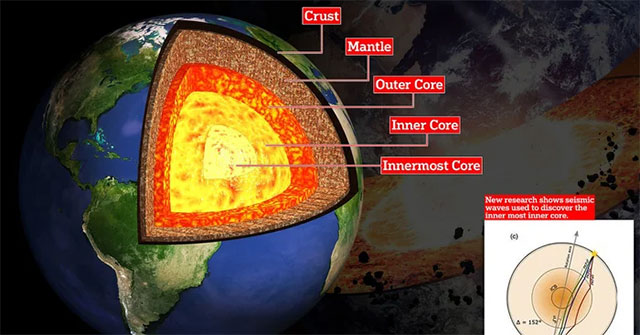
The temperature of the Earth's core is about 6,000 degrees Celsius, higher than the surface temperature of the Sun. Furthermore, the Earth's core is larger than the core…

Scientists have just made a surprising new discovery: The Earth's inner core is not only changing its rotation speed, but may also be deforming.
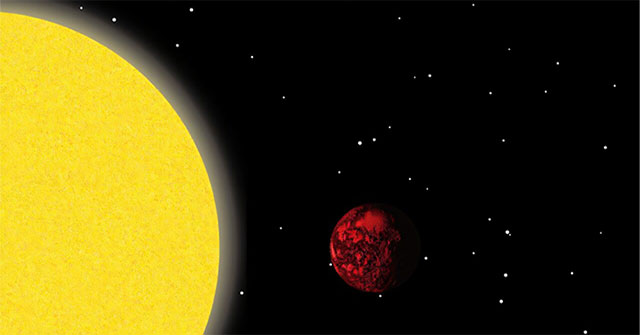
A lead-heavy exoplanet, possibly the leftover core of a giant sphere that flew too close to its sun, has just been discovered.

Heat from planet formation, radioactive decay of some elements, and friction between layers keep the Earth's core at extremely high temperatures after 4.5 billion years.