
New technology
Find out how to make batteries from urine very low cost, high performance
The type of battery that uses electrolytes made from urine appears to be superior in terms of cost, charging times, life expectancy and safety for users.
Browse ScienceInfo articles and explainers related to Electrolyte.
40 published items.
The type of battery that uses electrolytes made from urine appears to be superior in terms of cost, charging times, life expectancy and safety for users.

Recently, US scientists have announced that they have created a new electrolyte for Lithium batteries that promises to increase battery efficiency and improve capacity.

The battery is always hidden risk of explosion, danger to users.
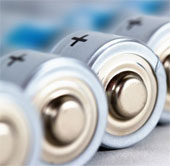
A battery is basically a negative electrode, negative electrode and electrolyte, which have a distinct and independent role.
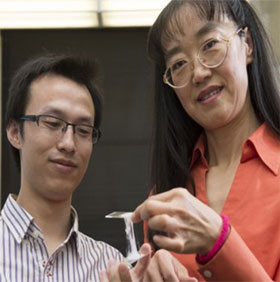
Washington State University researchers develop gum electrolytes to make lithium batteries safer, reduce inflammation.
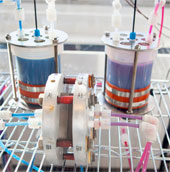
Researchers at Harvard University have successfully created a plant-based rechargeable battery that stores energy instead of metal.

Researchers at Oak Ridge National Laboratory - ORNL (Tennessee, USA) developed a solid electrolyte to replace flammable substances used in lithium-ion batteries.
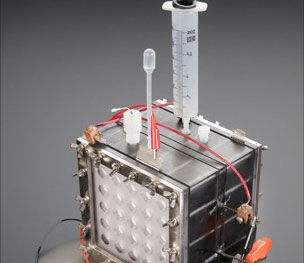
US scientists have found a technology to help bacteria made of bacteria capable of providing energy and can produce an infinite source of hydrogen.

Despite the technological breakthrough of conventional NiMH batteries, lithium-ion batteries are not faultless, but the risk of overheating leads to fires and explosions.

The new Toyota battery model uses porcelain coatings on positive electrode materials that make it a hard-shell design.