
Archeology
Ancient fish 'monsters' used fins to walk
Through the study, the rear fin of the Tiktaalik roseae fish has a solid structure that makes it easy to walk underwater.
Browse ScienceInfo articles and explainers related to Evolution.
634 published items.
Through the study, the rear fin of the Tiktaalik roseae fish has a solid structure that makes it easy to walk underwater.
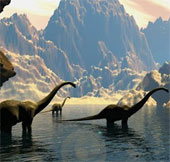
Biologists from Oxford University claimed that though they had disappeared from the earth tens of millions of years ago, however, dinosaurs and mammoths could have been…
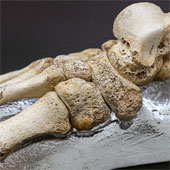
German anthropologists have deciphered the oldest DNA of a person from an ancient femur 400,000 years ago.

The penguin has appeared 20 million years ago and has become diverse due to a reduced global temperature, opening the possibility of residence in Antarctica.
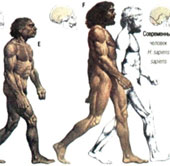
Human history is encoded in the lice 's genome, helping researchers to see hidden aspects of human evolution.
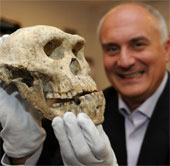
The 1.8-million-year-old skull discovered in Georgia could make experts reevaluate the entire evolution of humanity.
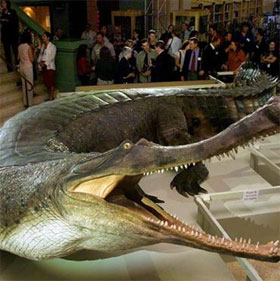
A new study has revealed for the first time how prehistoric alligators evolved in a world dominated by dinosaurs.
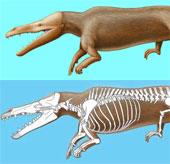
Peruvian researchers have discovered fossils of mammals in the southern desert of the country.

The 429 million year old fossil fish in China may be the earliest creature with a recognizable face, thanks to the modern jaw frame.

Early birds 100 million years ago gave up the long bone tail in exchange for flexible legs and evolutionary advantages.

The hominin, our ancient ancestor, must be attracted by the terrain of the rocky uplands and these topographic canyons giving them shelter and many opportunities to trap…
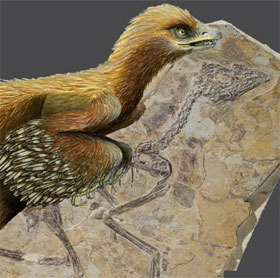
Scientists recently claimed to have found the fossil of a feather dinosaur dating back 160 million years, the world's oldest.
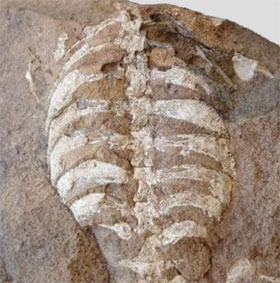
American paleontologists said they discovered a fossil, thereby providing clues about the initial evolution of the natural development of tortoise shells.

The new theory of evolution is highly controversial, including the hypothesis that human ancestors were aquatic primates that had more authentic evidence.

No one knows exactly when humans began to tame wolves. Scientists once found a dog skull in Russia's Siberia Mountains. Chronology of the skull shows that humans began t…