Space science
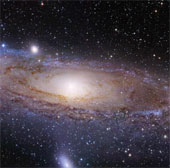
The true size of the Milky Way
Spiral galaxies like our Milky Way are in fact larger than expected, according to a new study by Colorado Boulder University based on data collected from the Hubble Spac…
Browse ScienceInfo articles and explainers related to Gas.
1,386 published items.
Spiral galaxies like our Milky Way are in fact larger than expected, according to a new study by Colorado Boulder University based on data collected from the Hubble Spac…
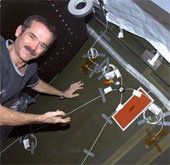
According to aerospace expert Eric Madaras at NASA's Langley Research Center, if the gas leak occurs on the ISS space station, the system will alert, astronauts will loo…
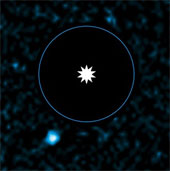
The European telescope has captured an image of an asteroid circling the central star 300 light-years from Earth, equivalent to 3.7 billion round-trips to the moon.
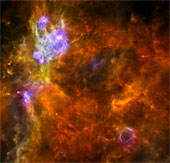
Newly born stars can grow up to 10-100 times the weight of the sun, if they are created in 'star nurseries' surrounded by many older stars.
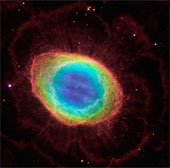
NASA scientists used the Hubble astronomical telescope to determine the 3D structure of the Ring Nebula. Thereby, its structure is shaped like a frozen donut located in…
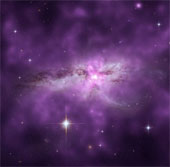
US scientists say the X-ray astronomical observatory of the US Aeronautics and Space Administration (NASA) on Earth's orbit Chandra has provided impressive details about…

The US and European Hubble Space Telescope discovered the remnant gas cloud of a supernova explosion in the Dorado constellation, which is 150,000 light years away from…
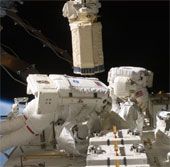
The US Aeronautics and Space Administration (NASA) said on May 11 that two astronauts on the International Space Station (ISS) had finished their walk out of space for m…
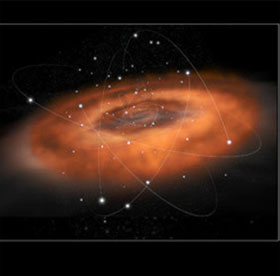
The Herschel Space Telescope has caused a great surprise for astronomers, when observing the extremely hot air being sucked into a black hole in the center of our Milky…
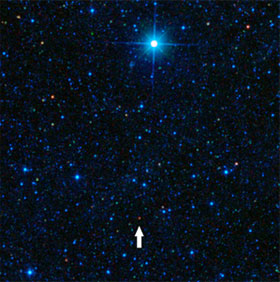
Astronomers have found a galaxy that turns gas into stars with a success rate of approximately 100%. Its name is SDSSJ1506 + 54.

Located 12.8 billion light-years from Earth, the galaxy named HFLSD3 is considered a
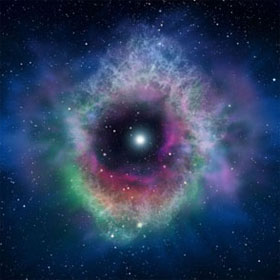
Thanks to a telescope in Chile, astronomers say they have detected traces of pictorial stars at the edge of a black hole in the center of the Milky Way.
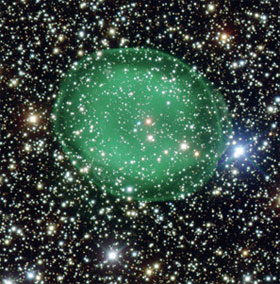
European astronomers have announced the image of a star about 3,300 light-years from Earth, emitting the last bright light before disappearing forever.
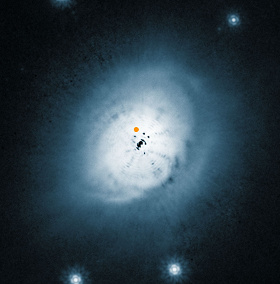
Chilean astronomers said that for the first time they observed directly a planet picturing inside a disk of gas and thick dust at the star system 335 light years away.
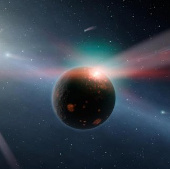
American astronomers say they have discovered six possible objects, comets around distant stars, a sign that comets are also popular out there rather than a special feat…