Space science
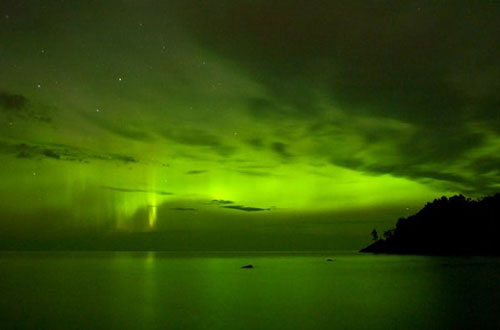
Aurora exploded because of the magnetic storm
The strongest storm from many years of landing on the earth made the aurora appear continuously in the northern hemisphere in the past few days.
Browse ScienceInfo articles and explainers related to Hemisphere.
180 published items.
The strongest storm from many years of landing on the earth made the aurora appear continuously in the northern hemisphere in the past few days.
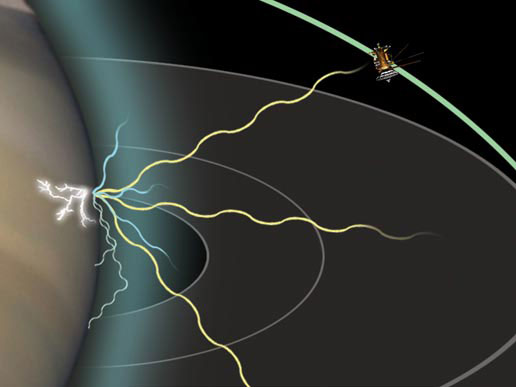
The biggest and most intense storm in the last 20 years has been discovered on Saturn. The initial measurement data for the storm was published on the cover of Nature, J…

From today until the end of the week, people in Vietnam will have the opportunity to admire the clear triangular light blocks on the horizon.

The European Space Research Organization in the Southern Hemisphere (ESO) has decided to choose this South American country as the place for the world's largest telescop…

In Vietnam, spring is calculated starting from Lap Xuan period, around February 5 and ending in Lap do, about May 5.

The US Aerospace Agency has just released a photo showing the presence of a liquid in the northern hemisphere of Titan, Saturn's largest satellite.
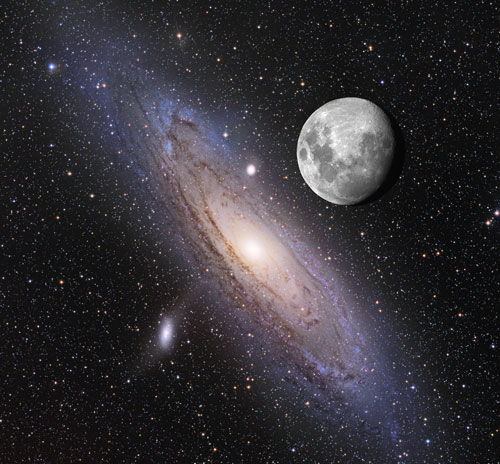
The Nymph, the only galaxy we can see with the naked eye when standing in the northern hemisphere, swells by swallowing the smaller galaxy.
Venus Express has provided the first map of the infrared wavelength of the Southern Venusian hemisphere.

Astronomers in the northern hemisphere just took the first photos of glowing clouds at night last week.

Some similarities between Earth and Mars make many people think that two planets have the same magnetic field but in fact they are not.
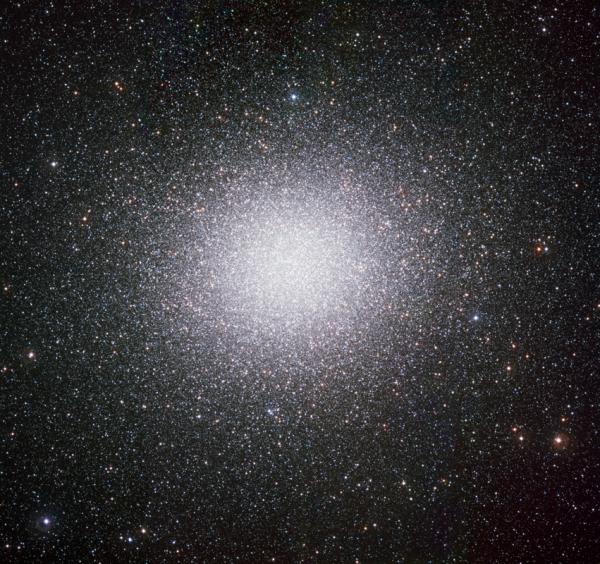
Omega Centauri is one of the most beautiful pearls in the southern hemisphere sky, perfectly illustrated in the latest ESO photo.

The accumulation of a number of chemical elements in the northern hemisphere of Mars makes American astronomers believe that the ocean once existed on the red planet.
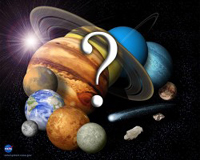
In the journey to conquer the vast universe, people have discovered so many new things, but still, there are countless unknowns to date.
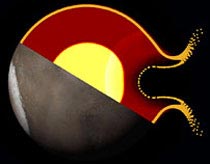
It is difficult to understand why Mars' poles look so different now that may have been elucidated.
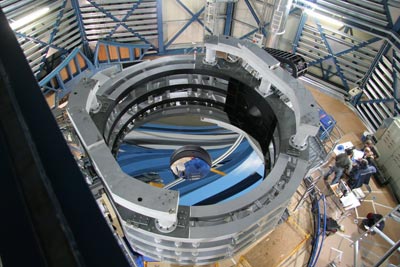
It is expected that this new type of European telescope of the Southern Hemisphere Astronomical Research (ESO) will be used in early 2009.