Discover science
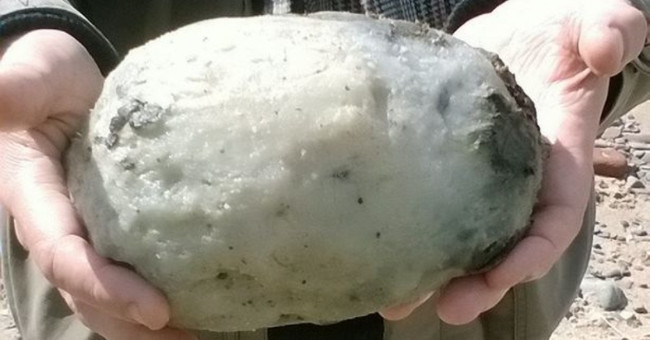
Why ambergris are more expensive than gold?
Many people are willing to spend thousands of dollars to buy stinking waste from vomit fish. Experts say that ambergris is actually more precious than gold.
Browse ScienceInfo articles and explainers related to Molecule.
513 published items.
Many people are willing to spend thousands of dollars to buy stinking waste from vomit fish. Experts say that ambergris is actually more precious than gold.

People love eating meat from ... more than 2 million years ago. Katharine Milton, an anthropologist at the University of California at Berkeley, explains: You can't go d…

Scientists say the preference for sweets is not the only reason we give a little sugar to coffee.

According to the British New Scientist magazine, sometimes the freezing speed of hot water is much faster than that of cold water. This bizarre phenomenon has hurt the s…

You will laugh when reading this seemingly silly question, but so far physicists have not been able to answer correctly.

The preference for sweets is not the only reason we give a little sugar to coffee or tea. According to scientists, sugar plays an important role in reducing bitter taste…

Clouds are something that is so familiar to us that we are almost indifferent to it. But have you ever thought how heavy the clouds are floating in the sky?

Researchers say caffeine, sugar and water will react to each other in a different way than most people think.

Volcanic eruptions have changed lives as well as human history for over 2,500 years, and are the cause of the coldest summers from 500 BC (BC) to 1000 AD. (AD).

According to experts, the scent of death is sweet, very intense - the smell is easy to identify and really unforgettable.

A biologist and American science writer has just calculated the chemical composition of the human body to produce a general chemical formula for mankind, like H2O is the…
Have you ever washed your hands full of oil and realized that it could not be washed with water?

A microwave can cook super fast food or heat cold food in just a minute or less.
Recently, scientists in Germany have found a way to make water reach extremely high temperatures in less than a blink of an eye.

According to Scientific Reports, researchers from Cornell University (USA) believe that clay may be