New technology
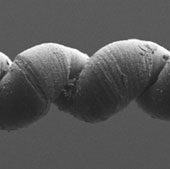
The muscle is 200 times stronger
US scientists have developed artificial muscle that is 200 times more potent than muscle fibers similar in size to human muscle.
Browse ScienceInfo articles and explainers related to Nanotube.
70 published items.
US scientists have developed artificial muscle that is 200 times more potent than muscle fibers similar in size to human muscle.

New fabric made from carbon nanotubes can withstand chemical and biological toxicity, according to US experts.
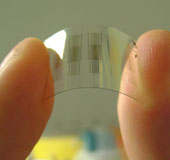
Researchers at IBM Corp. have developed a new technique for mass-producing carbon nanotubes, which can produce smaller, much faster chips.
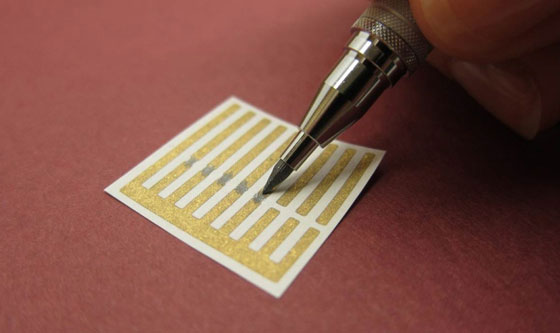
In the past, the University of Illinois at Urbana-Champaign has used nano-ink (made up of silver nanoparticles), which allows users to draw electrical circuits on paper.
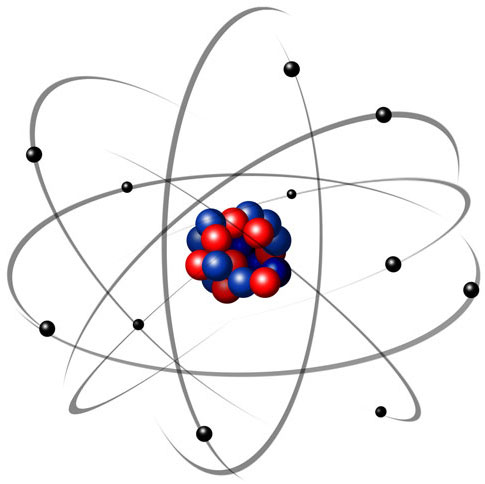
Scientists at the Catalan Institute of Nanotechnology in Spain have successfully tested the world's most sensitive sensor capable of measuring the mass of a proton p…

Researchers in Zurich (Switzerland) are developing a magnetic nanotube capable of detecting harmful molecules that exist in the blood and removing them.
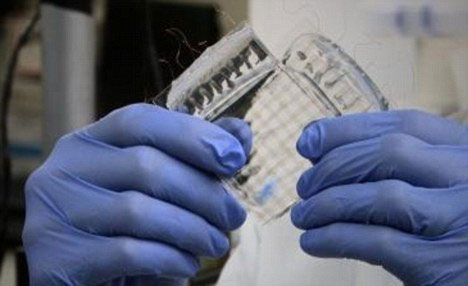
Scientists at Stanford University (USA) have developed a successful one

Tufts University researchers have announced they have succeeded in making the engine, to date, the smallest in the world, according to a report in the journal Nature Nan…

Water is a scarce resource and for many countries, water supplies do not meet demand. Along with the pressure of climate change and population growth, water will become…

Scientists at the Massachusetts Institute of Technology have discovered a new way to generate electricity: using carbon nanotubes to generate electricity.

Under certain conditions, carbon nanotubes can convert heat into energy and vice versa.

GS Research Team. Yi Cui, of Stanford University, has successfully put carbon nanotubes (one billionths of a meter) into a dye.

US scientists say they have successfully built a bio-battery battery that is no different from the existing rechargeable batteries on the market.

Oxford chemists have discovered a way to use carbon nanotubes to test the chili's spicy taste. This technology may soon be commercially available as a disposable sen…
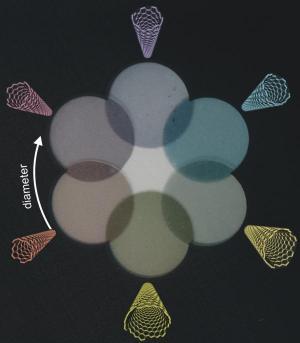
Carbon nanotubes are promising materials for high-tech applications because of their rare properties of mechanics, temperature, chemistry, optics and electricity.