
Discover science
What Is Wave-Particle Duality?
Wave-particle duality describes how quantum objects such as photons and electrons can produce wave-like interference in some experiments while being detected as discrete…
Browse ScienceInfo articles and explainers related to Photon.
95 published items.
Wave-particle duality describes how quantum objects such as photons and electrons can produce wave-like interference in some experiments while being detected as discrete…
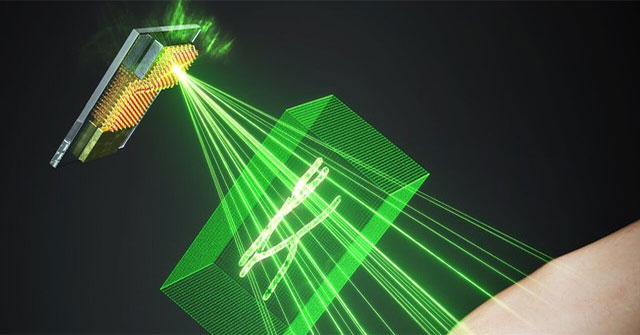
A collaboration between scientists from the University of Ottawa and Sapienza University has captured for the first time the dance of two quantumly entangled photons in…

Scientists have found a new limit on the mass of a particle of light (photon) based on indirect measurements.

Photonic crystals are optical nanostructures that affect the propagation of photons within them in a similar way to the way semiconductor crystals affect the motion of e…

If proven experimentally, this would be another confirmation of Einstein's famous formula.
New insights into dark matter emerge as researchers explore theories about
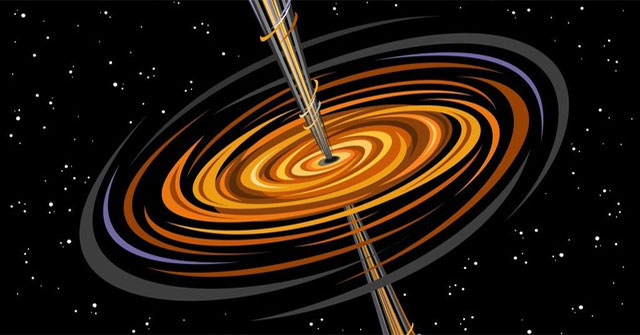
The accretion disk around a black hole makes it appear as if the material is burning because the material is swirling rapidly and giving off a lot of heat.

The Parker Solar Probe, which reaches speeds of 532,000 km/h, is the fastest man-made object, but is still very slow compared to other celestial bodies in the universe.
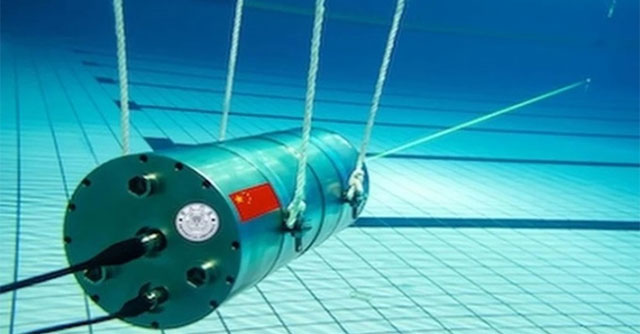
Xiamen University's lidar (laser radar) system can operate at a depth of one kilometer and detect oil spills from a distance of 12 meters.
New research opens up ways to improve sensors as well as quantum computing.

The quantum world is indeed a strange world, where nothing is impossible.
Although there is still no evidence of alien life, that does not mean that there are no aliens.

Gases are usually composed of atoms or molecules that swirl more or less rapidly through space.

Researchers make sensor cameras that can capture the movement of light particles at unprecedented speed and resolution.
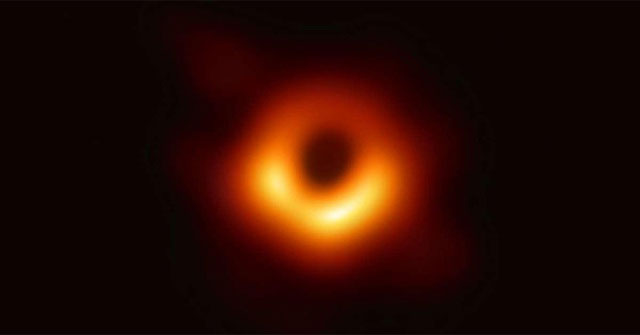
Harvard scientists are the ones who have just claimed to find a way to take sharper pictures of black holes than old fuzzy images available so far.