Science invention
Inventing materials to help produce electricity in the human body
On July 6, scientists from Tel Aviv University (Israel) announced a nanomaterial that can 'catch' parts of the body to produce electricity.
Browse ScienceInfo articles and explainers related to Piezoelectric.
9 published items.
On July 6, scientists from Tel Aviv University (Israel) announced a nanomaterial that can 'catch' parts of the body to produce electricity.

Japanese scientists made chewing gum with a customizable flavor. This can happen thanks to the piezoelectric effect.

In the next two years, we will most likely witness the human body supplying electricity to electronic devices such as phones and tablets.

Mexican entrepreneurs have developed a low-cost electricity exploitation system by taking advantage of the traffic of vehicles on the road.

Exceeding more than 8,600 projects, 18-year-old Ceren Burcak Dag has just won the Stockholm Prize for Water for Students at the World Water Week 2009 conference in Stock…
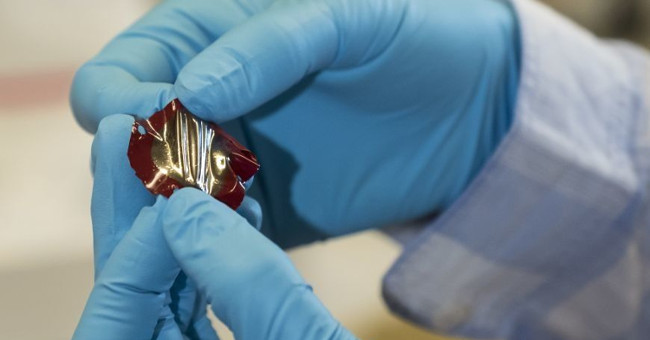
A team of researchers has developed an organic rubber-like material with high elasticity, which is interesting when stretching or compressing produces electricity.
The idea of producing electricity from airborne vibrations is not new, but a team at the Singapore Institute of Science and Technology has turned it into reality.
Researchers at the Georgia Institute of Technology used zinc oxide microfibers to significantly improve the efficiency of ultraviolet light emitting diodes.

To capitalize on the mechanical means, a company in Israel has built street and highway power generation.