Computer science
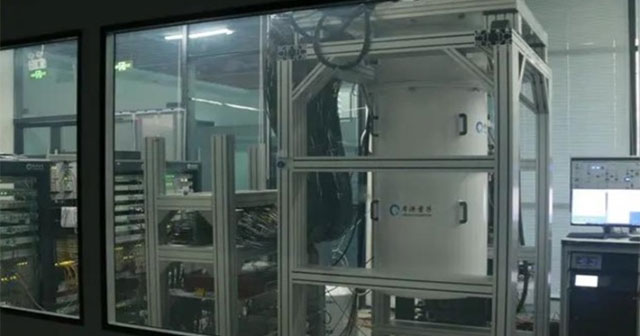
China's new quantum supercomputer operates
The Origin Wukong computer is China's most advanced transferable and programmable superconducting quantum computer.
Browse ScienceInfo articles and explainers related to Quantum.
263 published items.
The Origin Wukong computer is China's most advanced transferable and programmable superconducting quantum computer.

Although there is still no evidence of alien life, that does not mean that there are no aliens.

If today's most powerful supercomputers need 9,000 years to solve this problem, light quantum chips only need a few millionths of a second.

Because they do not use conventional electromagnetic waves to operate, these sound wave chips can be compatible and connected to quantum computer systems.

Can we punish a criminal, for what he did in the past, when the world really has no past or future?

The coastal country of Namibia is not only famous for its beautiful scenery, the jade mined here is both diverse and welcomed by all regions. But among the communities i…
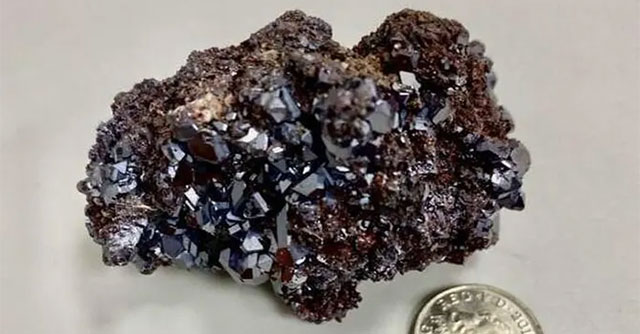
The magical ancient gem could help scientists create large particles that are a hybrid of light and matter, leading to a leap in science and technology through a future…

Chinese scientists perform quantum secure direct communication (QSDC) over the world's longest distance.
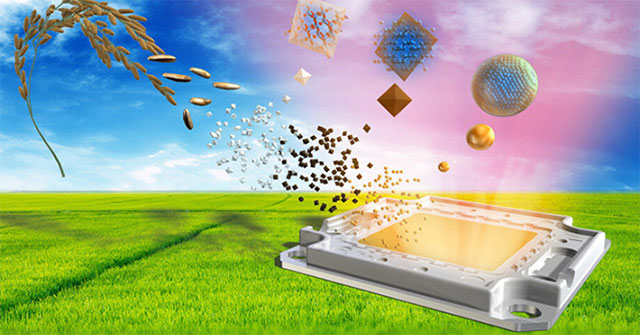
The team from Hiroshima University utilizes discarded rice husks to develop eco-friendly red-orange LEDs.

Gases are usually composed of atoms or molecules that swirl more or less rapidly through space.
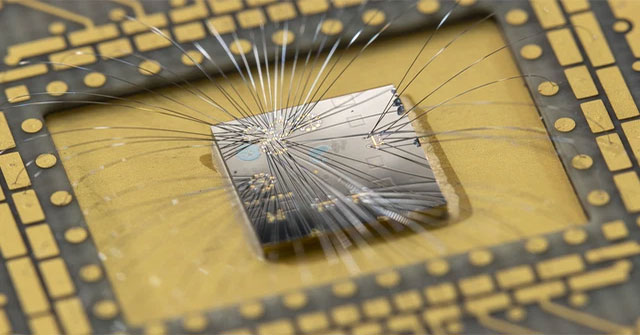
Microsoft proved the existence of a conjectured quantum state in 1937, and relied on it to take quantum computing to the next level.
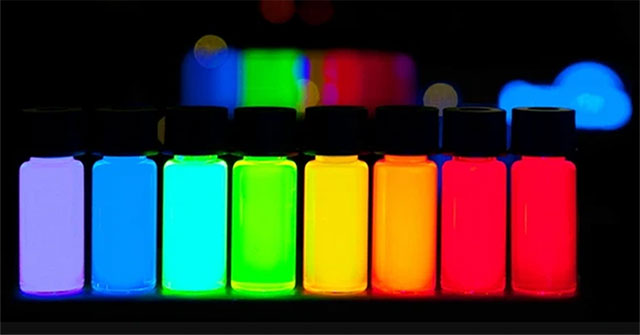
Through quantum technology, scientists have successfully made silk threads that glow in a completely natural way.

A team of US and Chinese researchers have found the exotic metal in a material where charge is carried not by electrons-electron particles, but by a wave-like entity cal…

What is quantum technology, why America?

The study, conducted by scientists at the University of New South Wales (UNSW), was published in the scientific journal Nature on January 20.