
Discover science
Social network history
Social networking sites such as Facebook and Twitter have become popular communication and community sharing tools for billions of people around the world.
Browse ScienceInfo articles and explainers related to Social.
565 published items.
Social networking sites such as Facebook and Twitter have become popular communication and community sharing tools for billions of people around the world.
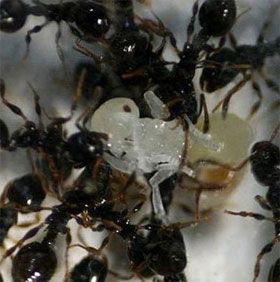
Ant, the scientific name is Formicidae, is an insect family of the Membrane wing. The species in this family are highly social, capable of living into large corporations…

According to social studies, posting photos of Facebook every day, leaving beards, praising ... are some habits that make you accidentally hated ...

New research by British scientists shows that people who like to communicate or have good social skills and many friends often have a larger brain structure.

Although accounting for only 0.2% of the global population, Jews won 22% of the Nobel prize.

Here are the obsessive posters, giving us vivid pictures of the dark side of life today ...

Leadership is an innate quality. This is the conclusion of scientists after conducting fish research and predicting unrest in animal social groups as well as humans, whe…

However, why it was created and how humans evolved to become music lovers is still a mystery to scientists.

The quality of a performance does not determine the number of applause applause for performers, according to a new study.

In ancient Chinese society, ordinary people had no status and social status. So, 'identity card' is something that only belongs to people who have a clear status and sta…

Researchers from the University of Guelph, Canada selected 125 students to attend an experimental interview. Students will self-assess their level of anxiety and the int…

Determination and 'loudness' are the best way to win any debate or argument, even if you're wrong, according to a new study.

Researchers from the University of Michigan (USA) tracked on dozens of students to find out the phenomenon of transmission in mobile phone use, Telegraph reported.

Researchers from the University of Delaware (USA) discovered that men with large but short faces are more likely to bluntly express their own racial biases.

A new British study found that men actually find it harder to read people's emotions than women, because their brains have to work twice as long as women in order to det…