
Discover science
Aliens control the fastest moving stars in the galaxy?
Long-lived civilizations may have many motives for wanting to move elsewhere in the galaxy.
Browse ScienceInfo articles and explainers related to Star Galaxy.
16 published items.
Long-lived civilizations may have many motives for wanting to move elsewhere in the galaxy.

Looking at a star in the sky, which appears only as a small bright dot and estimates its distance, seems very vague.
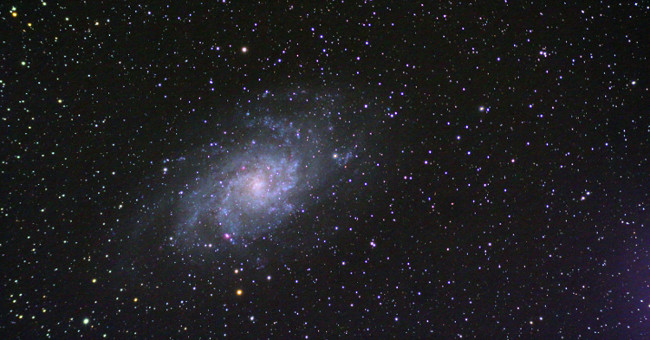
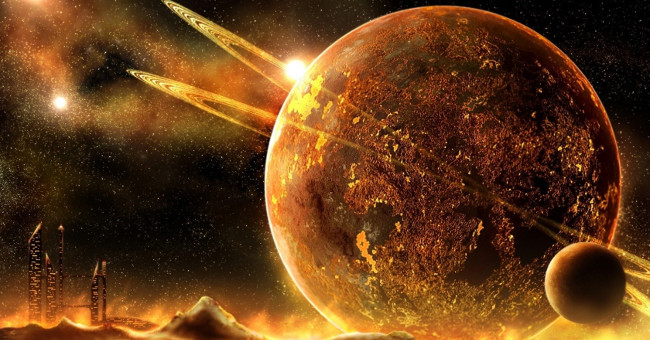
The new discovery, published in the March 31 issue of the journal Nature, points to billions of years ago of precious metals like gold, silver, and platinum in the unive…
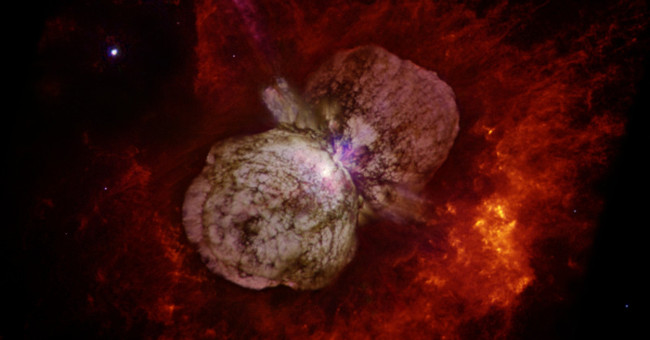
Scientists have recently discovered five stars in other oversized galaxies, similar to Eta Carinae, the largest and brightest star in the galaxy.
If we assume that a quarter of the Milky Way's 400 billion stars have orbiting planets
Do you often observe the sky at night, you will see the phenomenon: On cool summer nights, the number of stars in the sky seems more than the stars in winter, the cause…
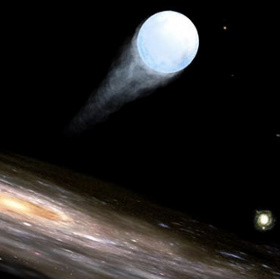
Last month astronomers discovered six super-fast stars flying very fast near the black hole in the center of the Milky Way, where the dust density was so great that the…
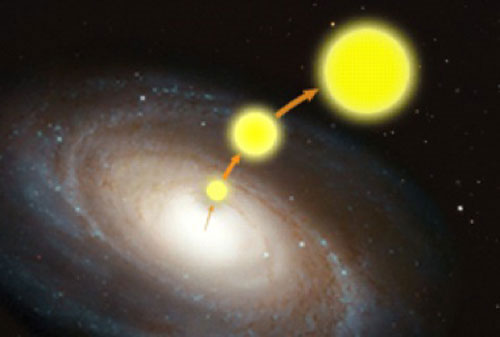
It is not easy to get a star out of its galaxy, but experts at Vanderbilt University (USA) have identified a group of more than 675 stars falling into this situation. Wa…
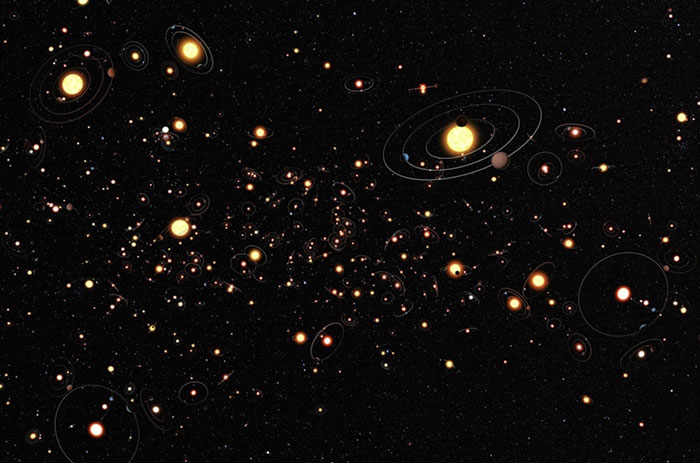
Our Milky Way Range has at least 100 billion planets according to a detailed statistical study based on the discovery of three extrasolar planets thanks to microlensing.

The US Hubble telescope detected a super-hot blue star moving at speeds of up to 2.56 million km / h.
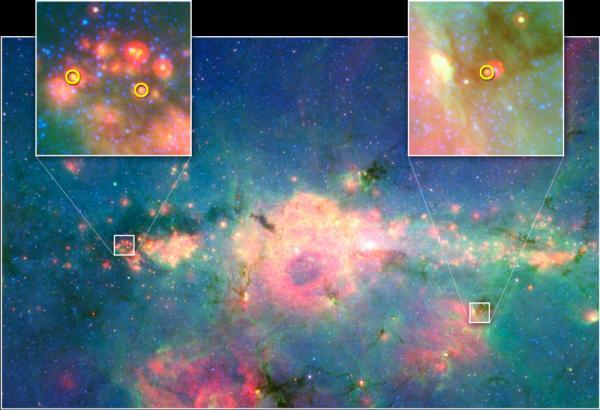
Astronomers have finally discovered newborn stars at the turbulent center of the Milky Way.

Scientists at the University of Toronto and the University of British Columbia have helped reveal the

Photos taken with Hubble telescopes and NASA's Cassini probe not only contributed to scientific research but also artistic value.
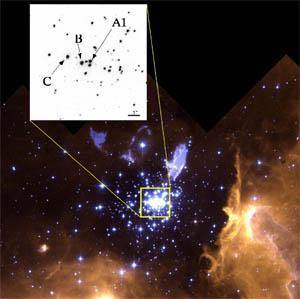
The theoretical models of star formation have hypothesized the existence of extremely large stars that could reach 150 times the mass of the sun.