A group of researchers from Chiang Mai University (Thailand) has just announced the discovery of a new species of flowering plant .
This new plant species belongs to the Annonaceae family, from specimens collected from Narathiwat province, southern part of this Southeast Asian country.
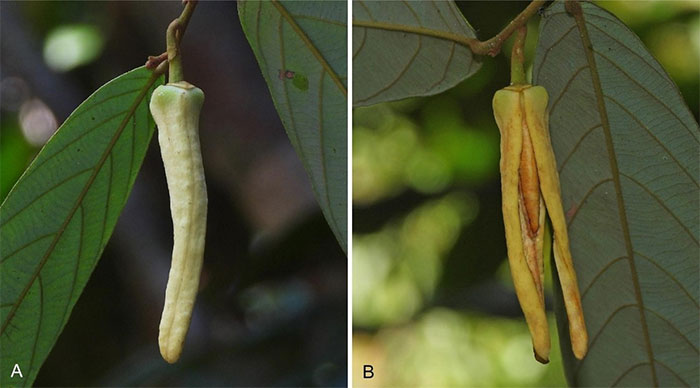
New Thai plant species with single leaves and flowers. (Source: Species New to Science)
Species of the custard apple family are found mainly in tropical regions such as Central and South America, Asia and Africa, with only a few species living in temperate regions.
The main characteristic of this type of plant is that it has simple leaves, growing alternately in two rows along the branches.
The researchers named the new plant species Friesodielsia lalisaeDamth , Baka, and Chaowasku in honor of Thai-born K-pop singer Lalisa "Lisa" Manoban , a member of the Korean girl group Blackpink.
The Chiang Mai University research team said one of its members was inspired by Lisa to pursue a PhD.
Currently, the group is implementing a project to research the taxonomy and evolution of rare and unknown plant species in the Annonaceae family in Thailand for conservation, with the support of the Thai Office of Scientific Research and Innovation and the Ministry of Higher Education, Science, Research and Innovation.