In the journey of exploring the universe, each new discovery brings unique perspectives and sometimes, heated debates within the scientific community.
Turbulence outside the Milky Way and the challenge of the "wave model"
Galactic turbulence , in simple terms, is the effect of external celestial bodies that affect the motion of stars inside the Milky Way. One of the prominent hypotheses is that the source of this phenomenon is the Sagittarius dwarf ellipsoid galaxy, which is located at the edge of the Milky Way. However, the research team at Lund University has come up with a "wave model", based on the assumption that the turbulence is the result of gravitational waves from the dwarf galaxy.
The crux of the controversy lies in the discrepancy between the model's predictions and the actual observational data. Several factors, such as the mass, structure, and distribution of the Sagittarius Dwarf Ellipsoid Galaxy, are not fully modeled. In addition, gravitational influences from the Milky Way itself or other objects in the vicinity may contribute to disturbances that the "wave model" does not account for.
This hypothesis suggests that to better understand, scientists need more precise experimental data and develop more complex models to decipher the true origin of disturbances in the Milky Way.
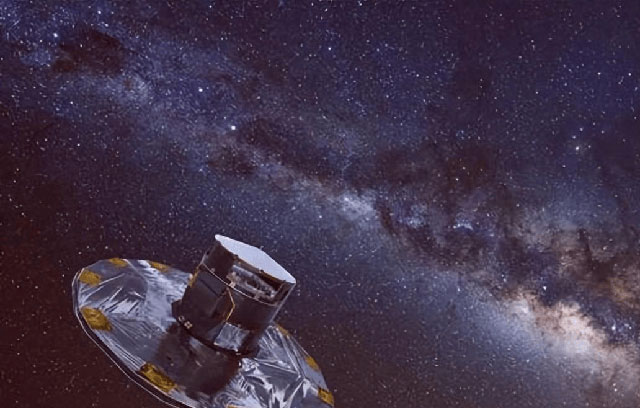
The Milky Way is not a static galaxy.
Recently, a study by a group of scientists at Lund University, Sweden, published remarkable results in the Monthly Bulletin of the Royal Astronomical Society on the phenomenon of turbulence outside the Milky Way. However, the hypotheses of this research group are not without question, raising many questions about the complex operating mechanism of the universe.
The Expansion and Merger of Galaxies: A Different Approach
The Milky Way is not a static galaxy. The expansion and merger of galaxies has attracted the attention of astronomers. In this context, the proximity of the Milky Way and the Andromeda Galaxy raises interesting questions about the mechanisms of interaction between galaxies.
A traditional view holds that galaxies expand and merge primarily through a process of 'engulfing,' where smaller galaxies are absorbed into larger ones. However, a new perspective suggests that this proximity may be a result of the expansion of space following the Big Bang. According to this approach, expanding space has pulled galaxies closer together, rather than through direct interactions.
This perspective offers a novel explanation for galaxy growth and mergers, emphasizing that natural cosmic factors may play a larger role than collisions or engulfments between galaxies. During their long-term evolution, galaxies may go through multiple phases of expansion and contraction, without necessarily interacting directly.
Humanity and the Distant Vision of Earth
Changes in the structure of the universe are not only of academic interest, but could also affect the long-term future of Earth and humanity. One scenario predicted by scientists is the merger of the Milky Way and Andromeda galaxies in about 3.75 billion years. This raises the question: can life on Earth survive this event?
Scientists believe that while Earth may have been affected by major cosmic events, the changes to the planet's habitat probably came not from galactic mergers, but from internal factors. For example, Earth's geological activity could have led to major changes in climate and topography, creating new ecosystems.
In addition, humanity may turn to exploring other planets to ensure future survival. Mars is the leading candidate, with major projects underway to turn the red planet into a habitable environment. In addition, other planets and moons such as Jupiter's Europa and Saturn's Titan are also being considered as potential future "homes".
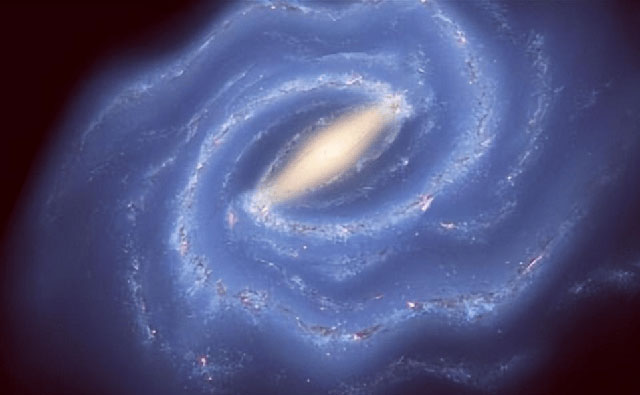
The Milky Way is not only our home but also a great story.
Hope in a Changing Universe
Despite the challenges facing humanity, there is reason to be optimistic about our ability to adapt and survive the dramatic changes that are taking place in the universe. Advances in space technology, coupled with an ever-increasing understanding of how galaxies work, will help us better prepare for the future.
The Milky Way is not just our home, it is a grand story that continues to be written through new discoveries. With each question we answer, we get closer to understanding our place in the vastness of the universe. Current scientific debates, such as the 'wave model' or the mechanism of galaxy mergers, are just the beginning of deeper explorations to come.