NASA is tracking nearly five of the most dangerous asteroids to Earth, including those with a high risk of causing a catastrophic impact.
About 66 million years ago, Earth was hit by an asteroid the size of a city. Its impact released more energy than 72 trillion tons of TNT, creating a 100-mile-wide (estimated 180 km) scar in Mexico's Yucatán Peninsula.
The Chicxulub asteroid is believed to have caused the Cretaceous-Paleogene extinction, wiping out three-quarters of all living species, including non-avian dinosaurs.
In an effort to prevent similar collisions, NASA's Center for Near-Earth Object Studies (CNEOS) operates the Sentry impact monitoring system, which continuously analyzes potentially hazardous future asteroid paths. Here is a list of the five most dangerous asteroids currently being tracked.
1. Bennu
Size: 0.49 km
Volume: 67 million tons

Discovered in 1999, Bennu is currently considered the most dangerous asteroid to Earth. However, its chance of impact is very low, only 0.037% (1 in 2,700), and the peak risk would be September 24, 2182. If Bennu were to collide with Earth, it would cause an explosion equivalent to 1.4 billion tons of TNT, causing massive regional damage.
Interestingly, Bennu contains the original chemical ingredients for life, including the amino acid glycine and many water-bearing minerals, according to data analyzed by NASA's OSIRIS-REx mission in 2023.
2. 29075 (1950 DA)
Size: 1.3 km
Volume: 71 million tons
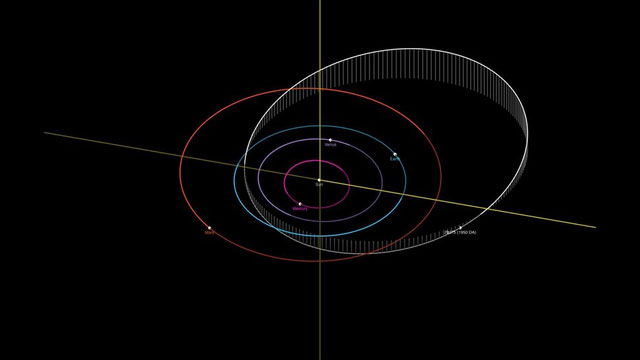
1950 DA has a 0.0029% (1 in 34,500) chance of causing a global catastrophe if it collides with Earth, with the highest risk occurring on March 16, 2880. The impact would produce an explosion equivalent to 75 billion tons of TNT – enough to wipe out human civilization.
3. 2023 TL4
Size: 0.33 km
Volume: 43 million tons
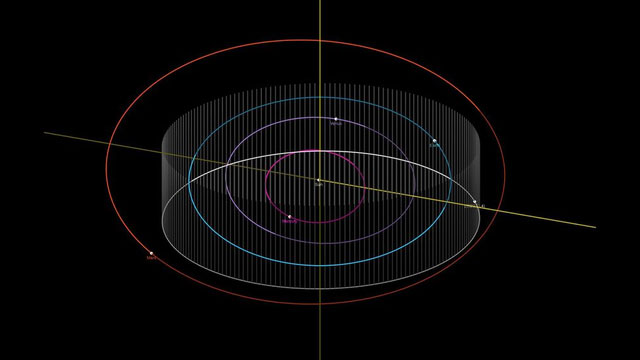
2023 TL4, discovered in 2023, is proof that even new asteroids can pose an immediate threat. With a 0.00055% (1 in 181,000) chance of impact, its most dangerous moment is October 10, 2119. If it does collide, it will release the equivalent of 7.5 billion tons of TNT.
4. 2007 FT3
Size: 0.34 km
Volume: 49 million tons
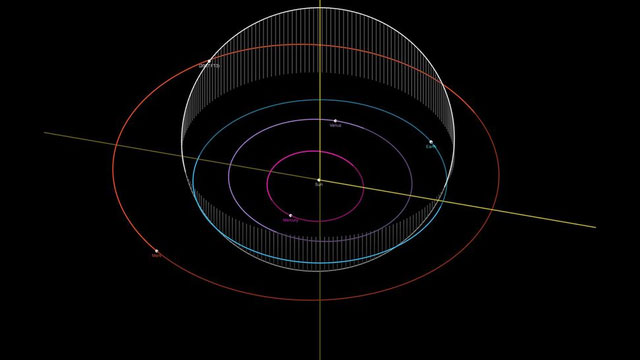
2007 FT3 is currently listed as a "missing asteroid" because it has not been observed since 2007. However, NASA estimates a 0.0000096% (1 in 10 million) chance of impact on March 3, 2030. If this were to happen, the energy would be equivalent to 2.6 billion tons of TNT, causing severe damage on a regional scale.
5. 1979 XB
Size: Unknown
Weight: Unknown
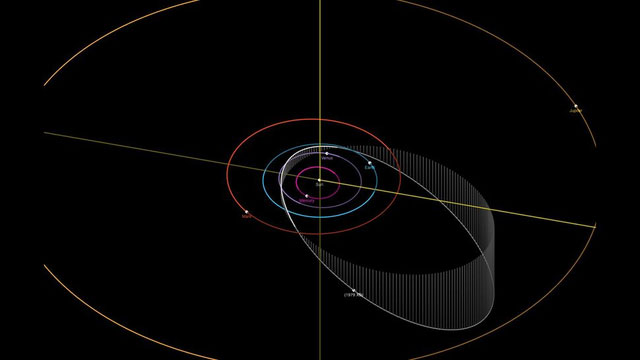
1979 XB is another 'missing asteroid ,' which hasn't been observed since 1979. According to CNEOS scientists, it has a 0.000055% (1 in 1.8 million) chance of colliding with Earth on December 14, 2113. The collision could release energy equivalent to 30 billion tons of TNT.