Some of these designs were ahead of their time - some just looked good on paper.
Hunting Guns You've Probably Never Heard Of
1. Winchester Model 70 with Transistor Radio
Before there were bluetooth speakers or AirPods, this gun was equipped with a radio.
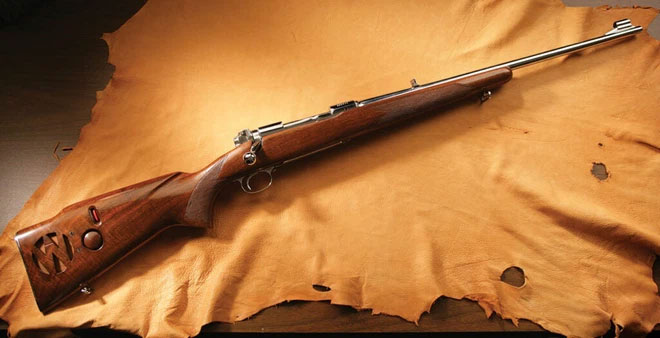
The built-in radio on the stock will definitely be a hit.
Transistor radios were first sold commercially in the United States in 1954 and quickly became popular. Someone at Winchester asked the question: who wouldn't want a gun with a built-in radio?
Why not? Guns could come with compasses, first aid kits, ammo boxes, even a grinder* in the stock . A built-in radio would certainly be a hit. In 1955, Winchester created the Model 70 in .308 caliber, made of plated metal and with a transistor radio built into the stock, emblazoned with the 'W' logo. After showing the gun at a few trade shows that year and getting no enthusiastic response, Winchester shelved the idea.
*"During the Cold War, someone had the rather ingenious idea of putting a horse feed mill in the butt of a gun so soldiers could process food for their horses. Some reports say it was to grind coffee."
2. Remington Parker Shotgun
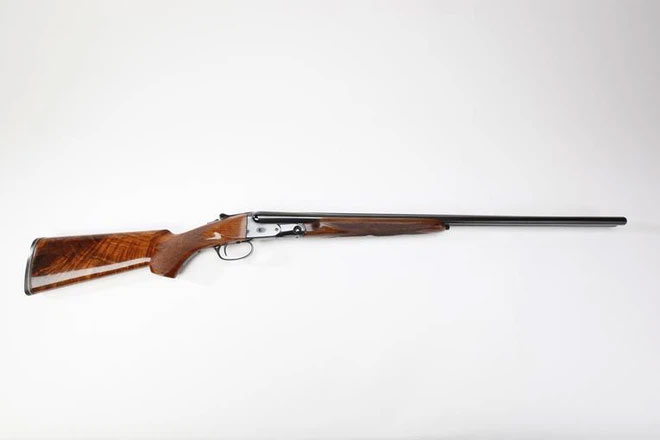
Parker guns have a magical appeal that keeps them at the top of hunters' lists.
Among American double-barreled guns, Parker guns had a magical appeal that kept them at the top of the list of hunters and shooters. Parker sold the brand to Remington during the Great Depression. Remington stopped producing Parker guns in 1942.
In 1984, the Japanese-made Parkers returned to the U.S. market, and they were good guns and attracted a lot of attention. Maybe someone at Remington saw this and figured that if Americans wanted Japanese-made Parkers, they might as well buy the real thing. In 1987, Remington's custom gun division produced a few 20-gauge Parkers, combining the original Parker design with modern touches like a roen choke.
3. .22 John Wayne/ Jim Sullivan Semi-Automatic Pistol
John Wayne's .22 Rifle (designed by Jim Sullivan)
John Wayne befriended Jim Sullivan at Armalite while working on boats at the garage next door. Together they designed the M16 and later the Ruger Mini 14, Model 77, Ultimax machine gun and many other famous designs.
Due to business mishaps, this easily disassembled .22'' model and the only other rifle model of the Wayne Gun Company could not become a reality, as did the fate of the company.
4. Bill Ruger's Savage Model 99 Semi-Automatic Pistol
In 1942, a young man from Brooklyn showed up at the Springfield Armory with a Savage Model 99 he had designed. He had converted a lever-action pistol into a gas-operated semi-automatic. The people at the armory were impressed and offered William B. Ruger a job as a gun designer.
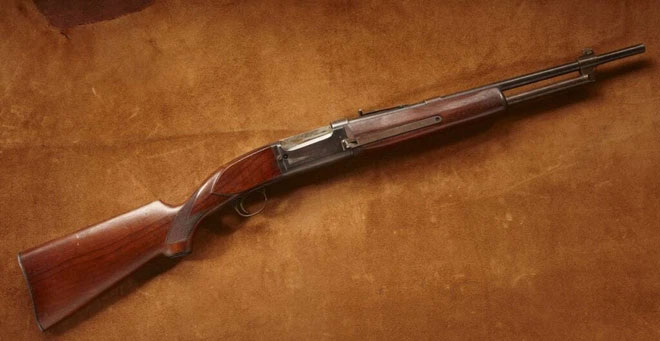
The small change will likely become popular as demand for semi-automatic guns that can reload themselves increases.
Ruger wrote about the gun in the December 1943 issue of American Rifleman magazine, saying the change, though small, would likely become popular as demand for semi-automatic guns that could reload themselves grew.
Ruger and partner Alexander Sturm went into the gun business in 1949, but never produced a self-loading firearm. Instead, Ruger designed a .44 Magnum carbine, followed by a 10/22. The 10/22, which featured a rotating magazine, perhaps inspired by the Savage, was a huge success, with over 7 million units produced and sold.
5. Luger .45
In 1906 and 1907 the US Army experimented with a universal pistol. Manufacturers offered revolvers and semi-automatic pistols and a Webley-Fosbery hybrid with a rotating barrel. Georg Luger of the German company DMW created enlarged versions of several lever-action pistols, chambered in .45, to be sent to the US for testing.
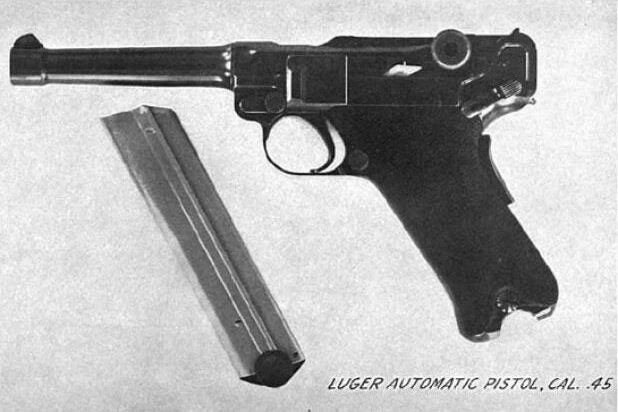
Although the DMW pistol performed well enough for the US Army to test it further before adoption, the Model 1911 won the competition, starting the history of military adoption that has followed. DMW did not release the prototypes commercially, perhaps because they were contracted to the German army, which was why each side in the two world wars used either Lugers or 1911s.
One of the surviving prototypes sold for $150 in 1949. It was later resold for a million USD and has been called the 'million dollar gun' ever since. A replica even appeared in the movie Wall Street, in the scene where Gordon Gekko brags about owning the rarest gun in the world.
6. US Army 45A Rifle
Although bullpup rifles – compact firearms with a locked breech and magazine behind the trigger – have a history dating back to the 1900s, the idea did not become popular until the 1950s. Today, there are several bullpup rifles, such as the Austrian Steyr-AUG, which first appeared in 1978.
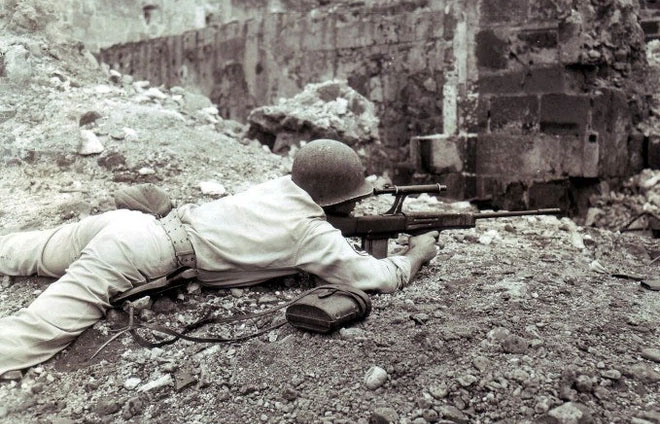
The Model 45A is a strange mystery.
The Model 45A is a strange mystery. It is unclear whether it was a real gun or a non-working model, but it appears to have been invented by US Army weapons personnel in the Philippines in 1945. It has only appeared in photographs, with only one soldier in the field. It uses a .30 caliber magazine, with a scope that can be used as a carrying handle like the Steyer AUG.
7. John Browning Flapper Gun
John Brown had a 'Eureka!' moment when he came up with the idea to improve the rifle range in 1890 with his brother Matthew. Browning noticed that the muzzle blast caused the surrounding vegetation to sway and realized that the energy in the blast could be harnessed for the loading mechanism. That same day, John and Matthew redesigned the lever-loading Winchester 1873 and converted it to a gas-operated rifle.
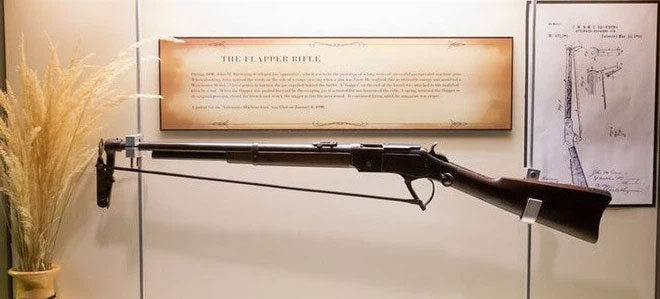
The gun was redesigned with a lever loading mechanism and turned it into a gas loaded one.
The Brownings added a metal plate with holes in it that allowed the bullet to pass through to the barrel, which was attached to a lever. When the gas emitted from the muzzle hit the metal plate, it moved the metal plate to perform the loading of the bullet for the user. With this mechanism, the Brownings produced the first gas-operated machine gun, the Model 1895. It was nicknamed the 'potato digger' because the lever under the barrel moved back and forth when operating.